
What Is an ADU? Accessory Dwelling Units Explained
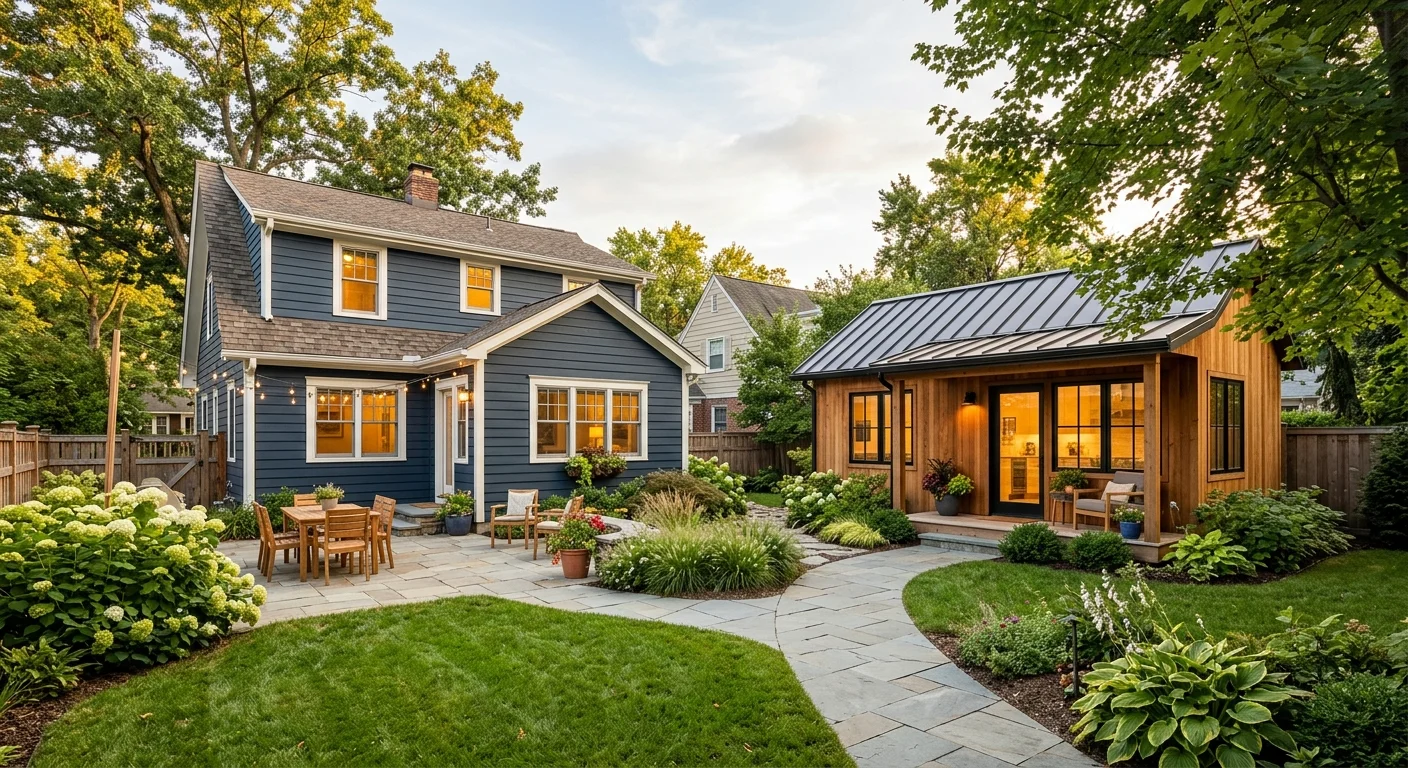
So, what is an ADU? An ADU — short for accessory dwelling unit — is a smaller, self-contained home on the same lot as a primary residence. In HUD and Fannie Mae guidance, it’s a separate living area on the same parcel with independent space for living, sleeping, cooking, and bathing. You might know the concept as a granny flat, in-law suite, backyard cottage, or casita — same idea, different name.
Here’s why this matters right now: a growing wave of state legislation is making ADUs dramatically easier to build. What used to require years of zoning battles in many cities now takes a single permit application. ADUs are being built to house aging parents, generate rental income, accommodate adult children, and add serious long-term value to properties.
But the term “ADU” is consistent while the rules are not. What qualifies, what’s allowed, and what it costs all depend on your city, your lot, and your state’s legislation. This guide unpacks all of it.
What Is Considered an ADU? Here’s How to Tell in 10 Seconds
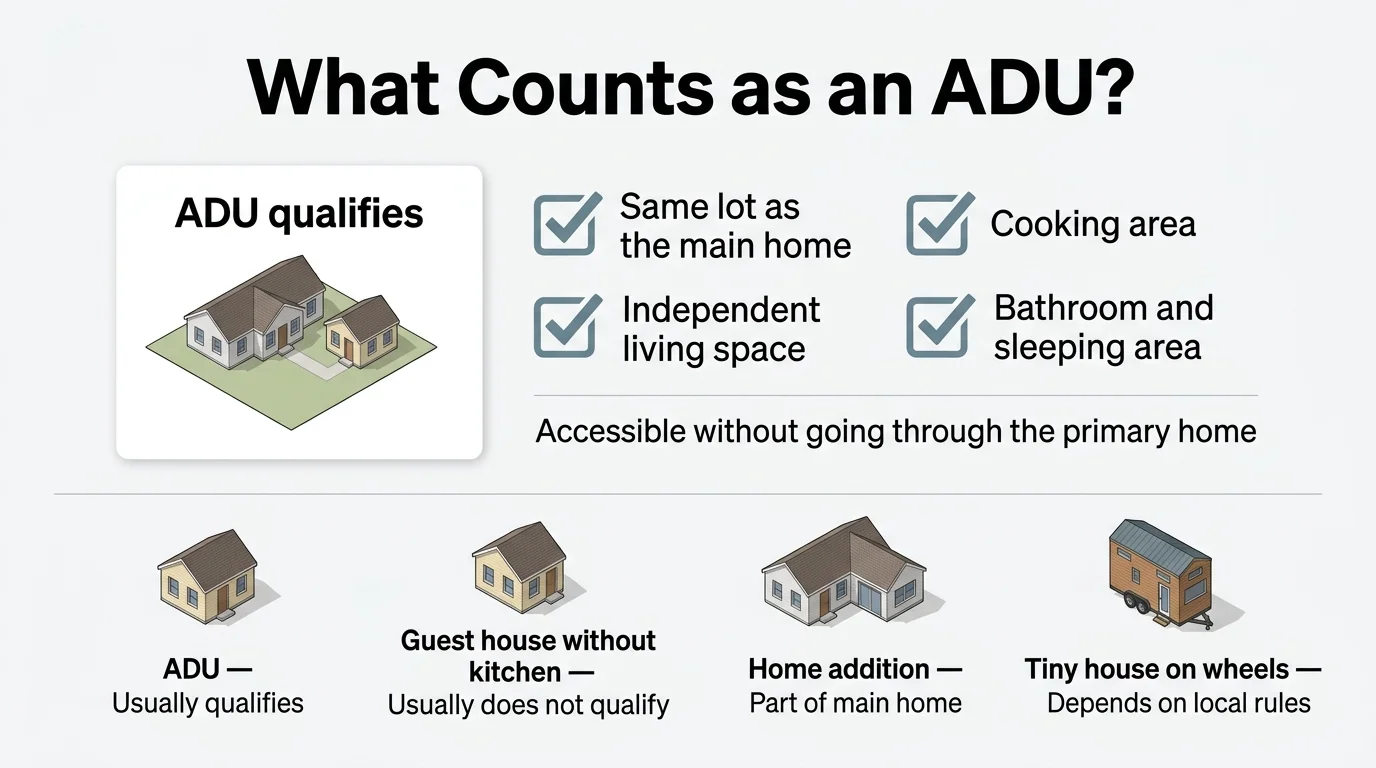
A finished basement, a guest bedroom, a detached office — homeowners call all kinds of spaces “ADUs” when many of them don’t actually qualify. The distinction matters because a legally permitted ADU can usually be rented, can contribute to property value when it’s legal and marketable, and is recognized by lenders and appraisers when it meets zoning and underwriting requirements.
An unpermitted space that doesn’t meet ADU requirements is just a room — and it won’t get you rental income, lender recognition, or a higher appraisal.
ADU or Not? — The Comparison Matrix
| Structure | On Same Lot? | Full Kitchen? | Own Bathroom? | Separate Entrance? | Can Be Rented? | Can Be Sold Separately? |
|---|---|---|---|---|---|---|
| ADU (detached, attached, or conversion) | ✅ Yes | ✅ Yes | ✅ Yes | ✅ Yes | ✅ Yes | ⚠️ Depends CA allows in some cases |
| Junior ADU (JADU) | ✅ Yes | ⚠️ Depends Efficiency only | ⚠️ Depends Can share | ✅ Yes | ✅ Yes 30+ day leases in CA | ❌ No |
| Guest house without kitchen | ✅ Yes | ❌ No | ✅ Yes | ✅ Yes | ❌ No Usually not | ❌ No |
| Home addition | ✅ Yes | ❌ No Shared | ❌ No Shared | ❌ No | ❌ No | ❌ No |
| Tiny house on wheels | ⚠️ Depends | ✅ Yes | ✅ Yes | ✅ Yes | ⚠️ Rarely | ❌ No |
| Duplex / two-family | ✅ Yes | ✅ Yes | ✅ Yes | ✅ Yes | ✅ Yes | ✅ Yes Often yes |
| Garage apartment (unpermitted) | ✅ Yes | ⚠️ Depends | ⚠️ Depends | ⚠️ Depends | ❌ No Not legally | ❌ No |
| Basement apartment (unpermitted) | ✅ Yes | ⚠️ Depends | ⚠️ Depends | ⚠️ Depends | ❌ No Not legally | ❌ No |
Sources: HUD/FHA Single Family Housing Policy Handbook (Glossary); Fannie Mae Selling Guide §B4-1.3; Freddie Mac Single-Family Seller/Servicer Guide; American Planning Association ADU knowledgebase. Verified March 2026.
The bottom line:
If it’s on the same parcel as a primary home, has independent living facilities (sleeping, cooking, bathing, and separate access), is permitted by your local jurisdiction, and complies with zoning — it’s an ADU. If it’s missing any of those, it’s something else.
Where this gets confusing:
A garage apartment that has a kitchen, bathroom, and separate door might function like an ADU — but if your city never permitted it as one, it’s technically an illegal unit. That matters for insurance, liability, resale, and rental legality. Freddie Mac’s guidelines explicitly state that rental income from an illegal ADU cannot be used to qualify for a mortgage. California’s AB 2533 expanded permit protections for certain unpermitted ADUs built before January 1, 2020.
If the space you’re looking at doesn’t qualify as an ADU yet, the good news is that it may be possible to bring it into compliance — and that could unlock rental income, financing options, and real property value that are currently sitting on the table.
Not sure if your property could support an ADU? Skip the zoning rabbit hole
Check your address in 60 seconds — free, no commitment.
Check My Property →Detailed reports available in CA, UT, TX, CO, and NY.
What Does ADU Stand For?
ADU stands for accessory dwelling unit. Let’s break that down:
Accessory
Secondary — smaller than and subordinate to your main home.
Dwelling
A place someone can actually live full-time, not just a shed or storage space.
Unit
Self-contained, with everything needed for independent daily life.
The acronym is the standard term used in zoning codes, building departments, state legislation, and by lenders nationwide. HUD/FHA defines it as a habitable living unit with separate ingress and egress, subordinate to the primary dwelling on the same real-estate interest. Fannie Mae requires that the ADU provide living, sleeping, cooking, and bathroom facilities on the same parcel, accessible without going through the primary home.
Names you’ll hear instead of ADU
Your city’s code might use a specific local term — Portland and Seattle often say “DADU” (detached accessory dwelling unit), California has “JADU” (junior accessory dwelling unit) for smaller in-home conversions. They’re all referring to the same basic concept.
What Are the Main Types of ADUs?
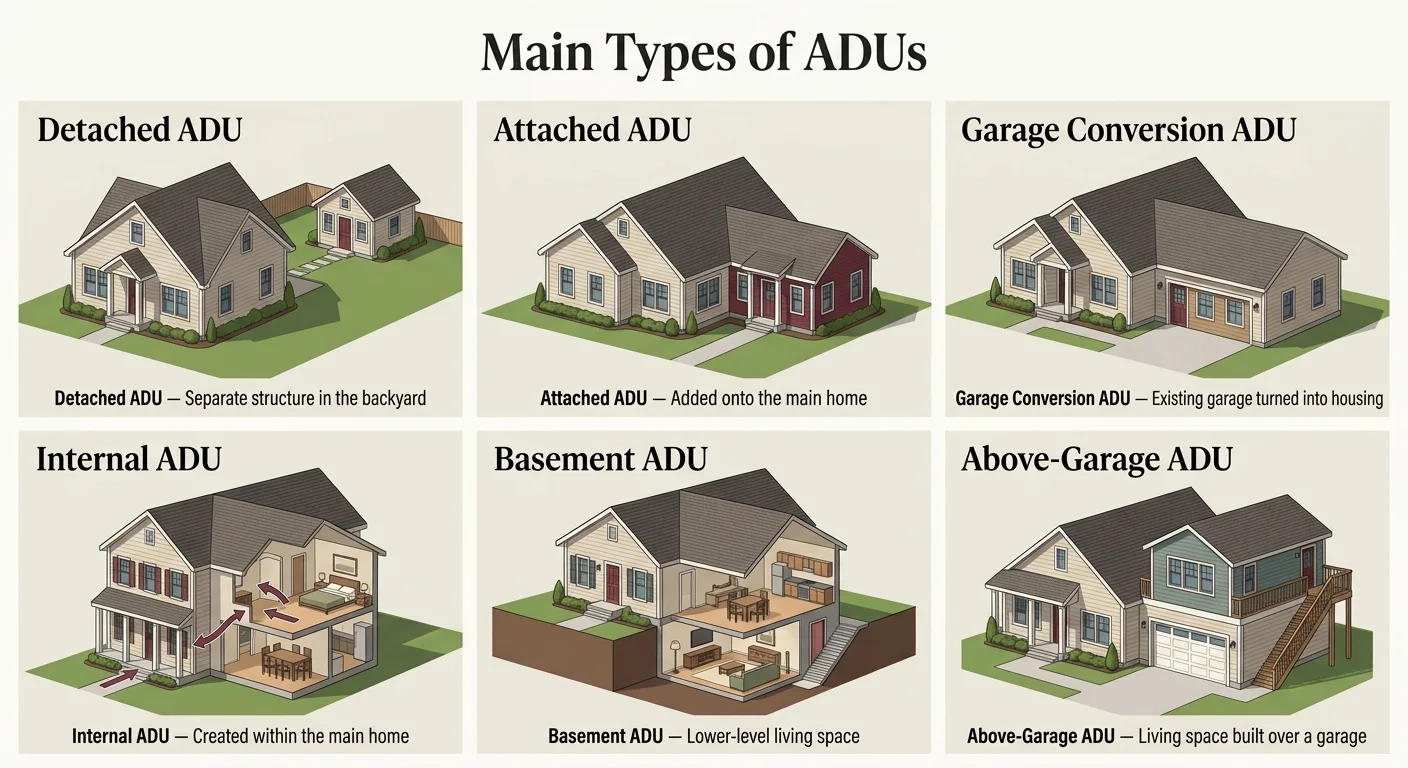
An ADU is a category, not a single building type. The version that makes sense for you depends on your property, your budget, your timeline, and what you want to use it for. Here are the six structural types, compared side by side.
ADU Types Compared: Cost, Timeline, and Best Fit
| ADU Type | Typical Cost Range | Typical Size | Build Timeline | Best For | Privacy |
|---|---|---|---|---|---|
| Detached (new build) | $200K–$400K+ | 400–1,200 sq ft | 10–18 months | Rental income, max property value, multigenerational | ★★★★★ |
| Attached addition | $150K–$300K | 400–1,000 sq ft | 8–14 months | Aging parents who want proximity | ★★★☆☆ |
| Garage conversion | $80K–$200K | 200–600 sq ft | 4–8 months | Fastest path on a budget, renters, young adults | ★★★★☆ |
| Basement conversion | $50K–$150K | 400–1,000 sq ft | 3–6 months | Cold climates, lowest cost using existing space | ★★☆☆☆ |
| Internal / in-home conversion | $40K–$100K | 200–500 sq ft | 2–4 months | Absolute lowest cost, spare rooms or attic space | ★☆☆☆☆ |
| Above-garage | $150K–$350K | 400–800 sq ft | 10–16 months | Keep parking and add a unit, tight urban lots | ★★★★☆ |
Cost ranges are national estimates based on contractor surveys and builder data. Your local market will vary significantly. These include design, permits, and construction but not land. Always get multiple written estimates before committing. Last verified March 2026.
Detached ADU (new construction)
A standalone structure in your backyard, built from the ground up with its own foundation, walls, roof, and utility connections. This is what most people picture when they hear "ADU" — and it delivers the highest privacy, strongest rental income, and biggest property value bump. It's also the most expensive and takes the longest. Setback requirements vary by jurisdiction — check your local code for the minimum distance from property lines.
Attached ADU
Connected to your main house, sharing at least one wall. Because it can often tap into existing utility lines, roof structure, or foundation, it usually costs less than a detached build. The tradeoff is less privacy — for you and the occupant. This type works especially well for aging parents who want to be close but independent.
Garage conversion
The most popular budget-friendly option. Your garage already has a foundation, walls, and roof — so you're converting rather than building from scratch, which typically costs significantly less than new construction. You'll lose parking, but in many markets, the rental income or family housing value far outweighs a covered parking spot. Detached garage conversions offer more privacy than attached ones.
Basement conversion
If you have an unfinished or underused basement with adequate ceiling height (check your local code for minimums — they vary), this is often one of the cheapest paths to a legal ADU. Moisture control, egress windows, and natural light are the biggest design challenges. Basement ADUs work especially well in colder climates where below-grade insulation is actually an advantage.
Internal / in-home conversion
Converting existing rooms — a spare bedroom suite, an attic, or a large bonus room — into a self-contained unit with a kitchen, bathroom, and separate entrance. The lowest cost option, but also the lowest privacy. This is common for JADUs in California (under 500 sq ft, can share a bathroom, only needs an efficiency kitchen) or as a stepping-stone when budget is tight.
Above-garage ADU
A second story built on top of an existing or new garage. You keep your parking, gain a private elevated unit, and often get better natural light than a ground-level conversion. The structural and engineering requirements are higher, which pushes costs up, but the result is a highly rentable, private space.
Prefab vs. site-built ADUs
Prefab and modular ADUs are factory-built units delivered to your site and installed on a prepared foundation. They aren’t a separate structural type — a prefab unit is still a detached ADU — but the construction method is different and worth understanding. The advantage is speed and cost predictability. The catch is that site preparation (foundation, grading, utility connections) is still required and isn’t included in the unit price. Get quotes for both options and compare total installed cost, not just the unit price.
Why Do Homeowners Build ADUs?
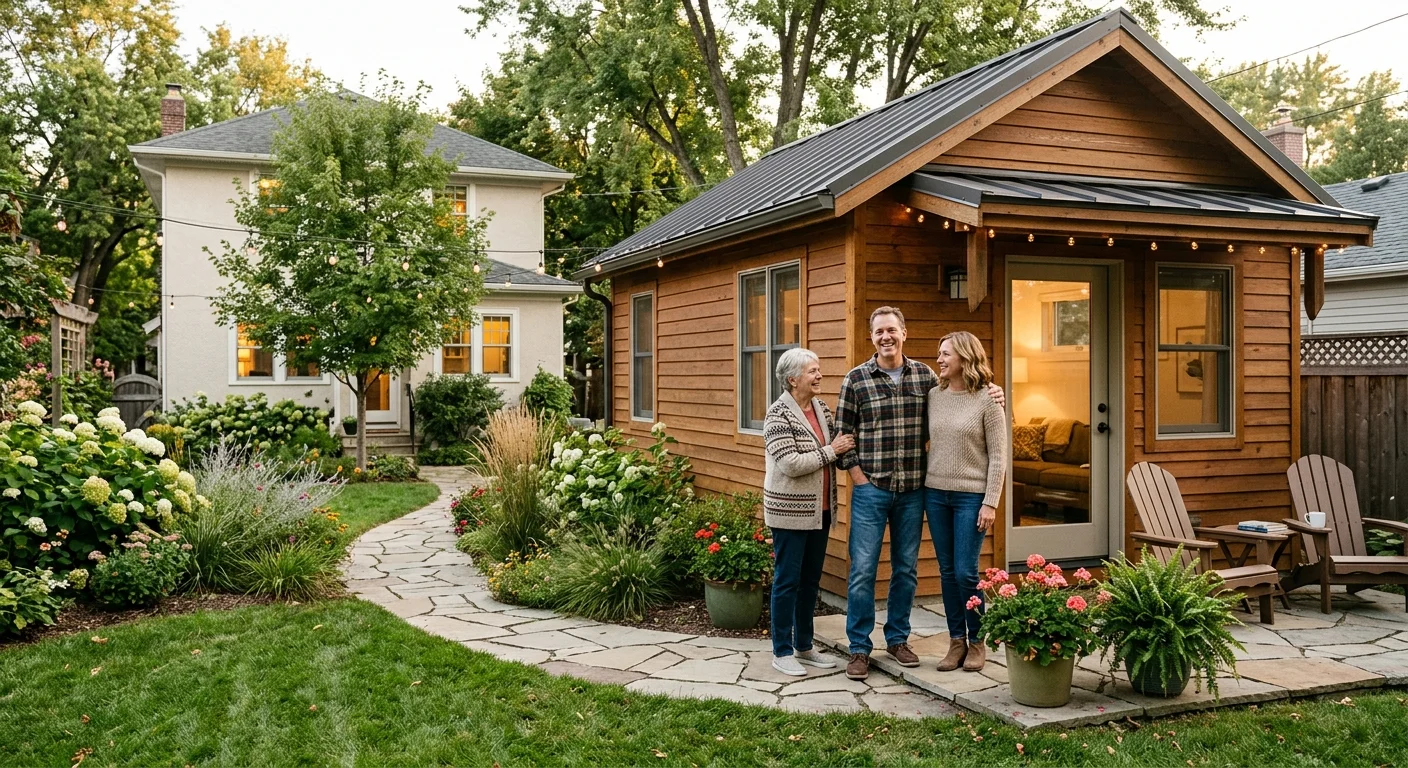
Most people don’t build an ADU because they love construction. They build because something changed — or is about to.
Best ADU Type by Goal
| Your Situation | Best-Fit ADU Type | Why It Works | Watch Out For |
|---|---|---|---|
| Aging parent needs to be nearby | Attached or detached ADU | Proximity + independence. Design for accessibility: wider doorways, no-step entry, grab bars. | Ensure the ADU is on the ground level or has elevator access |
| Adult child moving back home | Garage conversion or detached ADU | Privacy for both parties. They get independence; you get your house back. | Check owner-occupancy rules if they'll be the primary tenant |
| Long-term rental income | Detached ADU or garage conversion | Maximum rental rates come from detached units with privacy. A separate entrance is key. | Short-term rental restrictions (Airbnb) are common — verify locally |
| Home office or creative studio | Internal conversion or detached ADU | Separation from household distractions. Home-office and rental uses can have tax implications — consult a tax professional. | A space without a kitchen doesn't qualify as an ADU — it's an accessory structure |
| Guest housing | Any type | Flexibility — guests today, rental tomorrow. The unit adapts as your life changes. | Design for dual-use from the start so you don't remodel later |
| Lowest possible cost | Internal or basement conversion | Use what you have. Converting existing space avoids the cost of a new foundation, framing, and roof. | Ceiling height (basements), egress requirements, natural light |
| Maximum property value | Detached new build | Adds the most appraised value and commands the highest rents. | Longest timeline and highest upfront cost |
Both AARP and Freddie Mac cite family housing, caregiving, multigenerational living, rental income, and remote work as the primary reasons homeowners pursue ADUs. And here’s what experienced ADU owners consistently say: the use changes over time. The unit you build for Mom becomes a rental when she no longer needs it, or the rental becomes a home office when your work situation changes.
That flexibility is the real value. An ADU isn’t a one-purpose structure — it’s optionality built into your property.
If any of those situations sound like yours, you're closer than you think
Check your address in 60 seconds — free, no commitment.
Check My Property →Detailed reports available in CA, UT, TX, CO, and NY.
How Is an ADU Different From a Guest House, Tiny House, or Addition?
This is where most of the confusion lives. People use these terms interchangeably, but they mean different things to your city, your lender, and your insurance company.
ADU vs. Similar Housing Types
| Feature | ADU | Guest House | Home Addition | Tiny House (wheels) | Duplex |
|---|---|---|---|---|---|
| Full kitchen required? | ✅ Yes | ❌ No | ❌ No Shared with main home | ✅ Yes | ✅ Yes |
| Separate entrance? | ✅ Yes | ✅ Yes | ❌ No | ✅ Yes | ✅ Yes |
| Legally recognized dwelling unit? | ✅ Yes When permitted | ⚠️ Sometimes | ❌ No Part of main home | ⚠️ Rarely | ✅ Yes |
| Can be rented long-term? | ✅ Yes Most areas | ⚠️ Depends | ❌ No Not separately | ⚠️ Depends | ✅ Yes |
| Increases appraised value? | ✅ Yes Amount varies by market | ✅ Yes Moderately | ✅ Yes Moderately | ⚠️ Rarely | ✅ Yes |
| Can be sold separately from main home? | ⚠️ Rarely CA allows in some cases | ❌ No | ❌ No | ❌ No | ✅ Yes Often |
| Recognized by Fannie Mae / Freddie Mac? | ✅ Yes When legal and compliant | ⚠️ Depends Limited | ✅ Yes As part of home | ❌ No | ✅ Yes |
Can I Build an ADU on My Property?
This is the question that turns curiosity into action — and it’s the one where “it depends” is genuinely the honest first answer, followed quickly by “but here’s exactly how to find out.” Whether you can build an ADU depends on a short, knowable list of local rules. You don’t need a lawyer to check these — you need about 30 minutes with your city’s planning department website or a quick call.
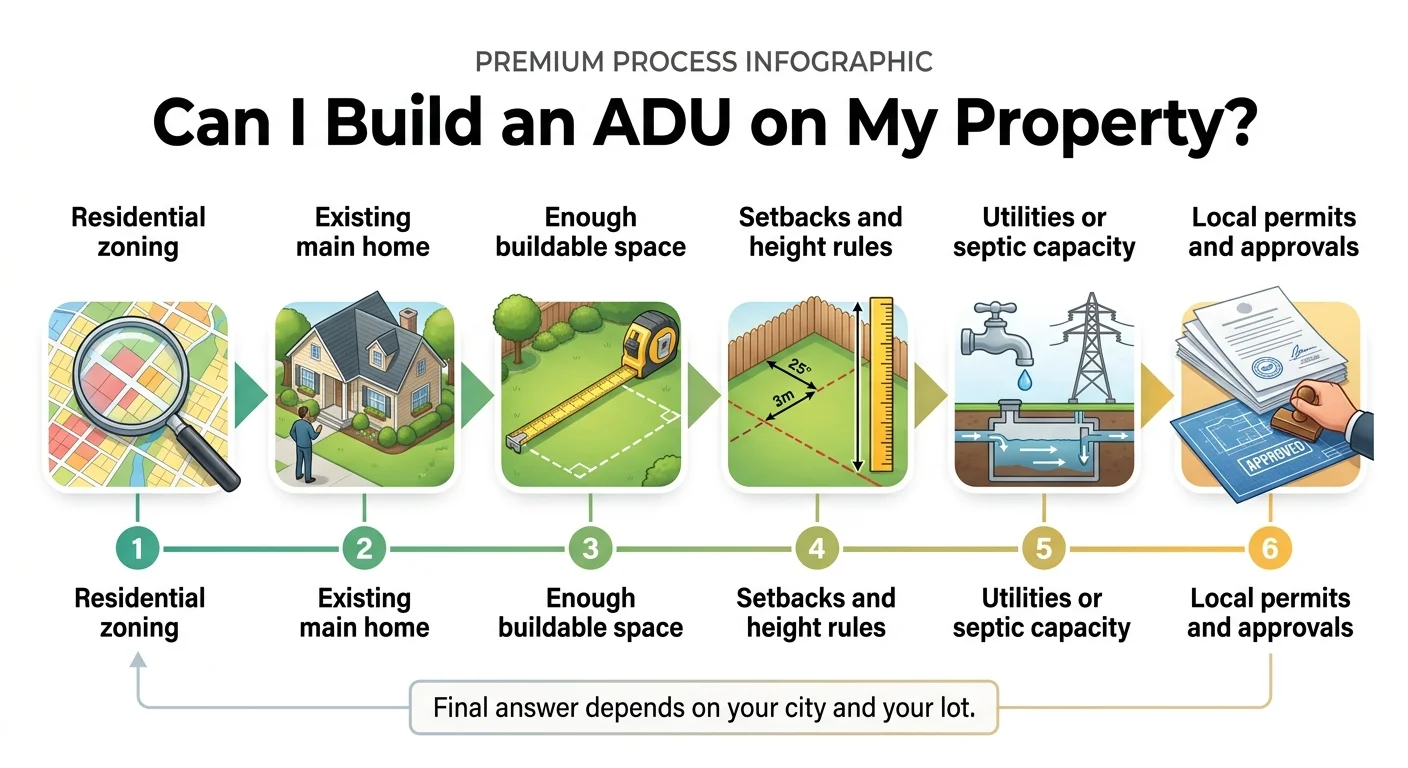
The 7-Question ADU Eligibility Checklist
- 1
Is your property zoned for residential use?
ADUs are typically allowed on single-family residential lots (R-1, R-2, etc.). Some cities also allow them on multifamily lots. If you're in an agricultural, commercial, or industrial zone, ADUs usually aren't an option.
- 2
Do you have an existing home on the lot (or plan to build one)?
The "accessory" in ADU means it's secondary to a primary dwelling. Most jurisdictions require a main home to exist or be under construction before you can add an ADU.
- 3
Does your lot meet minimum size requirements?
Some cities require a minimum lot size for ADUs. However, the trend is moving away from this — California and several other states have eliminated minimum lot size requirements for ADUs entirely.
- 4
Can you meet setback requirements?
Setbacks are the minimum distance between your ADU and your property lines. Requirements vary by jurisdiction — check your local code for specifics. Conversions of existing structures often have no additional setback requirements beyond what already exists.
- 5
Will your ADU fit within height limits?
Height limits vary by city and state. For detached ADUs, many jurisdictions set limits in the 16–18 foot range for single-story structures, with higher limits for two-story or attached units. Always verify your local code — state laws set minimums, but your city may allow more.
- 6
Can your utilities handle it?
Sewer or septic capacity, water service, electrical panel capacity, and gas service all need to support an additional dwelling. Utility hookup costs are one of the most underestimated expenses in ADU projects. If you're on septic, your system may need to be upgraded or replaced.
- 7
Does your HOA allow it?
This varies significantly by state. California law now prohibits HOAs from barring ADU construction on single-family properties. In most other states, HOA CC&Rs may still restrict or prohibit ADUs. Always check both your state law and your HOA governing documents.
Other Factors to Verify
Owner-occupancy requirements
Some cities require the property owner to live on-site (either in the main home or the ADU). California eliminated this requirement for ADUs effective January 1, 2024 (AB 976). For JADUs, California's 2026 rules specify that owner occupancy is required if the JADU shares sanitation facilities with the primary home, but not required if the JADU has its own separate sanitation. Other states have their own rules — verify locally.
Parking requirements
Many ADU-friendly jurisdictions have eliminated additional parking requirements, especially for properties near public transit.
Short-term rental restrictions
Even if you can build an ADU and rent it long-term, Airbnb-style short-term rentals may be prohibited. Verify your local short-term rental ordinance separately.
Lot coverage and FAR (Floor Area Ratio)
Some cities limit how much of your lot can be covered by structures. However, several states have passed laws preventing these limits from blocking a reasonably-sized ADU.
We built a tool for exactly this
Our free report checks your specific property against local zoning, size limits, and setbacks — takes about 60 seconds.
Get Your Free ADU Feasibility Report →Detailed reports currently available in CA, UT, TX, CO, and NY.
What Rules Change by City and State?
There’s no single national ADU rulebook. The definition is fairly consistent everywhere — a self-contained secondary dwelling on a residential lot — but the rules that determine whether your specific project can actually happen vary from city to city and state to state.
Here’s what stays consistent almost everywhere: an ADU needs independent living facilities (kitchen, bath, sleeping area, entrance), it must be on the same lot as the primary home, it requires a building permit, and it must meet building code for life safety (structural, electrical, plumbing, fire).
Here’s what changes: size caps, setbacks, height limits, parking requirements, owner-occupancy rules, short-term rental restrictions, the number of ADUs allowed per lot, utility and septic requirements, impact fees, and whether pre-approved plans are available.
Major ADU Reforms by State
ADU legislation is one of the fastest-moving housing policy trends in the country. According to the Mercatus Center’s 2025 taxonomy of state ADU laws, 18 states have now passed legislation broadly legalizing ADU construction — and 11 of those laws were adopted within just the last four years.
| State | Statewide Law? | Key Details | Source / Verified |
|---|---|---|---|
| California | ✅ Yes | Most permissive in the US. ADUs by right on residential lots. No owner-occupancy requirement for ADUs (AB 976, effective Jan. 1, 2024). ADUs can be sold separately if local jurisdiction opts in (AB 1033). Pre-approved plan programs required statewide (AB 1332). JADU owner-occupancy tied to shared sanitation. HCD Handbook updated with 2026 addendum. | CA HCD ADU Handbook (2026 addendum) |
| Oregon | ✅ Yes | SB 1051 (2017) requires cities with populations over 2,500 and counties with populations over 15,000 to allow ADUs on lots zoned for detached single-family dwellings. | OR SB 1051 (2017) |
| Washington | ✅ Yes | State law allows at least 2 ADUs per lot in most areas. Seattle seeing "3-pack" developments (primary + attached ADU + detached ADU). | WA HB 1337 (2023) |
| Maine | ✅ Yes | LD 2003 (2022) requires municipalities to allow ADUs on single-family lots statewide. | ME LD 2003 (2022) |
| Connecticut | ✅ Yes | 2021 law allowed ADUs in residential zones with municipal opt-out provisions. 2026 legislation is extending as-of-right ADU access to previously opted-out municipalities. | CT PA 21-29; HB 5507 (2026) |
| Vermont | ✅ Yes | Act 47 (2023) established ADU allowances tied to owner-occupied lots with specified conditions. Details vary — check municipal implementation. | VT Act 47 (2023) |
| Montana | ✅ Yes | ADUs permitted on lots with single-family homes under recent legislation. | MT HB 406 (2023) |
| Massachusetts | ✅ Yes | Affordable Homes Act (2024): ADUs up to 900 sq ft by right in single-family zones. MassHousing launched affordable ADU financing in 2026. | MA Ch. 150, Acts of 2024 |
| Colorado | ✅ Yes | State law with some local discretion remaining. | CO HB 24-1152 (2024) |
| New York | ⚠️ Local | NYC City of Yes (Local Laws 126 & 127, 2024): 1 ADU per 1- or 2-family residence, up to 800 sq ft. NYC also launched pre-approved plans (March 2026). NY State's Plus One ADU program provides financing assistance — a funding initiative, not statewide by-right legalization. | NYC Dept. of Buildings; NY HCR |
| Hawaii | ✅ Yes | Ohana units allowed; some local restrictions remain. | HI state ADU provisions |
| New Hampshire | ✅ Yes | RSA 674:71–73 (revised 2025, effective July 1, 2025) requires municipalities to allow attached or detached ADUs by right on single-family lots. | NH RSA 674:71–73 |
| Utah | ⚠️ Local | State law already requires internal ADUs as a permitted use in residential areas, subject to conditions. Individual cities (Salt Lake City, others) have additional ADU-friendly ordinances. | UT Code |
| Florida | ⚠️ Local | FL Statute 163.31771 encourages but doesn't mandate ADUs. Miami, St. Petersburg, Gainesville active. | FL Stat. 163.31771 |
| Texas | ⚠️ Local | Austin and Houston allow; no statewide law. Local control dominates. | Local ordinances |
| Arizona | ⚠️ Local | Phoenix and Tucson allow ADUs; no state legislation. Suburban restrictions common. | Local ordinances |
Sources: Mercatus Center “Taxonomy of State ADU Laws” (August 2025); individual state legislative records as cited per row. Verified March 2026. State laws set the floor — your city may have additional requirements or may be more permissive. Always verify locally.
Want to know the rules for your specific address?
Check your address in 60 seconds — free, no commitment.
Check My Property →Detailed reports available in CA, UT, TX, CO, and NY.
How Much Does an ADU Cost, and How Long Does It Take?
We covered the cost comparison by type above. Here’s the deeper story behind those numbers — because the headline figure is never the whole picture, and understanding where the money actually goes helps you make smarter decisions.
Where the Money Goes
Construction (hard costs)
The vast majority of your budget — foundation, framing, roofing, plumbing, electrical, HVAC, interior finishes. Labor alone typically accounts for 40–60% of construction costs.
Design and engineering
Architectural plans, structural engineering, energy compliance documentation.
Permits and fees
Building permits, plan review fees, impact fees, sewer/water connection fees. Many jurisdictions waive or reduce impact fees for smaller ADUs — check your local rules.
Site work and utilities
Grading, utility trenching, electrical panel upgrades, sewer laterals. This is the line item that surprises the most people — it can be a significant addition to your budget, especially for detached units that need new utility connections.
Our honest warning: the costs people underestimate
ADU projects frequently cost more than the initial estimate. The most common surprises are utility hookup costs (especially if you need a new sewer lateral or electrical panel upgrade), site preparation on sloped or difficult lots, and permit fees that weren’t included in the contractor’s quote. Budget a contingency of 15–20% above your total estimated cost.
The homeowners who get burned aren’t the ones who build ADUs. They’re the ones who start without understanding the full cost picture.
Realistic Timeline
Phase 1: Feasibility and Design
2 to 4 monthsCheck local rules. Assess your property. Define your goals. Hire an architect or designer (or select pre-approved plans). Finalize construction documents.
Phase 2: Permitting
2 to 8 monthsSubmit plans to your building department. Wait for plan check review. Address any corrections. Receive your building permit. This is the most variable phase — some ADU-friendly cities with pre-approved plans are issuing permits in 30–60 days. Others take 6+ months.
Phase 3: Construction
4 to 8 monthsSite preparation and foundation. Framing, roofing, exterior. Mechanical rough-in (plumbing, electrical, HVAC). Interior finishes. Inspections. Certificate of occupancy.
Pre-approved plans (now required in California under AB 1332 and available in NYC and other cities) can cut the design and permitting phases significantly.
Does an ADU Increase Property Value — and Can You Rent It Out?
Short answers: yes to both. The exact amount depends on your market, ADU type, legal status, and construction quality — but the direction is consistent.
Property Value
The strongest official data comes from the Federal Housing Finance Agency. Their 2025 analysis of California purchase properties found that homes with ADUs showed stronger annualized growth in median appraised value than comparable properties without ADUs over the period 2013–2023.
A common industry rule of thumb: a newly built ADU adds roughly 100x its potential monthly rental value to property value. If an ADU can rent for $2,500/month, it may contribute approximately $250,000 in value. This is a rough benchmark, not a guarantee.
Rental Income
ADU rental income varies by market, unit size, quality, and privacy level. In high-cost coastal metros, well-designed detached ADUs can command strong rents. In lower-cost markets, the income is proportionally lower but so are construction costs.
Rental income is taxable — consult a tax professional about deductions available for rental property expenses.
Value impact depends on legality, market conditions, ADU quality, privacy, and appraiser treatment. These are illustrative examples, not guarantees of returns. Actual results depend on local market conditions, construction costs, and regulatory approvals. Work with a local real estate agent familiar with ADU properties in your area.
When an ADU May Not Be the Right Move
If you plan to sell within 1–2 years
ADU construction takes time, and short-term ROI at resale is less certain than long-term appreciation plus rental income. ADUs are a 3–5+ year investment.
If your lot requires major infrastructure upgrades
Expensive septic system replacements, significant grading, or utility capacity issues can push total costs to a point where the math gets tight. Run the numbers before committing.
If either of those describes your situation, it doesn’t mean an ADU is wrong — it means you should model the full costs carefully. And remember: an ADU built for family housing has value that doesn’t depend on rental income at all.
Curious what an ADU could mean for your property?
Check your address in 60 seconds — free, no commitment.
Check My Property →Detailed reports available in CA, UT, TX, CO, and NY.
How Do Homeowners Pay for an ADU?
Most people don’t write a check for $200,000. Here’s how ADU construction actually gets funded.
Home Equity Line of Credit (HELOC)
Borrow against your existing home equity. Flexible draw schedule matches construction milestones.
Cash-Out Refinance
Replace your existing mortgage with a larger one and use the difference for construction.
Construction Loan
Short-term loan specifically for the build, often converting to a permanent mortgage upon completion.
FHA 203(k) Renovation Loan
Government-backed loan that rolls purchase/refinance and renovation costs into one mortgage. Note: HUD's 203(k) comparison guidance indicates the ADU generally must be attached to the existing structure to qualify under this program.
Fannie Mae HomeStyle / Freddie Mac CHOICERenovation
Renovation loan products that explicitly allow ADU construction as an eligible use of funds.
Personal savings or family loans
Common for smaller conversions and garage ADUs.
We are an independent educational resource, not a lender or broker. We do not guarantee approval, qualification, or specific outcomes. Financing terms depend on your individual financial situation.
About ADU grants
Grant programs exist but funding is limited. California’s CalHFA ADU Grant Program (up to $40,000) is currently fully allocated with no open application round as of this writing — confirm current status directly with CalHFA. Massachusetts launched MassHousing affordable ADU mortgage financing in 2026. NYC’s Plus One ADU Program provides construction financing through NY State HCR — verify eligibility directly. We recommend applying where eligible but treating grant funding as a bonus, not a cornerstone of your financing plan.
The Biggest Mistakes People Make With ADUs
Trust is earned by telling the truth, so here’s what goes wrong — and how to make sure it doesn’t happen to you.
Buying plans before checking rules
Always verify local rules first — before you spend a dollar on design. We see this constantly. Someone falls in love with a floor plan online, pays for architectural drawings, and then discovers their city doesn't allow that size, type, or placement on their lot.
Underestimating utility costs
Running a new sewer lateral, upgrading your electrical panel to handle a second dwelling, or extending water service lines can add significantly to your budget. Get a utility quote early in the process. This line item sinks more budgets than anything else.
Assuming the contractor's quote is the total cost
A construction quote often doesn't include design fees, permit fees, utility connections, site prep, or landscaping restoration. Ask explicitly what's included and what's not.
Skipping permits
Building without permits might seem like a shortcut, but it creates real problems: no insurance coverage, liability exposure, inability to legally rent the space, inability to use ADU rental income for mortgage qualification, reduced appraised value, and complications at resale.
Ignoring the construction timeline
An ADU project means months of activity on your property — deliveries, noise, workers, disrupted yard space. Garage conversions minimize this. New detached builds take the longest. Plan for the disruption, especially if you have young children or work from home.
Before you spend money on plans or quotes, know what your property allows
Check your address in 60 seconds — free, no commitment.
Check My Property →Detailed reports available in CA, UT, TX, CO, and NY.
What Should You Do Before You Get Quotes or Buy Plans?
If you’ve read this far, you probably have a good sense of whether an ADU could work for you. Here’s the practical sequence we recommend — the same steps we’d walk a friend through.
Your 10-Step ADU Starter Checklist
- 1
Define your goal. Rental income? Family housing? Home office? Future flexibility? This drives every other decision.
- 2
Check your local zoning. Call your city's planning department or check their website. Ask: "Can I build an ADU on a [your zoning designation] lot?" Get it in writing if you can.
- 3
Understand setbacks, size limits, and height. These determine where on your lot an ADU can go and how big it can be.
- 4
Check utility capacity. Sewer/septic, water, electrical. Ask your city about connection fees and whether your existing systems can support an additional unit.
- 5
Review HOA restrictions. If you have an HOA, read the CC&Rs. In some states (California), the HOA cannot block you. In others, they can.
- 6
Choose your ADU type. Match it to your goal, budget, timeline, and property layout using the comparison table above.
- 7
Get financing pre-qualification. If you're not paying cash, understand your borrowing capacity before you start designing.
- 8
Hire a designer or select pre-approved plans. Check if your city offers pre-approved ADU plans — they're faster and cheaper. If going custom, hire someone with ADU experience in your specific city.
- 9
Get 2–3 contractor quotes. Compare scope, timeline, and total cost (not just construction — ask about permits, utilities, and site work).
- 10
Apply for your building permit. Your designer or contractor typically handles this, but know the expected timeline.
Documents to Gather First
- Property survey or plot plan (shows lot boundaries, existing structures, setbacks)
- Utility bills or service records (confirms existing connections)
- HOA CC&Rs (if applicable)
- Property deed (confirms ownership and any restrictions)
- Recent property tax assessment
Questions to Ask Your City
- What ADU types are allowed on my lot?
- What are the size, setback, and height limits?
- Is there an owner-occupancy requirement?
- What are the permit fees and impact fees?
- Do you have pre-approved ADU plans?
- How long is the current permit review timeline?
Free Resource
Free 2026 ADU Starter Kit
Your complete step-by-step guide: costs, financing, permit timelines by state, and common mistakes — before you talk to a single company or contractor.
Download Free Starter Kit →Frequently Asked Questions About ADUs
What does ADU stand for?↓
ADU stands for Accessory Dwelling Unit. It's a self-contained secondary home on the same property as a primary residence, with its own kitchen, bathroom, entrance, and living space. Other common names include granny flat, in-law suite, backyard cottage, and casita.
What is an ADU in real estate?↓
In real estate, an ADU is a secondary dwelling unit on a residential property. When a listing mentions an ADU, it typically means there is a secondary living space — though it's worth verifying that the unit is legally permitted, since listings sometimes use the term loosely. ADUs that are legal and permitted are recognized by lenders (Fannie Mae, Freddie Mac, FHA) and appraisers.
What is considered an ADU?↓
To qualify as an ADU, a space typically needs: sleeping area, cooking facilities (full or efficiency kitchen), a bathroom, and separate access — all on the same parcel as a primary home, with a building permit and zoning compliance. A finished basement, guest room, or converted garage without a kitchen and permit is not legally an ADU.
Does an ADU have to have a kitchen?↓
Yes. Full ADUs require a complete kitchen with cooking facilities. The exception is a JADU (Junior ADU) in California, which only needs an "efficiency kitchen" — a sink, countertop, and a small cooking appliance or hookup. Without cooking facilities, the space is an accessory structure, not a dwelling unit.
What is a JADU?↓
A Junior ADU is a California-specific category: a unit of 500 square feet or less, built within the existing walls of a single-family home. JADUs can share a bathroom with the main house and only need an efficiency kitchen. Owner-occupancy requirements for JADUs depend on whether the JADU has its own separate sanitation facilities. California law allows one JADU plus one ADU on a single-family lot.
What is the difference between an ADU and a DADU?↓
DADU stands for Detached Accessory Dwelling Unit — a separate, standalone structure not attached to the main house. It's a subset of ADUs. The term is commonly used in Seattle and Portland. All DADUs are ADUs, but not all ADUs are detached.
How much does it cost to build an ADU?↓
ADU costs range widely based on type, location, size, and finish level. Garage conversions are generally the most affordable option; detached new-build ADUs are the most expensive. See the cost comparison table above for ranges based on industry data. Always get multiple local quotes — national averages don't capture your specific market.
How long does it take to build an ADU?↓
Typically 10–18 months total for new detached construction (design + permitting + construction). Garage conversions can be completed in 4–8 months. Internal conversions in 2–4 months. The biggest variable is permitting — some cities approve in 30–60 days, others take 6+ months.
Can I build an ADU on my property?↓
It depends on your local zoning, lot size, setbacks, and existing structures. Many states have passed legislation making ADUs easier to build, and many cities allow them through local ordinances. The most reliable answer comes from your city's planning department — or use our feasibility tool above.
What states allow ADUs?↓
A growing number of states have passed ADU legislation — the Mercatus Center identified 18 states with broad ADU laws as of mid-2025. Many additional cities allow ADUs through local ordinances even without state laws. See the state table above for verified examples.
Can an ADU be rented out?↓
Yes, in most jurisdictions that allow ADUs. Long-term rentals (30+ days) are broadly permitted. Short-term rentals (Airbnb, VRBO) are frequently restricted or prohibited — even where ADUs are legal. Always check your local short-term rental ordinance separately from ADU regulations.
Does an ADU increase property value?↓
Yes — the FHFA's 2025 California analysis found stronger appreciation for properties with ADUs compared to those without. Value impact varies by market, ADU type, legal status, and construction quality. Detached ADUs generally add the most value, followed by attached, then internal conversions.
Can an ADU be sold separately from the main home?↓
In most states, no. However, California's AB 1033 (effective 2024) allows ADUs to be sold as condominiums separately from the primary residence if the local jurisdiction adopts an enabling ordinance. This is still uncommon nationally.
What happens if you build an ADU without a permit?↓
An unpermitted ADU can result in fines, forced removal, insurance coverage gaps, liability exposure, inability to legally rent, inability to use rental income for mortgage qualification, and complications at resale. California's AB 2533 expanded permit protections for certain unpermitted ADUs built before January 1, 2020, but building new without permits is never advisable.
How much does an ADU permit cost?↓
Permit costs vary widely by jurisdiction. Costs include building permit fees, plan review fees, and potentially impact fees. In California, impact fees are limited for smaller ADUs under current HCD guidelines. Pre-approved plans can significantly reduce plan review fees and timelines. Contact your local building department for specific fee schedules.
Do I need to live on the property to have an ADU?↓
It depends on your jurisdiction. California eliminated owner-occupancy requirements for ADUs effective January 1, 2024 (AB 976). For JADUs, owner-occupancy depends on whether the unit has its own separate sanitation facilities (per 2026 state rules). Many other cities still require the property owner to live in either the main house or the ADU. This is one of the first things to verify with your local planning department.
ADU Glossary
Quick reference for terms you’ll encounter during your research and planning.
ADU
Accessory Dwelling Unit. A self-contained secondary home on a residential lot.
DADU
Detached Accessory Dwelling Unit. A standalone ADU separate from the main house.
JADU
Junior Accessory Dwelling Unit. A California-specific small unit (≤500 sq ft) within an existing home.
Setback
Minimum required distance between a structure and property lines.
By-right
Approved administratively if the application meets objective standards, without discretionary review or public hearing.
Ministerial approval
The government must approve the application if it meets all objective criteria. No subjective judgment.
Owner-occupancy requirement
A rule requiring the property owner to live on-site (in either the main home or the ADU).
Lot coverage
Percentage of the lot area covered by buildings and other structures.
FAR (Floor Area Ratio)
Total building floor area divided by lot area. Some cities use FAR to limit building size.
Certificate of Occupancy (CO)
Official approval from the building department confirming a structure is safe and legal to inhabit.
Impact fees
One-time fees charged by local governments to offset the infrastructure costs of new development.
Pre-approved plans
ADU designs already reviewed and approved by a city, which speed up the permitting process significantly.
Plan check
The building department's review of your submitted construction plans for code compliance.
Your next step is simple:
Find out what's actually buildable at your specific address.
Free report · 60 seconds · No sales call · No commitment
Get Your Free ADU Report →Detailed reports currently available in CA, UT, TX, CO, and NY.
Related Guides
ADU Types: Detached vs Attached vs Conversion
Compare all 6 project paths by cost, privacy, timeline, and lot fit
How to Build an ADU: 11 Steps to Move-In Day
The complete process — from confirming your lot qualifies to final inspections
Washington ADU Laws 2026
City-by-city rules, UGA limits, HOA edge cases, and real-life scenarios
California ADU Laws 2026
State rules, setbacks, fees, and permit timelines
Best Prefab ADU Companies (2026)
Full comparison by price, scope, and service area
Modular ADU Guide
Real costs, build paths, and when modular beats site-built
2 Bedroom Prefab ADU
Best 2BR models, costs, and lot-fit requirements
ADU Financing Options
HELOCs, cash-out refis, and ADU-specific loans explained
How Much Does an ADU Cost?
Full cost breakdown by type, region, and phase
Last verified March 2026. This guide is regularly updated as state and local ADU laws change. Sources include HUD/FHA, Fannie Mae, Freddie Mac, APA, AARP, Mercatus Center, California HCD ADU Handbook (2026 addendum), Massachusetts HLC, NYC Dept. of Buildings, and individual state legislative records as noted. For the most current rules for your specific address, always confirm directly with your local planning and building department. The Dwelling Index is an independent educational resource. We are not builders, lenders, or brokers.