
Boxabl Casita Review (2026): Unit Price vs All-In ADU Cost Drivers
Bottom line up front.
Boxabl's Casita is publicly listed at $60,000 for a 361 sq. ft. unit, or about $166 per square foot. But if you're reading this because you want to understand the real-world ADU budget, the answer is simple: the unit price is only the starting point. In most cases, site work, foundation and engineering, utility hookups, and local permitting and inspection requirements will do more to shape your final budget and timeline than the box itself.
In California, statewide ADU law can limit some local restrictions for qualifying detached ADUs, including a pathway with up to 800 sq. ft. and certain up to 4-foot side/rear setback allowances. But your lot still has to qualify and local building, fire, equipment, and inspection rules still matter.
Sources: Boxabl 10-K (Apr. 14, 2025); California Government Code ADU provisions; HCD ADU Handbook (March 2026). Last verified: June 12, 2026.
Free, about a minute, no commitment. Returns zoning class, buildable size, and preliminary fee eligibility for your address.
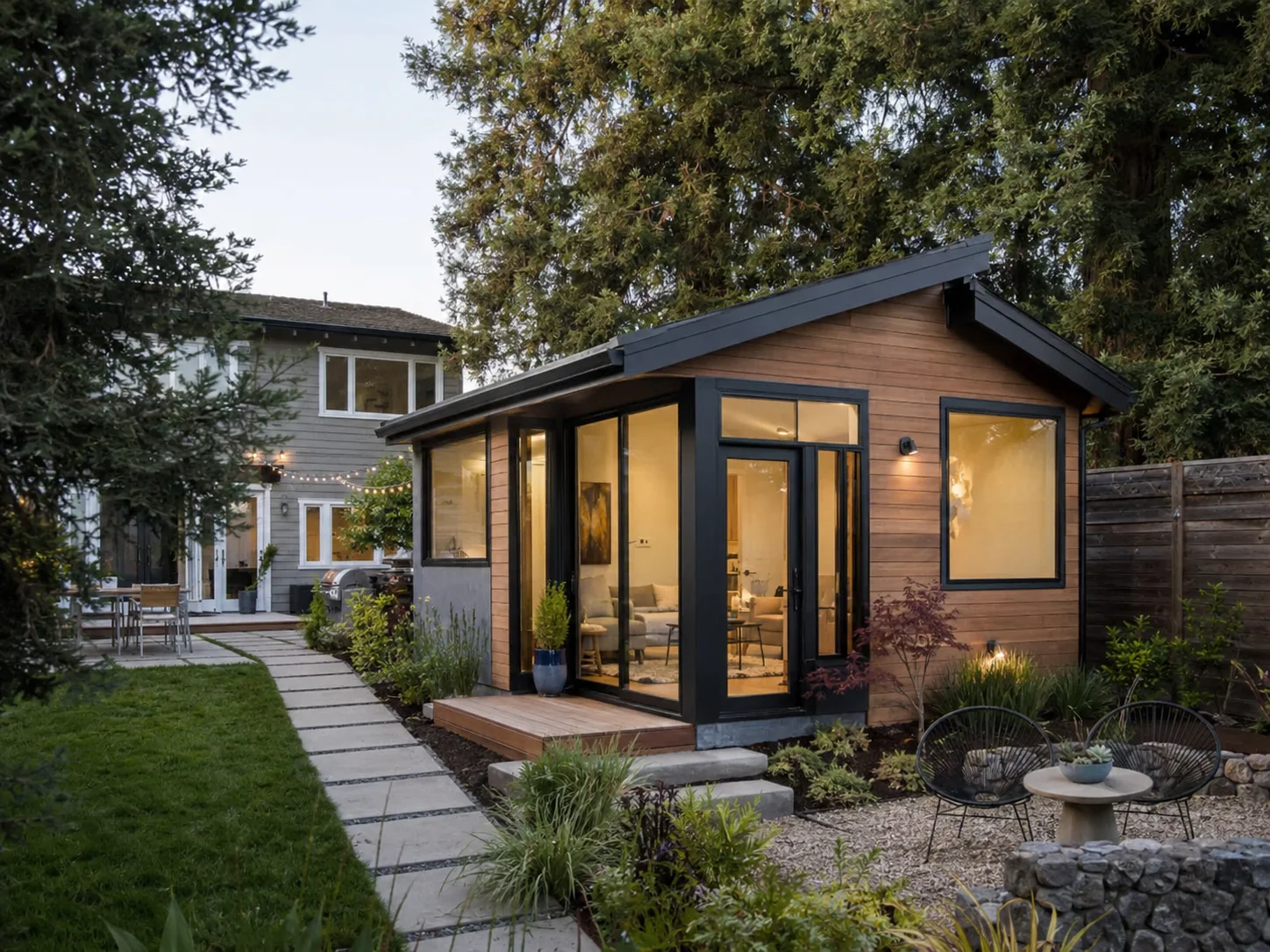
Boxabl Casita specs and price: what's actually verified
Boxabl's Casita review usually starts with one headline number: $60,000. That price is tied to the 361 sq. ft. Casita, which works out to about $166/sq. ft. on a unit-only basis. That's useful, but only if you keep it in context. A unit price tells you what the factory product costs. It does not tell you what it costs to get an ADU approved, delivered, set, connected, and signed off.
The retail unit price people keep quoting
The publicly stated Casita retail price is $60,000 for 361 sq. ft. This is the figure most buyers see first, and it is the source of much of the online attention around the product. What it does not mean is “your whole project is $60,000.” For ADUs, the unit is just one line item.
The technical spec set shows why site conditions matter
Boxabl's technical sample plan set includes example design criteria such as:
- Seismic Design Category: D
- Up to 100 psf ground snow rating
- Shipping example weight: 13,000 lbs
Those numbers show the unit is engineered, but they are not a shortcut around site-specific requirements. The plan set itself notes that design criteria are generic and that site criteria may vary. Your lot may require different foundation details, anchoring, access, or structural calculations depending on soil, slope, snow load, seismic zone, and local code interpretation.
Marketing specs are not the same as permit compliance
Boxabl's product page highlights features like 9'6" ceilings and 8-foot-tall windows and doors. Those are product features, not approval guarantees. For a homeowner, the useful questions are:
- Does this fit my zoning?
- Does this fit my setbacks?
- What foundation does my city require?
- What utility work is needed?
- What inspections are required before occupancy?
The real cost model: turn $60,000 into an all-in ADU budget
If you want a usable Boxabl Casita review, you need to separate unit price from project cost. That means budgeting in buckets.
| Cost bucket | What it covers |
|---|---|
| 1. Unit price | $60,000 — the factory-built Casita only |
| 2. Delivery and placement | Transport, rigging, crane if needed, staging |
| 3. Foundation and engineering | Site-specific foundation design, soils report, structural sign-off |
| 4. Utility hookups | Electric, water, sewer, gas, meter upgrades, trenching |
| 5. Permits, plan check, inspections | Pre-app, plan check corrections, fire, foundation, rough, final |
| 6. Soft costs and contingency | Survey, drafting, engineering, title, financing fees, buffer |
Cost bucket 3: foundation and engineering
This is where a lot of ADU budgets surprise homeowners. A factory-built unit still needs a compliant foundation and site-specific engineering. Common drivers include:
- Soil conditions
- Slope and drainage
- Seismic requirements
- Snow/wind exposure
- Setback constraints
- Local foundation design standards
Cost bucket 4: utilities
Utilities are one of the biggest swing factors in both cost and schedule. You may need work for:
- Electric service
- Water supply
- Sewer connection or septic
- Gas, if applicable
- Meter upgrades
- Trenching and conduit
- Easements or utility coordination
A unit can be “ready” while the site is still waiting on utility approvals or trenching.
The total cost surprised you — that's normal.
Most homeowners fund prefab ADU projects with a HELOC, cash-out refinance, or construction loan — not out of pocket. Each path has different rate behavior, draw structure, and tax treatment.
Compare ADU Financing Paths →Financing-path education; we don't quote rates as guarantees.
California ADU rules that matter for a detached Boxabl-style Casita
California is one of the most relevant states for Boxabl Casita buyers, because statewide ADU law can limit how much local governments can slow down qualifying detached ADUs. But “supportive state law” does not mean “automatic approval.”
The statewide guardrails
California Government Code ADU provisions include a pathway for a detached new-construction ADU with:
- Up to 800 sq. ft.
- Up to 4-foot side and rear setbacks for qualifying projects
The California HCD ADU Handbook, updated in March 2026, confirms that qualifying detached new-construction ADUs can use that statewide pathway — while also reminding readers that the conditions in the code still apply.
What that does and does not mean
It means local governments can't just invent extra barriers for qualifying projects. It does not mean:
- Every lot qualifies
- Every design fits
- Every utility setup is acceptable
- Every foundation detail will pass
- Every fire or access issue disappears
Jurisdiction-first checklist: what to check before you fall in love with the unit
The smartest Boxabl Casita review is really a workflow. Before you order anything, check the project in this order:
- Confirm your city or county allows a detached ADU on the lot
- Verify setbacks and height limits
- Check whether the project fits state ADU criteria
- Ask about fire access and equipment requirements
- Confirm utility service capacity and trenching needs
- Determine foundation and engineering sign-off requirements
- Ask what inspections happen before work is covered
- Review permit timing and plan-check corrections
- Get lender feedback before committing
Lot conditions can change the whole budget
A flat, open lot with short utility runs is a very different project from a sloped lot with retaining walls, long trenching, drainage work, or easement conflicts. If your site has slope, poor soils, drainage issues, retaining wall needs, tight access, or long utility runs, your “ADU budget” is really a site development budget with a Casita attached to it.
Utilities can be the hidden schedule killer
If you need service upgrades, trenching, or multiple utility approvals, your project may take much longer than expected. In many ADU projects, utility work is often a major bottleneck that pushes occupancy back. Always verify local utility requirements for your address.
Financing realism: can lenders treat a Casita like an ADU?
Financing often depends on how the finished project is legally classified. A factory-built unit that functions like an ADU may be treated differently from other property categories in underwriting, appraisal, or draw funding. Financing terms vary by lender and jurisdiction.
The classification problem
Lenders may consider different categories, such as ADU, manufactured housing, modular housing, or other property categories. That classification can affect how a lender evaluates the loan, the appraisal, and the documentation it asks for.
What to ask a lender before you order
- Will you finance this specific project at this address?
- How will you classify the finished unit?
- What permit documents do you need?
- What foundation or engineering documents will you require?
- Will you fund before or after installation milestones?
- How do you appraise factory-built detached ADUs?
If a lender cannot answer those questions clearly, that is a warning sign. A unit that is marketed as portable may still be treated differently depending on whether it is being installed as an ADU, attached to land, or categorized differently under local and lender rules.
Common misconceptions in a Boxabl Casita review
1) “$60,000 means my ADU will cost $60,000 installed”
No. That is the unit price, not the full project cost. Installed ADU cost usually includes site work, foundation, utilities, permits, and soft costs.
2) “If California allows ADUs, I’ll automatically get my permit”
No. California law can limit some local restrictions for qualifying ADUs, but local review, inspections, and site-specific requirements still apply.
3) “Factory-built means code risk is gone”
No. The factory product may be engineered, but your site still needs the right foundation, structural sign-off, and local compliance. Boxabl's technical sample set uses generic criteria and states that site criteria may vary.
4) “Portable means the lender will treat it the same everywhere”
No. Classification matters. A portable or factory-built unit may be underwritten differently depending on the finished legal setup.
5) “If Boxabl is approved in some states, my city will accept it automatically”
No. State-level progress is not a substitute for local permitting at your address. Local permit processes still apply regardless of manufacturer state rollout milestones.
Who a Boxabl Casita is best for
A Casita is most worth exploring if you have:
- A clear ADU pathway on your lot
- A city or county that already supports detached ADUs
- Manageable utility distances
- A straightforward foundation plan
- A lender who understands your project structure
- Enough budget for all the non-unit costs
Who should pause before ordering
You should slow down if your lot has:
- Unclear zoning
- Unusual setbacks
- Slope or retaining wall issues
- Uncertain utility capacity
- Access problems for delivery
- No lender clarity
- Fire or easement complications
These issues can turn a simple-looking unit into a slow and expensive site project.
Buyer checklist before you order
- Confirm the project is allowed on your lot
- Verify local setbacks, height, and site rules
- Check the California ADU framework if you're in California
- Ask for utility service and trenching requirements
- Get a foundation/engineering estimate
- Ask the permit office what inspections are required
- Talk to a lender about classification and appraisal
- Build a budget with contingency
- Do not order until the site path is clear
FAQ: Boxabl Casita review questions
What is the Boxabl Casita price?
Boxabl publicly lists the Casita at $60,000 for 361 sq. ft., or about $166/sq. ft. That is the unit price, not the installed ADU cost. Site work, foundation, delivery, utilities, permits, and soft costs are additional.
Is a Boxabl Casita legal as an ADU?
It can be, but legality depends on your jurisdiction, your lot, and whether the project meets local and state requirements. Zoning, setbacks, foundation design, utility hookups, and inspection requirements all apply at the local level regardless of the unit's factory origin.
Does California ADU law automatically approve detached ADUs?
No. California law can limit some local restrictions for qualifying projects, but local permitting, inspections, and building, fire, and equipment rules still apply. The California HCD ADU Handbook (March 2026) confirms that statewide pathways exist but that site-specific conditions still govern approval.
How long does a Boxabl Casita ADU take?
There is no universal timeline. Permitting, foundation work, and utility hookups are often the primary schedule drivers. Always verify timing with your local jurisdiction and utility provider before planning occupancy dates.
Can you finance a Boxabl Casita with a mortgage or HELOC?
Possibly, but lender treatment depends on how the finished permitted project is classified. Ask the lender how it will classify the unit for underwriting purposes. Legal classification affects underwriting, appraisal, and rentability.
What is included in the $60,000 Casita price?
The stated retail unit price covers the factory-built Casita unit. It does not include delivery and placement, foundation and engineering, utility hookups, permit fees, plan check, inspections, surveying, architectural or structural services, or contingency.
What foundation does the Casita need?
That depends on your site and local rules. Boxabl's technical plan set shows example criteria — Seismic Design Category D, up to 100 psf ground snow rating — but the plan set notes that site criteria may vary. Your property still needs site-specific engineering and local building-department approval.
Where should I check local ADU rules?
Start with your city or county planning department and building department. In California, also review the HCD ADU Handbook (updated March 2026) for the statewide baseline, then compare against your local ordinance and permit office guidance.
Download the Free ADU Starter Kit
Site evaluation checklist, permit prep guide, financing comparison, and contractor interview templates — before you call anyone.
Download the Free ADU Starter Kit →