
Best ADU Builders Sonoma County (2026): How to Find a Compliant, Jurisdiction-Ready Contractor
Bottom line up front.
If you are searching for the best ADU builders in Sonoma County in 2026, the most important thing to understand is this: Sonoma County is not a single permit jurisdiction. The unincorporated county is governed by Permit Sonoma (effective October 14, 2021 ordinance). But the incorporated cities — Santa Rosa, Petaluma, Rohnert Park, Healdsburg, Windsor, Cloverdale, Sebastopol, the City of Sonoma, and Cotati — each have their own planning departments, ADU ordinances, fee schedules, and permit processes. The right builder is the one with documented permit experience in your specific city or jurisdiction, an understanding of Sonoma County's fire-zone requirements, and a quote that clearly separates hard costs from site work from development fees.
No builder can guarantee permit approval or timelines. Regulations, fees, and review timelines vary by jurisdiction and change. Verify current information with Permit Sonoma or your city's planning department before signing a contract.
Source: The Dwelling Index independent research; Permit Sonoma ADU guidance; California HCD ADU resources. Last verified: June 12, 2026.
Free, about a minute, no commitment. Returns zoning class, buildable size, and preliminary fee eligibility for your address.
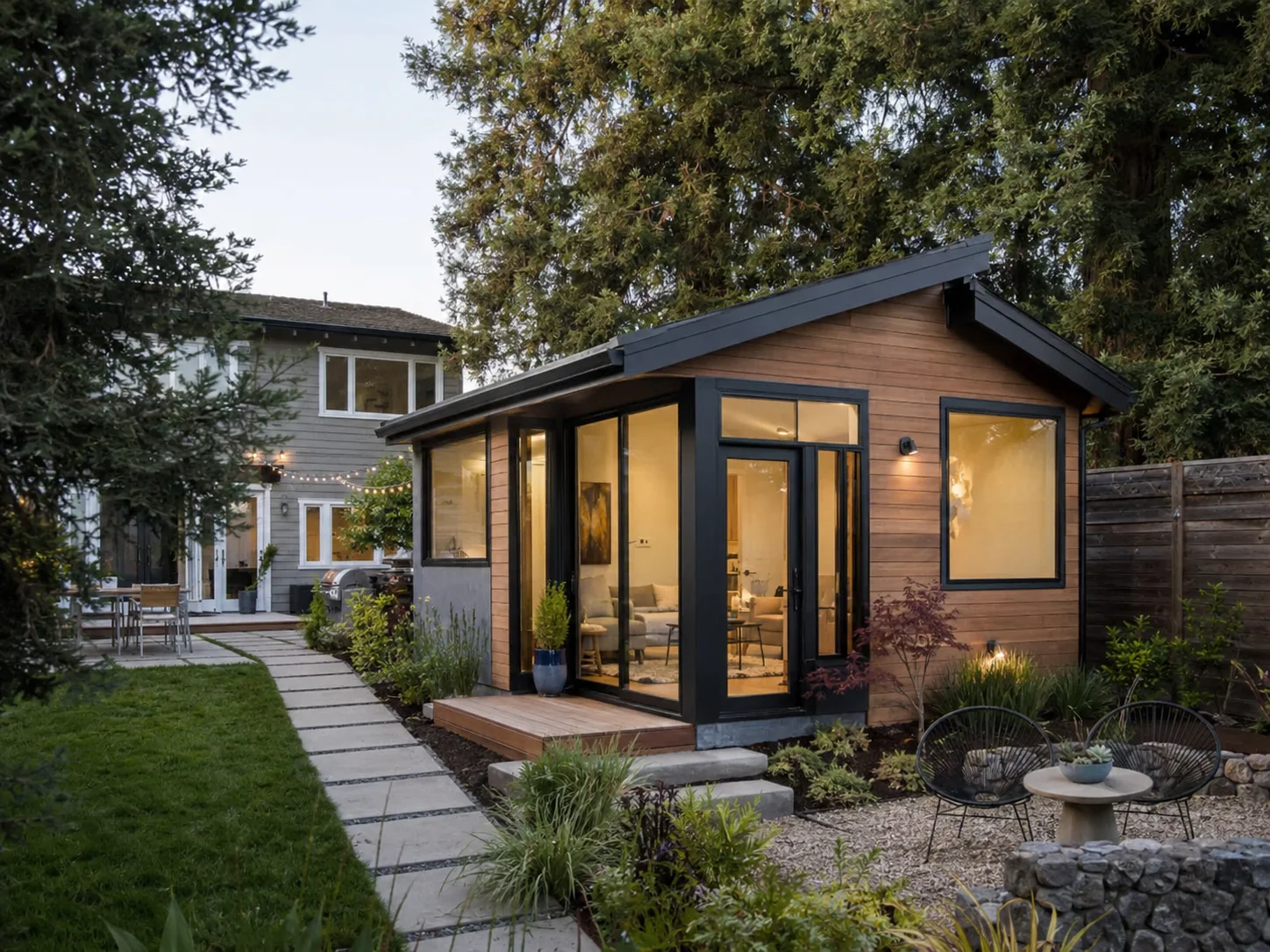
Sonoma County's multiple ADU permit jurisdictions
A builder claiming “Sonoma County experience” should be able to specify exactly which jurisdiction they have worked in. The county and its incorporated cities are separate permit environments:
| Jurisdiction | Permit authority |
|---|---|
| Unincorporated Sonoma County | Permit Sonoma (ordinance effective Oct 14, 2021) |
| City of Santa Rosa | City of Santa Rosa Planning and Economic Development |
| City of Petaluma | City of Petaluma Community Development |
| City of Rohnert Park | City of Rohnert Park Development Services |
| City of Healdsburg | City of Healdsburg Community Development |
| Town of Windsor | Town of Windsor Community Development |
| City of Cloverdale | City of Cloverdale Planning |
| City of Sebastopol | City of Sebastopol Community Development |
| City of Sonoma | City of Sonoma Community Development |
| City of Cotati | City of Cotati Planning |
Turnkey scope checklist: what every Sonoma County ADU quote must cover
Request that every Sonoma County ADU quote explicitly state whether each of the following is included or excluded:
- Design and engineering. Architectural plans, structural engineering, soils/geotechnical report (if applicable).
- Permit fees. City or county plan-check fees, building permit fees, state-mandated fees (SB2 housing fee, SMIP fee).
- Development impact fees. School fees, traffic impact fees, park fees — all vary by jurisdiction and ADU size.
- Utility connections. Water meter upgrade/expansion, sewer lateral, electrical panel capacity, gas line extension — each may require separate utility company work and fees.
- Site work. Grading, drainage improvements, driveway modification, erosion control.
- Fire-zone upgrades. If your parcel is in a Very High Fire Hazard Severity Zone (VHFHSZ), additional fire-resistant materials, ember-resistant venting, and landscaping compliance may be required.
- Septic evaluation and upgrade. For parcels served by a septic system, a capacity evaluation and possible system upgrade or expansion may be required before the ADU is permitted.
- Contingency. 10–15% for site-specific unknowns.
Budget in hand — now find the right financing path.
Most Sonoma County ADU projects are financed with a HELOC, cash-out refinance, or construction loan. Each has different rate behavior, draw timing, and tax treatment.
Compare ADU Financing Paths →Financing-path education; we don't quote rates as guarantees.
Fire zones and ADU construction in Sonoma County
A significant portion of unincorporated Sonoma County is designated as Very High Fire Hazard Severity Zone (VHFHSZ) or State Responsibility Area (SRA). ADU construction in these zones triggers additional requirements:
- California Wildland-Urban Interface (WUI) Code (Chapter 7A). Requires fire-resistant exterior materials — non-combustible or fire-rated roofing, siding, decking, and fascia — and ember-resistant venting throughout the structure.
- Defensible space compliance. Cal Fire defensible space requirements (100-foot zones around structures in SRA areas) must be met before a certificate of occupancy is issued.
- Setbacks from ridgelines and vegetation. Additional setback requirements may apply in high-fire areas that exceed standard zoning setbacks.
- Builder experience matters. WUI construction adds cost and complexity. Ask builders for specific experience building ADUs in Sonoma County fire zones — not just general WUI experience.
Verify your parcel's fire hazard designation using the CAL FIRE FHSZ viewer before engaging a builder, and ask every contractor for a specific cost estimate for WUI compliance if your parcel is in a high-fire area.
Eight questions to ask every Sonoma County ADU builder
- Which Sonoma County jurisdiction have you pulled ADU permits in? Ask for completed project addresses or permit numbers you can verify with the specific permit office.
- Is my parcel in unincorporated county or an incorporated city? A builder who cannot immediately tell you which permit office governs your parcel is not prepared for Sonoma County.
- Is my parcel in a fire hazard zone? If yes, what are the WUI code requirements and what is the estimated cost of compliance?
- Is my property served by septic? If yes, what is the septic evaluation process and how is a required upgrade handled in the contract?
- Are development impact fees included in your quote? Ask for a city-specific itemization.
- What is your payment schedule? Confirm compliance with California home improvement contract law (down payment cap of $1,000 or 10% of contract price, whichever is less).
- Who stamps the structural drawings? A licensed California engineer or architect must stamp structural plans.
- Can you provide three completed Sonoma County ADU references? Ask for permit numbers or project addresses you can verify.
Download the Free ADU Starter Kit
Site evaluation checklist, permit prep guide, financing comparison, and contractor interview templates — before you call anyone.
Download the Free ADU Starter Kit →Frequently asked questions
What is the difference between an ADU and a JADU in Sonoma County?
A JADU (Junior Accessory Dwelling Unit) in Sonoma County is a unit created entirely within the existing space of a single-family home, limited to 500 square feet, with its own exterior entrance and an interior connecting door to the primary dwelling. An ADU may be attached or detached, up to the applicable size maximum, and may be new construction or a conversion of existing accessory space. One ADU and one JADU may be built on any single-family lot under California law.
When did Sonoma County's current ADU and JADU ordinance become effective?
The Sonoma County ADU and JADU ordinance that brought the county into compliance with California ADU law became effective October 14, 2021. Permit Sonoma (the county's permitting authority) administers this ordinance for unincorporated county land. Incorporated cities within Sonoma County — Santa Rosa, Petaluma, Rohnert Park, Healdsburg, Windsor, Cloverdale, Sebastopol, Sonoma City, Cotati — each maintain their own ordinances and permit offices.
How do 2026 JADU rule changes affect Sonoma County ADU projects?
AB 1154 (effective January 1, 2025) modified California JADU law by allowing JADUs to be created from detached accessory structures (not only within the primary dwelling) in certain circumstances, and updated efficiency kitchen standards. If your ADU project involves a JADU and relies on rules about where a JADU may be located or what kitchen equipment is required, verify the current requirements with Permit Sonoma or your city's planning department, as the rules are actively being updated.
What size ADU can I build in unincorporated Sonoma County?
California law requires local jurisdictions to allow ADUs of at least 800 square feet if setback and height requirements can be met, regardless of lot size or existing dwelling size. For lots where setback and height requirements cannot be met by an 800-square-foot unit, a smaller unit may be required. The county ordinance and the California ADU law interact — if the county ordinance appears to be more restrictive than state law allows, verify with Permit Sonoma.
Does Sonoma County have wildfire or septic requirements that affect ADU permitting?
Yes. Unincorporated Sonoma County contains wildfire hazard areas that may require fire-resistant construction materials, vegetation management compliance, and additional defensible space measures for ADUs. Sites served by septic systems — common in rural and semi-rural areas — may require a septic system capacity evaluation and possible upgrade before an ADU can be permitted. Ask your builder specifically about fire-zone and septic requirements for your parcel.
How do I verify a Sonoma County ADU builder's license?
Go to cslb.ca.gov and search by license number or business name. Confirm the license is active, the classification covers your project (Class B for most ADUs), workers' compensation is current, the bond is active, and no unresolved complaints are on file. For Sonoma County projects, also ask whether the builder has current familiarity with Permit Sonoma's submittal requirements and any city-specific requirements if your project is within an incorporated city.
Editorial independence: The Dwelling Index does not accept payment for builder placement. No builder mentioned in this guide has paid for inclusion, ranking, or editorial coverage. All guidance is based on independent research. Regulations change; verify all information with Permit Sonoma or your city's planning department before signing a contract.