
Best ADU Builders Santa Cruz County (2026): Jurisdiction Match, Fee Estimator, and Permit Transparency
Bottom line up front.
If you are searching for the best ADU builders in Santa Cruz County in 2026, the primary qualifier is jurisdiction match. Santa Cruz County contains four incorporated cities — the City of Santa Cruz, Watsonville, Capitola, and Scotts Valley — each with its own planning department and ADU rules, plus unincorporated county land governed by the Santa Cruz County Planning Department. A builder with strong City of Santa Cruz experience may have no familiarity with the county's unincorporated permit process, and vice versa. The right builder knows your jurisdiction, can use the county's published ADU fee estimator to give you a realistic cost picture, and has a track record of completed permitted ADUs in your specific area.
No builder can guarantee permit approval or timelines. Regulations and fees vary by jurisdiction and change. Verify current requirements with the applicable planning department before signing a contract.
Source: The Dwelling Index independent research; Santa Cruz County Planning Department; California HCD ADU resources. Last verified: June 12, 2026.
Free, about a minute, no commitment. Returns zoning class, buildable size, and preliminary fee eligibility for your address.
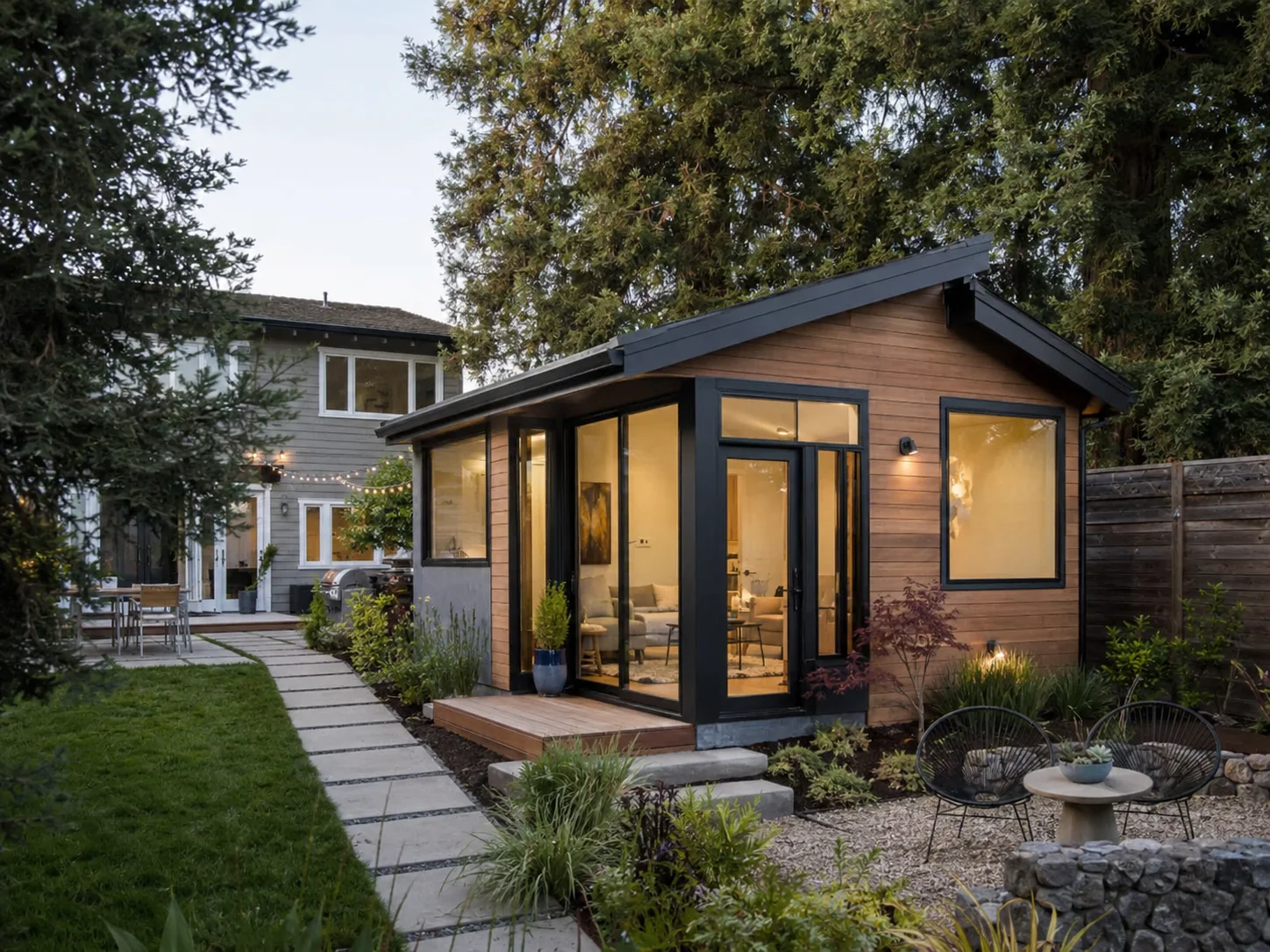
Santa Cruz County's four cities and the unincorporated county
| Jurisdiction | ADU permit note |
|---|---|
| Unincorporated Santa Cruz County | Santa Cruz County Planning Dept; publishes ADU fee estimator; septic evaluation for OWTS parcels |
| City of Santa Cruz | Separate planning dept; 2025 ADU condo-mapping pathway introduced |
| City of Watsonville | Separate planning and building depts; distinct fee schedule |
| City of Capitola | Separate planning dept; smaller city with distinct permit environment |
| City of Scotts Valley | Separate planning dept; hillside terrain common; verify grading requirements |
Using Santa Cruz County's ADU fee estimator
The Santa Cruz County Planning Department publishes an ADU fee estimator for unincorporated county parcels. Published illustrative estimates (planning purposes only, not guaranteed totals) have included:
- ~$25,000 for a 750 square foot new construction ADU
- ~$5,000 for a 640 square foot garage conversion ADU
These are county-published estimates for planning purposes. Actual fees depend on:
- Current fee schedule (fees are updated periodically)
- ADU type, size, and construction method
- Site-specific conditions — septic, grading, utilities
- State-mandated fees (SB2 housing fee, SMIP seismic fee)
- School fees (separate from planning and building fees)
Use the county estimator as a starting point for budgeting, not a guaranteed total. Ask your builder to produce a complete line-item fee estimate using the current fee schedule for your specific city or county jurisdiction.
Budget in hand — now find the right financing path.
Most Santa Cruz County ADU projects are financed with a HELOC, cash-out refinance, or construction loan. Each has different rate behavior, draw timing, and tax treatment.
Compare ADU Financing Paths →Financing-path education; we don't quote rates as guarantees.
Seven questions to ask every Santa Cruz County ADU builder
- Which Santa Cruz County jurisdiction have you permitted ADUs in? Ask for permit numbers from the specific county or city permit office.
- Is my parcel in unincorporated county or an incorporated city? A builder who cannot tell you this cannot correctly identify your permit pathway.
- Is my parcel served by public sewer or septic? If septic, what is the evaluation process and what happens if the system needs an upgrade?
- Can you provide a complete line-item fee estimate? Including county or city permit fees, school fees, utility connection fees, and any development impact fees.
- Are you familiar with the HelloADU program? If you are unsure about feasibility, HelloADU can be a useful resource before engaging a paid contractor.
- What is your CSLB license number? Verify at cslb.ca.gov — active license, correct classification, current workers' comp and bond.
- Can you provide three verified completed Santa Cruz County ADU references? Ask for permit numbers you can look up with the applicable permit office.
Download the Free ADU Starter Kit
Site evaluation checklist, permit prep guide, financing comparison, and contractor interview templates — before you call anyone.
Download the Free ADU Starter Kit →Frequently asked questions
Is there one set of ADU rules for all of Santa Cruz County?
No. Santa Cruz County contains four incorporated cities — Santa Cruz, Watsonville, Capitola, and Scotts Valley — each with its own planning department, ADU ordinance, and permit process. The unincorporated county is governed by the Santa Cruz County Planning Department. ADU rules, fee schedules, and development impact fees differ between the county and each city. Always confirm which jurisdiction your parcel falls under before engaging a builder.
What is the Santa Cruz County ADU fee estimator?
The Santa Cruz County Planning Department publishes an ADU fee estimator tool on its website that provides estimates of county planning and building fees for unincorporated county ADU projects based on ADU type and size. Illustrative estimates for qualifying projects have included approximately $25,000 for a 750 square foot new construction ADU and approximately $5,000 for a 640 square foot garage conversion — though these are county estimates for planning purposes only, not guaranteed totals. Actual fees depend on current fee schedules, project specifics, and any additional utility or development fees. Verify current fee estimates directly with the Santa Cruz County Planning Department.
Can ADUs be sold separately from the primary home in the City of Santa Cruz?
A 2025 update to the City of Santa Cruz's code introduced a pathway for ADU condominium mapping — allowing ADUs to be sold separately from the primary dwelling as a condominium unit. This is distinct from a standard fee-simple sale. Conditions, HOA requirements, and title procedures apply. If separate-sale capability is part of your ADU financial model, verify the current requirements with the City of Santa Cruz's Community Development Department before committing to a design or financing structure.
What is HelloADU and how does it help Santa Cruz County homeowners?
HelloADU is a technical assistance resource operated in partnership with local housing agencies to help Santa Cruz County homeowners navigate the ADU development process. HelloADU provides guidance on feasibility, permit pathways, financing options, and contractor selection. It is not a builder and does not perform construction. If you are unsure about the permit pathway for your parcel or ADU type, HelloADU is a starting point for information.
Does Santa Cruz County have septic-related ADU permit requirements?
Yes. Unincorporated Santa Cruz County parcels served by on-site wastewater treatment systems (septic) require a septic system capacity evaluation before an ADU permit is issued. The Santa Cruz County Environmental Health Department reviews septic capacity as part of the permit process. If the existing system does not have capacity for the additional dwelling unit, a system upgrade may be required. This is a significant variable for rural and semi-rural parcels not served by public sewer.
How do I verify a Santa Cruz County ADU builder's CSLB license?
Go to cslb.ca.gov and search by license number or business name. Confirm the license is active, the classification covers your project type (Class B for most ADUs), workers' compensation is current, the bond is active, and no unresolved complaints are on file. For Santa Cruz County, also confirm the builder has specific permit experience in your jurisdiction — city or unincorporated county — not just the general Central Coast or Bay Area.
Editorial independence: The Dwelling Index does not accept payment for builder placement. No builder mentioned in this guide has paid for inclusion, ranking, or editorial coverage. All guidance is based on independent research. Regulations change; verify all information with the Santa Cruz County Planning Department or your city's planning department before signing a contract.