
Best ADU Builders Monterey County: How to Short-List the Right Contractor for Coastal vs Inland Permits in 2026
Bottom line up front.
If you're searching for the best ADU builders Monterey County has to offer in 2026, the first thing to understand is that Monterey County is not a single permit environment. Properties in the Coastal Zone — from Pacific Grove and Pebble Beach to coastal Carmel — face a different regulatory path than inland properties in areas like Salinas, King City, or Greenfield. The right builder is the one who understands the specific permit environment for your address, can explain the permit path clearly, gives you a quote that separates all the real cost drivers, and has experience getting ADU permits approved specifically in your jurisdiction.
No builder can guarantee permit approval or specific timelines. Regulations, fees, and timelines vary by jurisdiction and can change. Always verify current rules with Monterey County planning and building departments before signing a contract.
Source: The Dwelling Index independent research; Monterey County planning resources; California HCD ADU Handbook (March 2026). Last verified: June 12, 2026.
Free, about a minute, no commitment. Returns zoning class, buildable size, and preliminary fee eligibility for your address.
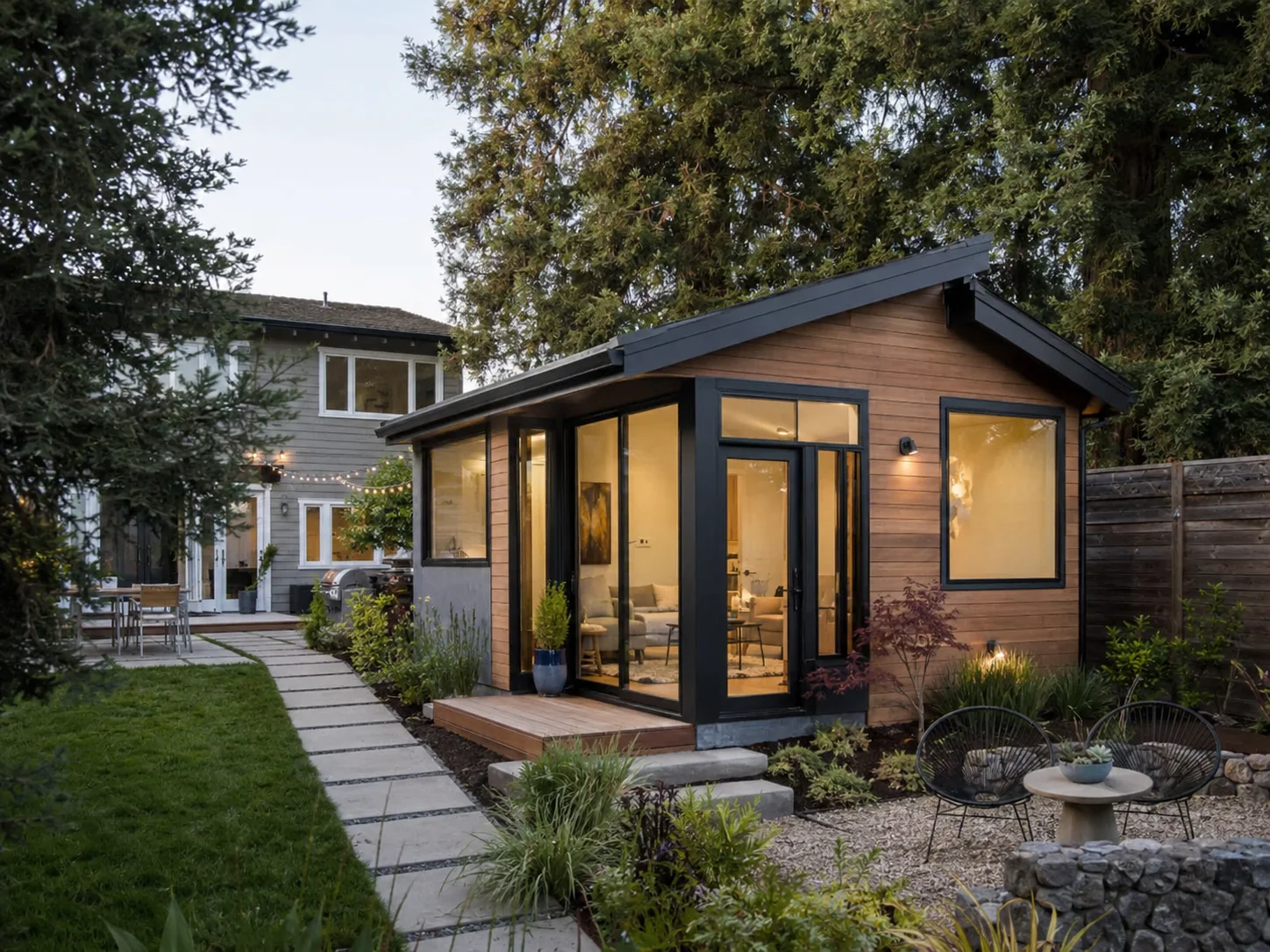
Coastal vs inland: why it matters for finding the right builder
Monterey County's geography creates two meaningfully different ADU permit environments. Properties within California's Coastal Zone are subject to the county's Local Coastal Program and may require a Coastal Administrative Permit in addition to standard building permits. Properties outside the Coastal Zone follow the standard Monterey County building permit process.
That distinction matters when you're evaluating builders, because:
- Coastal Zone projects typically require additional review steps and documentation
- A builder without Coastal Zone experience may not know how to structure the application
- Review timelines in the Coastal Zone can differ from standard inland permit timelines
- Design standards and site constraints may be more detailed for coastal properties
How to tell which environment applies to your property
The best starting point is to check your parcel's Coastal Zone status using the California Coastal Commission's mapping resources and Monterey County's planning department. If your property falls in the Coastal Zone, ask any builder candidate specifically about their Coastal Zone ADU project experience before you spend time comparing their bid.
How The Dwelling Index judges “best” for Monterey County
The Dwelling Index is an independent research resource covering ADU financing, costs, and regulations. For Monterey County, “best” should mean: permit-path fluent, quote-transparent, lot-aware, and jurisdiction-specific. The builder who looks best in a gallery may not be the one who can navigate your address.
The Dwelling Index Monterey County ADU builder scorecard
| Criterion (max points) | What to look for |
|---|---|
| Coastal Zone experience (0–4) | Named completed ADU projects in the Coastal Zone, if applicable to your property |
| Inland permit fluency (0–4) | Named projects in your specific Monterey County jurisdiction |
| Quote transparency (0–4) | Site work, foundation, utilities, permits, and soft costs broken out separately |
| Lot-specific judgment (0–4) | Builder asks about your lot before quoting |
| Pre-approved plan knowledge (0–2) | Knows whether your project could use county pre-approved ADU plans |
| Financing fluency (0–2) | Can describe lender documentation needs for your project type |
Monterey County ADU rules that affect which builder is right for you
Monterey County's ADU process is shaped by both California state law and the county's own planning and building requirements. The right builder needs to understand both layers.
1) Coastal Zone properties: additional review applies
Properties in Monterey County's Coastal Zone typically require review under the county's Local Coastal Program. Depending on the project, a Coastal Administrative Permit may be required before or alongside the standard building permit. Ask any builder candidate to explain exactly how they have handled Coastal Zone ADU projects before.
2) Pre-approved ADU floor plans may be available
Monterey County may offer pre-approved ADU floor plan options that can streamline some aspects of design review. However, “pre-approved” does not mean “automatically approved” for your site. You still need a site-specific plan showing the ADU placement and site conditions. Always verify which pre-approved plan options are currently available and whether your lot qualifies.
3) California ADU state law baseline
California's statewide ADU law provides a baseline for qualifying detached new-construction ADUs, including provisions for up to 800 sq. ft. and certain setback rules. The California HCD ADU Handbook (March 2026) documents the current state framework. Monterey County applies these rules alongside its own local standards.
4) Your lot decides a lot
Even good builders can't make every lot simple. These factors can significantly change the project scope:
- Coastal Zone status
- Slope, drainage, and soil conditions
- Utility distance and capacity
- Access for construction and delivery
- Setbacks and lot coverage rules
- Fire access requirements
- Neighborhood-specific zoning constraints
Practical vetting rubric for Monterey County homeowners
Use this process to shortlist builders intelligently before you get attached to a quote.
Ask for these five things before you evaluate any quote
- A written scope of work — what's included, what's excluded, what site prep is assumed
- A permit-path explanation — standard county permit, Coastal Zone review, or both, and why
- A cost breakdown — design/engineering, plan check/permits, site work, foundation, utilities, construction, contingency
- A realistic schedule — design, submittal, review, revisions, permit issuance, construction, inspections
- Named completed ADU projects in your jurisdiction — not general Bay Area or Central Coast references
First-call questions to ask any Monterey County ADU builder
- “Have you completed a permitted ADU in my jurisdiction?”
- “Does my property fall in the Coastal Zone, and does that affect the permit path?”
- “Which ADU path are you planning: state pathway or local ordinance?”
- “Would my project fit a pre-approved floor plan?”
- “Can you break your quote into design, permits, site work, utilities, and construction?”
- “What fee schedule date are you using for permit cost estimates?”
- “What usually causes redesigns or delays on Monterey County ADU projects?”
Red flags to watch for
Guarantees permit approval or specific timelines
Claims experience without naming Monterey County projects
Quotes a price before asking about your lot or Coastal Zone status
Can't explain the difference between Coastal Zone and standard permit paths
Won't provide a line-item cost breakdown
Says pre-approved plans eliminate all permit review
Prefab vs custom: what changes in Monterey County
Prefab ADUs can reduce some on-site construction time, but they don't eliminate site costs or permit requirements — especially in Monterey County where Coastal Zone properties face additional review.
Prefab tends to fit better when:
- The site is relatively flat with short utility runs
- Access for delivery and crane is straightforward
- The project is outside the Coastal Zone
- The design can match a standard or pre-approved footprint
Custom tends to fit better when:
- The lot has slope, soil issues, or tight access
- The property is in the Coastal Zone with specific design standards
- The site requires retaining walls, drainage work, or unusual utility routing
- Local review standards require specific documentation not provided by the manufacturer
In either case, always compare the all-in installed cost, not just the unit price or base construction bid. Site work, utilities, foundation, permits, and soft costs are often larger budget items than the structure itself.
Budget clarity starts before you call a builder.
Most Monterey County ADU projects are financed through a HELOC, cash-out refi, or construction loan. Learn the differences before talking to a contractor.
Compare ADU Financing Paths →Financing-path education; we don't quote rates as guarantees.
Best Monterey County ADU builder by project type
Detached new-construction ADU
Look for builders who can site the unit within Monterey County setbacks and height rules, manage utility routing, coordinate Coastal Zone review if applicable, and have documented ADU permits in your city or unincorporated area.
Garage or accessory structure conversion
Look for builders experienced with existing structure code compliance, fire and egress requirements, and how Monterey County treats conversion projects differently from new construction.
Junior ADU (JADU)
Look for builders who understand JADU-specific size limits, interior access requirements, and owner-occupancy rules under California state law and local implementation.
Coastal Zone ADU
Look for builders with named completed projects in the Monterey County Coastal Zone, who understand both the Local Coastal Program requirements and the state ADU law baseline.
What to request before signing any Monterey County ADU contract
Minimum documents before signing
- Written scope of work with inclusions and exclusions
- Permit path explanation (Coastal Zone or standard, and why)
- Itemized cost breakdown by category
- Payment schedule and milestones
- Timeline assumptions with named phases
- Site prep, utility, and access assumptions
- Change-order policy
- Warranty and insurance information
A good Monterey County ADU contract should answer:
- Who manages Coastal Zone review if applicable?
- What happens if the county or Coastal Commission requests revisions?
- Who pays for redesign?
- Who handles utility coordination?
- Are permit fees included, estimated, or excluded?
- What if site conditions are different than assumed?
FAQ: Best ADU builders in Monterey County
Is the best ADU builder the same for every Monterey County neighborhood?
No. Coastal properties may require a Coastal Administrative Permit on top of standard building permits, which means the right builder for a Pebble Beach or Pacific Grove project may not be the right one for an inland Salinas or King City project. Local experience with your specific jurisdiction matters more than general experience.
How do I know if my property needs a Coastal Administrative Permit?
Monterey County's Local Coastal Program and the California Coastal Commission's mapping tools can help you determine whether your property is in the Coastal Zone. If it is, additional coastal review is typically required. Ask your builder whether they have experience with Coastal Zone projects in Monterey County specifically.
Can I use pre-approved detached ADU floor plans in Monterey County?
Monterey County may offer pre-approved ADU floor plans that can streamline some parts of the design review process. But even with a pre-approved plan, you still need a site-specific submittal showing where the ADU goes on your property, and site-specific conditions still apply. Always verify current plan availability with the county.
What is the biggest reason ADU projects get delayed in Monterey County?
Incomplete permit submittals, unexpected site conditions, utility coordination delays, and Coastal Zone review requirements are among the most common causes. A builder with genuine Monterey County experience should be able to identify these risks early and structure the project to reduce them.
Do the 2026 ADU law changes matter for my project?
California ADU law has been updated multiple times. As of the California HCD ADU Handbook (March 2026), qualifying detached new-construction ADUs can use a statewide pathway with up to 800 sq. ft. and certain side/rear setback rules. Check the current HCD resources and your local jurisdiction for how those rules apply to your property.
Should I hire a designer first or a builder first in Monterey County?
It depends on the project complexity. For a standard detached ADU on a clear lot, a design-build contractor may handle both. For a complex lot, Coastal Zone property, or unusual design requirements, bringing in an architect or designer early can prevent expensive revisions later.
Will a prefab or modular ADU automatically be easier to permit in Monterey County?
Not necessarily. Monterey County's permit requirements apply regardless of whether the unit is site-built or factory-built. A prefab unit still needs site-specific engineering, foundation design, utility hookups, and permit approval. In the Coastal Zone, additional review applies regardless of construction method.
Download the Free ADU Starter Kit
Site evaluation checklist, permit prep guide, financing comparison, and contractor interview templates — before you call anyone.
Download the Free ADU Starter Kit →