
Best ADU Builders King County (2026): How to Choose for Unincorporated County and City Jurisdictions
Bottom line up front.
If you are searching for the best ADU builders in King County in 2026, the most important qualifier is jurisdiction match. King County contains over 30 incorporated cities — including Seattle, Bellevue, Redmond, Kirkland, Renton, Kent, Auburn, Shoreline, and others — plus unincorporated King County governed by the King County Department of Local Services. Each is a separate permit jurisdiction with its own process, fees, and ADU standards. The right builder is the one who understands your specific jurisdiction, knows King County's Notice on Title recording requirement (for unincorporated parcels), can navigate the septic evaluation process if your parcel is not on public sewer, and gives you a complete itemized quote before work begins.
No builder can guarantee permit approval or timelines. King County permit fees increased approximately 14% effective January 1, 2026. Verify current fees and requirements with the applicable permit office before signing a contract.
Source: The Dwelling Index independent research; King County Department of Local Services; Washington State Department of Commerce ADU resources. Last verified: June 12, 2026.
Free, about a minute, no commitment. Returns zoning class, buildable size, and preliminary fee eligibility for your address.
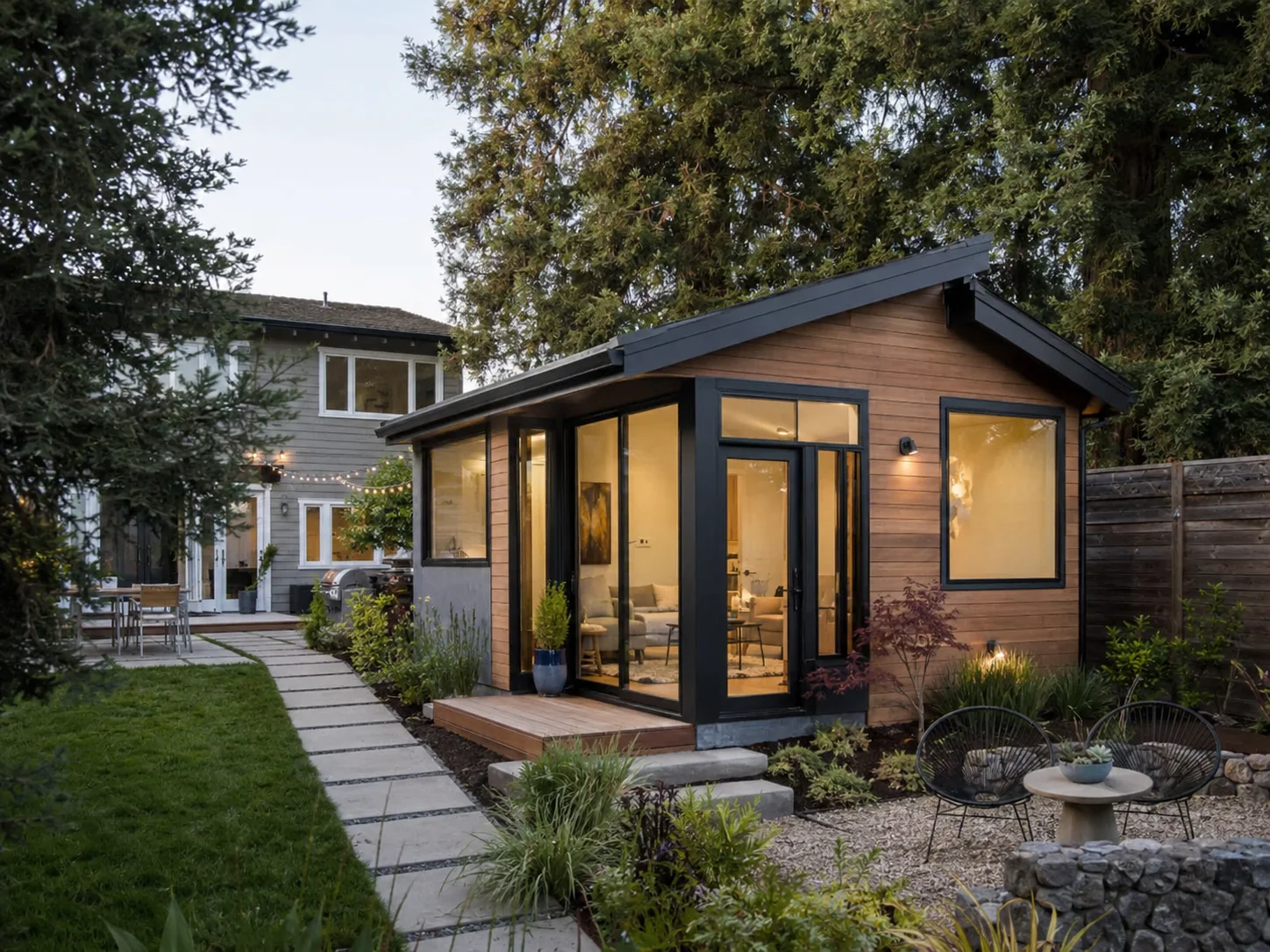
Unincorporated King County vs. incorporated cities: two different permit environments
Before engaging any builder, confirm which jurisdiction your parcel falls under. The rules, fees, and process are meaningfully different:
| Jurisdiction type | Key ADU considerations |
|---|---|
| Unincorporated King County | Governed by Title 21A; Notice on Title recording required; one ADU per lot; permit fees up ~14% in 2026; septic evaluation required for OWTS parcels |
| City of Seattle | Separate permit office (SDCI); allows up to two ADUs per lot; pre-approved DADU plan program available |
| City of Bellevue | Separate permit office; own ADU standards and fee schedule |
| City of Redmond | Separate permit office; active tech-corridor ADU market |
| City of Kirkland | Separate permit office; own ADU standards |
| Other incorporated cities | Each has own permit office, fees, and ADU code; verify with the specific city |
Notice on Title: the unincorporated King County ADU requirement builders often miss
Unincorporated King County requires that a Notice on Title be recorded with the King County Recorder as a condition of ADU permitting. The notice:
- Discloses the existence of the ADU and its regulatory conditions to future purchasers and title searchers.
- Must be recorded before the building permit is issued — not after construction.
- Typically includes a statement of any owner-occupancy conditions applicable to the ADU.
- Is a permanent encumbrance on title and will appear in title searches.
Builders unfamiliar with unincorporated King County may not know this step exists, causing avoidable permit delays. Ask every prospective builder how they handle the Notice on Title recording step before engaging them.
Budget in hand — now find the right financing path.
Most King County ADU projects are financed with a HELOC, cash-out refinance, or construction loan. Each has different rate behavior, draw timing, and tax treatment.
Compare ADU Financing Paths →Financing-path education; we don't quote rates as guarantees.
Septic system evaluation for King County ADUs
Unincorporated King County parcels not served by public sewer require a septic system (on-site sewage system) evaluation before an ADU permit is issued. Key facts:
- System capacity review. The Seattle-King County Department of Public Health reviews whether the existing system has capacity for the additional dwelling unit.
- Potential upgrade requirement. If the system does not have sufficient capacity, an upgrade or expansion is required before permitting proceeds. System upgrades can cost $15,000–$40,000+ depending on system type and site conditions.
- Timeline impact. Septic evaluation and any required upgrade adds time to the permit process — sometimes months.
- Builder awareness. Ask builders upfront whether your parcel is served by public sewer or septic, and what their experience is with King County's septic evaluation process.
Seven questions to ask every King County ADU builder
- Which King County jurisdiction have you permitted ADUs in? Ask for permit numbers from unincorporated county or specific incorporated cities.
- Do you know the Notice on Title recording requirement? If building in unincorporated county, can they walk you through the recording process?
- Is my parcel on public sewer or septic? If septic, how do they handle the Public Health evaluation and what happens if an upgrade is required?
- Have King County permit fees changed recently? Confirm the builder is quoting current 2026 fee levels.
- Does your quote include all utility connection costs? Water, sewer or septic, electrical panel upgrade, trenching — ask for explicit line items.
- What is your Washington contractor registration number? Verify at lni.wa.gov.
- Can you provide verified references for King County ADU projects? Ask for permit numbers you can look up in the county or city permit portal.
Download the Free ADU Starter Kit
Site evaluation checklist, permit prep guide, financing comparison, and contractor interview templates — before you call anyone.
Download the Free ADU Starter Kit →Frequently asked questions
What is the Notice on Title requirement for unincorporated King County ADUs?
Unincorporated King County requires that property owners record a Notice on Title affidavit with the King County Recorder before a building permit for an ADU is issued. The notice discloses the ADU and its owner-occupancy conditions (if any) to future purchasers. Builders unfamiliar with this requirement can delay the permit process. Confirm with King County's Department of Local Services (Permitting) whether the Notice on Title requirement applies to your parcel and ADU type.
How many ADUs are allowed on one lot in unincorporated King County?
Unincorporated King County generally allows one ADU per single-family lot under Title 21A of the King County Code. Verify current allowances with King County's Department of Local Services, as Washington state law and local ordinance updates may affect this number.
Did King County permit fees increase in 2026?
King County implemented a permit fee increase of approximately 14% effective January 1, 2026, affecting building permits including ADU permits in unincorporated King County. Fee schedules for incorporated cities within King County — including Seattle, Bellevue, Redmond, Kirkland, and others — are set independently by each city and are not affected by county fee changes.
What happens if my King County ADU project is on a septic system?
Parcels in unincorporated King County served by on-site sewage systems (septic) require a septic system capacity evaluation before an ADU permit is issued. King County's Department of Local Services works with the Seattle-King County Department of Public Health on septic system reviews. If the existing system does not have capacity for the additional dwelling unit, a system upgrade or expansion may be required — a significant additional cost. Confirm whether your parcel is on septic and what the evaluation process entails before budgeting.
Do ADU rules in incorporated King County cities differ from unincorporated King County?
Yes, significantly. Seattle, Bellevue, Kirkland, Redmond, Renton, Bellevue, Auburn, and the other cities within King County each have their own planning departments, ADU ordinances, permit processes, and fee schedules. The rules for unincorporated King County (governed by the county) are separate from the rules for any incorporated city. A builder experienced only in the city of Seattle has no guaranteed familiarity with unincorporated King County processes, and vice versa.
How do I verify a King County ADU builder's Washington contractor registration?
Verify contractor registration at lni.wa.gov by searching the business name or contractor registration number. Confirm the registration is active, the bond is current, and workers' compensation coverage is in place. Also ask for a current certificate of general liability insurance. For King County projects, also confirm the builder has completed ADU permits in your specific jurisdiction — unincorporated county, or your specific incorporated city.
Editorial independence: The Dwelling Index does not accept payment for builder placement. No builder mentioned in this guide has paid for inclusion, ranking, or editorial coverage. All guidance is based on independent research. Regulations change; verify all information with King County Department of Local Services or your city's permit office before signing a contract.