
Best ADU Builders Alameda County (2026): How to Choose by Jurisdiction, ADU Type, and 2026 Compliance
Bottom line up front.
If you are searching for the best ADU builders in Alameda County in 2026, the most important qualifier is jurisdiction match. Alameda County contains 14 incorporated cities — Oakland, Berkeley, Fremont, Hayward, San Leandro, Alameda, Albany, Emeryville, Livermore, Pleasanton, Dublin, Union City, Newark, and Piedmont — plus unincorporated county land governed by the Alameda County Planning Department (which updated its ADU ordinance in January 2026). Each is a separate permit environment. A builder experienced in Oakland will not necessarily know Berkeley's design review requirements or Fremont's fee structure. The right builder has completed ADU permits in your specific city, knows the 2026 current-code standards, and gives you a quote broken down by cost category.
No builder can guarantee permit approval or timelines. Alameda County cities each set their own review timelines. Verify current information with the applicable planning and building department before signing a contract.
Source: The Dwelling Index independent research; Alameda County Planning Department; California HCD ADU resources. Last verified: June 12, 2026.
Free, about a minute, no commitment. Returns zoning class, buildable size, and preliminary fee eligibility for your address.
Alameda County's 14 cities and the unincorporated county
Key jurisdictions and distinguishing ADU considerations:
| Jurisdiction | ADU permit note |
|---|---|
| City of Oakland | Active ADU market; separate permit office; historically faster ADU review for qualifying projects |
| City of Berkeley | More detailed design standards; separate historic preservation considerations in some areas |
| City of Fremont | Separate permit office; higher school and development impact fees in some zones |
| City of Alameda | Island city; separate planning and building depts; 6-ft structural separation requirement for detached ADUs |
| City of Hayward | Separate permit office; distinct fee schedule |
| Unincorporated Alameda County | January 2026 updated ordinance; separate process from all incorporated cities |
ADU types and which builder experience matters for each
Alameda County cities allow all California ADU types, but each type has different complexity levels and builder qualification requirements:
| ADU type | Key builder qualification to ask about |
|---|---|
| Detached new construction | Structural engineering, foundation type for your soil, site work experience |
| Attached ADU | Shared wall and structural connection experience; fire-wall and separation requirements |
| Garage conversion (ADU) | Waterproofing, heating and cooling systems, egress window installation, foundation conditions |
| Interior conversion (attached) | Existing electrical/plumbing capacity, egress compliance, insulation and energy code |
| JADU (Junior ADU) | JADU-specific code knowledge; efficiency kitchen vs. full kitchen; deed restriction recording |
Budget in hand — now find the right financing path.
Most Alameda County ADU projects are financed with a HELOC, cash-out refinance, or construction loan. Each has different rate behavior, draw timing, and tax treatment.
Compare ADU Financing Paths →Financing-path education; we don't quote rates as guarantees.
HelloADU: a pre-contractor resource for Alameda County homeowners
HelloADU provides free technical assistance to homeowners in participating Alameda County jurisdictions, helping them understand ADU feasibility before engaging a paid contractor. HelloADU can help with:
- Preliminary feasibility analysis for your specific parcel
- Explanation of the permit pathway for your city or the unincorporated county
- Overview of available ADU types and size constraints
- Information on financing pathways and assistance programs
- Guidance on what to look for when selecting a contractor
HelloADU is a resource, not a builder. It does not perform design, permitting, or construction. Using HelloADU before engaging a contractor can help you ask better questions and evaluate quotes more accurately.
Seven questions to ask every Alameda County ADU builder
- Which Alameda County city have you permitted ADUs in? Ask for permit numbers from your specific city.
- Are you current on the January 2026 unincorporated Alameda County ordinance? (If applicable.) What changed and how does it affect your project?
- What ADU types have you built in my city? Experience with detached new construction does not guarantee expertise in garage conversions or JADUs.
- What are the development impact fees for my city and ADU size? Ask for a city-specific, size-specific itemization.
- Does your quote include all utility costs? Water, sewer, electrical panel — get explicit line items.
- What is your CSLB license number? Verify at cslb.ca.gov.
- Can you provide three verified completed Alameda County ADU references? Ask for permit numbers in your specific city.
Download the Free ADU Starter Kit
Site evaluation checklist, permit prep guide, financing comparison, and contractor interview templates — before you call anyone.
Download the Free ADU Starter Kit →Frequently asked questions
Is there one best ADU builder for all of Alameda County?
No. Alameda County contains 14 incorporated cities — including Oakland, Berkeley, Fremont, Hayward, San Leandro, Alameda, Albany, Emeryville, Livermore, Pleasanton, Dublin, Union City, Newark, and Piedmont — plus unincorporated Alameda County governed by the county Planning Department. Each has its own permit office, ADU ordinance, design standards, and fee schedule. The right builder is the one with documented ADU permit experience in your specific city.
What is the minimum separation for a detached ADU from other structures in the City of Alameda?
The City of Alameda requires a minimum 6-foot separation between a detached ADU and other structures on the same lot, in addition to standard setback requirements from property lines. This structural separation requirement is in addition to — not instead of — the property line setbacks. Confirm the current separation and setback requirements with the City of Alameda's Planning and Building Department for your specific lot and ADU type.
What is HelloADU and how does it help Alameda County homeowners?
HelloADU is a technical assistance and navigation service available to homeowners in participating Alameda County jurisdictions. HelloADU provides guidance on ADU feasibility, permit pathways, financing options, and contractor selection — without being a builder itself. If you are in the early stages of exploring an ADU and are unsure about the process, HelloADU is a useful starting point for understanding what is possible on your specific property before engaging a paid contractor.
Did Alameda County update its ADU ordinance in 2026?
Yes. Unincorporated Alameda County updated its ADU ordinance effective January 2026 to align with state law updates, including changes to JADU provisions and ministerial approval pathways. If you are relying on rules that were in effect before 2026, verify that your builder is working from the current January 2026 ordinance. Incorporated cities within Alameda County update their own ordinances independently.
What ADU types are allowed in Alameda County?
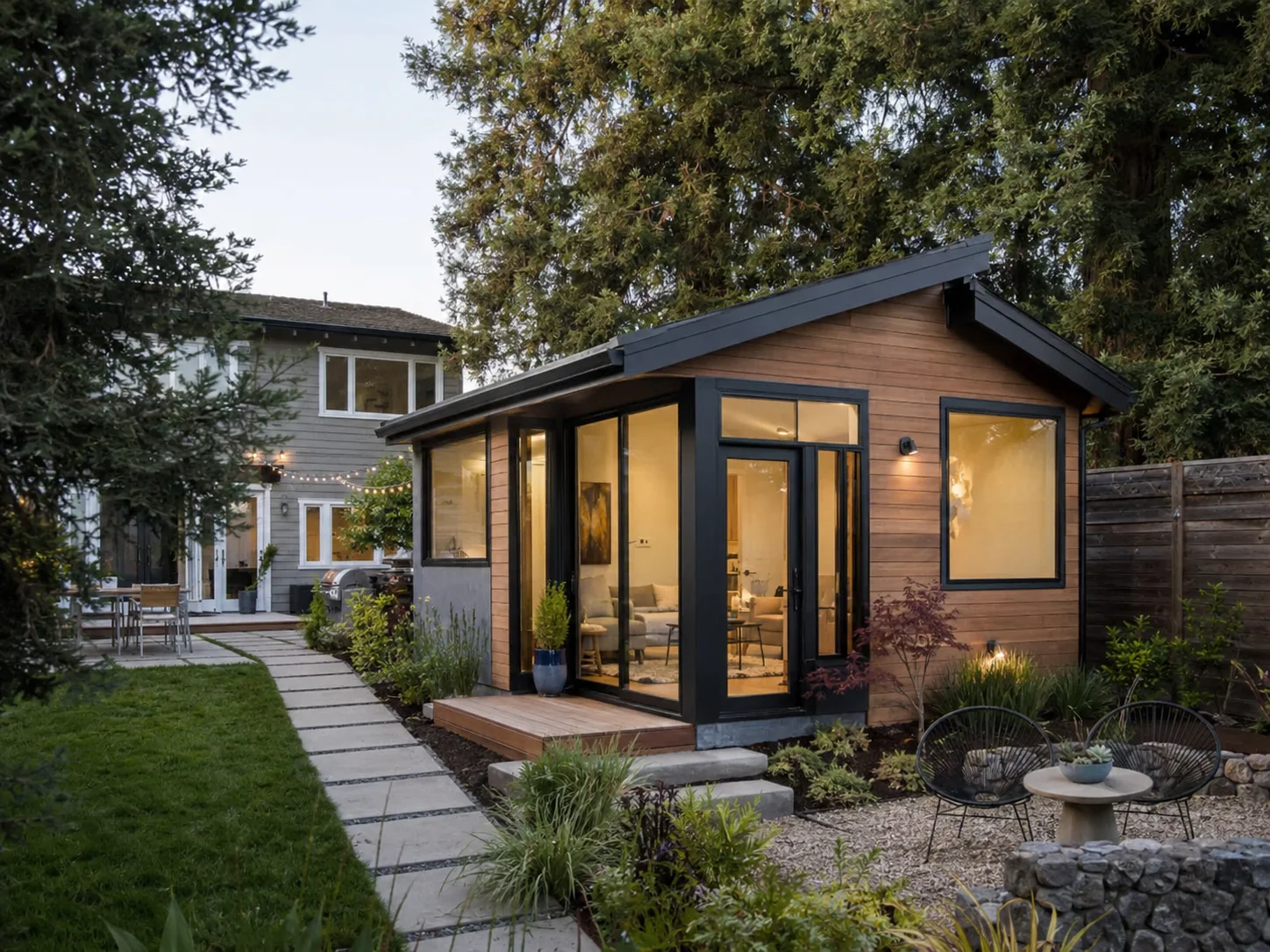
Alameda County and its cities generally allow all California-recognized ADU types: detached new construction ADUs, attached ADUs, garage conversions, interior conversions, and JADUs (Junior ADUs) within the existing primary dwelling. The specific size limits, setbacks, height maximums, and design standards vary by jurisdiction and ADU type. Confirm which ADU type is best suited to your lot and goals with your specific city's planning department before finalizing a design.
How do I verify an Alameda County ADU builder's CSLB license?
Go to cslb.ca.gov and search by license number or business name. Confirm the license is active, the classification covers your project type (Class B for most ADUs), workers' compensation is current, the bond is active, and no unresolved complaints are on file. For Alameda County, confirm the builder has specific completed ADU permits in your city — not just the broader East Bay or Bay Area.
Editorial independence: The Dwelling Index does not accept payment for builder placement. No builder mentioned in this guide has paid for inclusion, ranking, or editorial coverage. All guidance is based on independent research. Regulations change; verify all information with your city's planning and building department before signing a contract.