
Best Prefab ADU Under $100K: Real Options That Still Make Sense in 2026
Prices last verified: April 2026
If you're looking for the best prefab ADU under $100K, the first thing to know is that the advertised price is usually the unit price — not the installed cost. We found legitimate prefab ADU models starting around $56,500 for the base unit. But once you add foundation, site prep, utility hookups, permits, and delivery, the real project cost for most sub-$100K units lands between $120,000 and $175,000. That's still significantly less than a custom site-built ADU, and most of these projects can reach occupancy in 3–6 months.
We verified pricing against manufacturer websites and marketplace listings, separated base price from likely installed cost, and flagged each unit's readiness to actually serve as a legal, permitted accessory dwelling unit. If you want the broader prefab landscape, see our Best Prefab ADU Companies guide or Prefab ADU Cost breakdown. This page is narrower on purpose: the strict-budget shortlist for homeowners who need the truth, not a catalog.
Our Top Picks
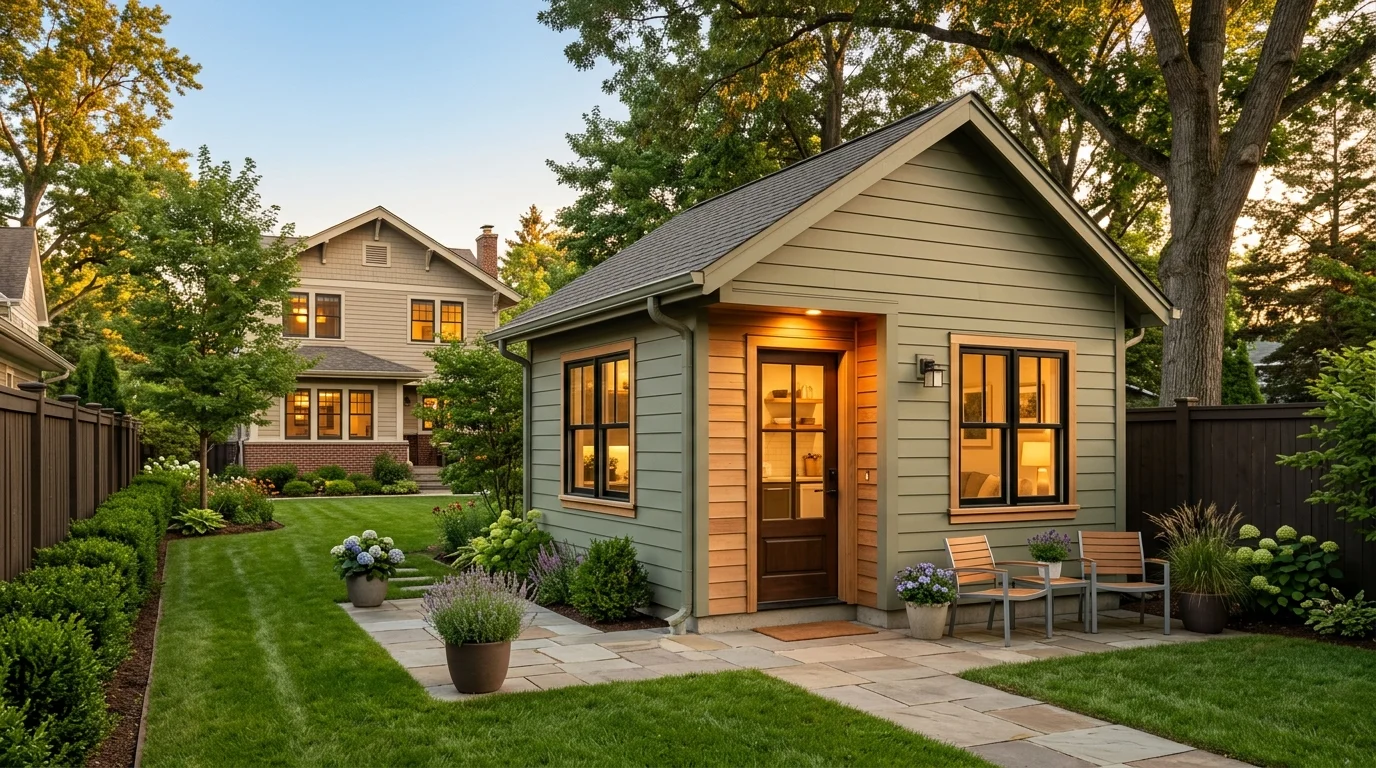
Best Prefab ADUs Under $100K: The Full Shortlist
Not every unit advertised under $100K deserves your attention. Some are office pods with no plumbing. Some are portable structures that won't clear local ADU review. We filtered for units that meet three criteria: base price under $100K, capable of including a kitchen and bathroom (or already does), and positioned by the manufacturer as a dwelling — not just a workspace.
| Company & Model | Base Price | Size (SF) | Kitchen / Bath | Build Type | Est. Installed Range | ADU-Fit Verdict |
|---|---|---|---|---|---|---|
| Modular Home Direct 284 | $56,500 | 284 | Config. varies | Steel-frame modular (base package, partial assembly) | $100K–$140K | ✅ ADU contender |
| Craftsman Tiny Homes Summit | $65,500 | ~400 | Full / Full | Custom modular, HUD-standard eligible | $115K–$150K | ✅ Strong ADU contender |
| Kanga Room Systems Studio Luxe 14×20 | $65K–$85K turnkey | 280 | Kitchenette / Full | Panelized prefab | $95K–$135K | ✅ ADU contender |
| Modular Home Direct 432 | $70,000 | 432 | 1 bed / 1 bath | Steel-frame modular (base package) | $120K–$160K | ✅ Strong ADU contender |
| AbleNook 2-Bay ADU | ~$77,000+ | 216+ | Add-on options | Flat-pack SIP modular | $115K–$155K | ⚠️ ADU possible, finishing needed |
| Kountry Containers Showcase | ~$80,000 | 320 | Kitchenette / Full | Container conversion | $120K–$155K | ⚠️ ADU possible, verify locally |
| PrefabADU Micro/Mini kits | Varies (6 models under $100K) | 150–400 | Varies by plan | DIY panel kit (owner-built) | $80K–$150K | ⚠️ ADU possible, DIY path |
| Studio Home Summit 308 | $98,029 | 308 | Configurable | Panelized kit | $140K–$180K | ✅ ADU contender (ADU config) |
| BOXABL Casita | Varies — request quote | 361 | Full / Full | Factory-built foldable studio | $120K–$170K | ✅ ADU contender (verify state) |
"Est. Installed Range" is a Dwelling Index editorial estimate assuming a standard suburban lot — flat, reasonable access, moderate utility distance. Your actual cost depends on your specific property. Estimates based on published industry data from Angi, BuildingAnADU.com, and manufacturer disclosures. Prices verified April 2026.
Models we excluded and why
Best ADU-First Option Under $100K
See pricing & floor plans from Craftsman Tiny Homes
Summit model from $65,500 — full kitchen, full bath, custom-built quality.
Affiliate link — we earn a commission at no cost to you.
Can a Prefab ADU Really Stay Under $100K All-In?
Sometimes — but only under a specific set of conditions. A fully installed prefab ADU staying under $100K total is most realistic when the unit is very small (under 300 SF) or a shell you finish yourself, the lot is flat with easy access, utilities are close, and the jurisdiction has low permit fees. Remove any one of those conditions and the total moves higher.
For a more typical scenario — a 300–450 SF unit on a standard suburban lot — plan on $120K–$175K installed. That's the honest number to budget around.
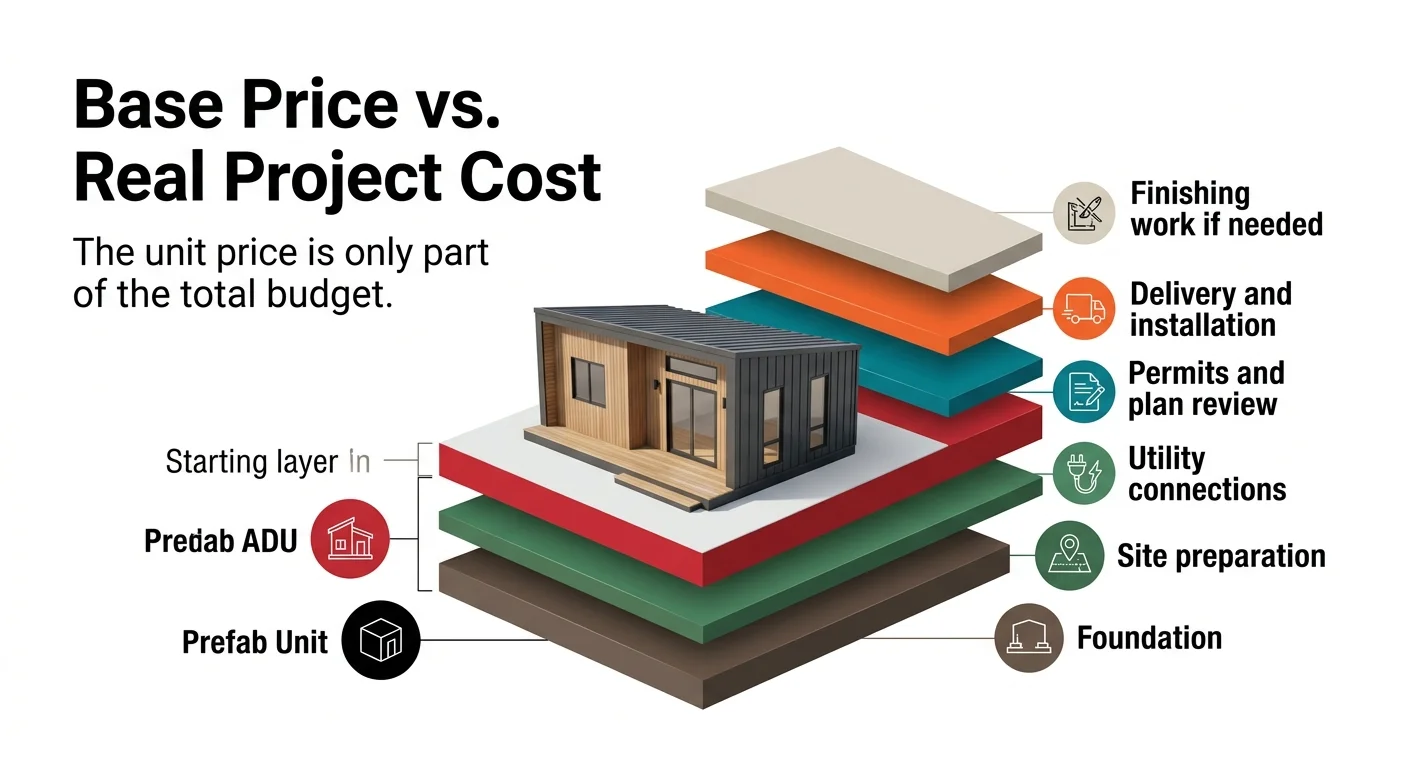
The Five Budget Items Most People Miss
Foundation and site prep: $8,000–$30,000+
The single biggest line item beyond the unit. A basic slab-on-grade on a flat lot is at the low end. Slope, poor soil, or drainage issues push costs up fast.
Utility connections: $10,000–$30,000
Water, sewer (or septic), electrical, and gas lines from your main house to the ADU. Every extra 10 feet of trenching adds cost. Electrical sub-panel upgrades alone can run $2,000–$5,000.
Permits, plan review, and engineering: $2,000–$15,000
Varies enormously by city. California state law prohibits impact fees on ADUs with 750 square feet or less of livable space (Cal. Gov. Code §66313.1). But building permit fees, plan-check fees, and engineering costs still add up.
Delivery, crane, and installation: $3,000–$15,000
Modular units arrive on a truck and get placed by crane. Distance from factory and backyard access difficulty drive this number.
Interior finishing (if shell or kit): $10,000–$40,000
Some units arrive turnkey. Others arrive as a weather-tight shell. Know which one you're buying — the gap between 'shell' and 'livable' is often $15K–$30K.
Real Math: What a $65,500 Unit Actually Costs on a Cooperative Lot
| Line Item | Estimated Cost |
|---|---|
| Craftsman Tiny Homes Summit (~400 SF, full kitchen + bath) | $65,500 |
| Foundation (slab on grade, flat lot) | $12,000 |
| Site prep (grading, clearing, access) | $6,000 |
| Utility connections (water, sewer, electric — 25 ft run) | $15,000 |
| Delivery (from Florida, mid-distance) | $8,000 |
| Permits + plan review | $4,500 |
| Landscaping restoration | $3,000 |
| Estimated project total | $114,000 |
Planning estimates based on manufacturer pricing, Angi 2026 ADU cost data, and BuildingAnADU.com self-reported cost database. Assumes flat lot, standard access, moderate utility distances. Your actual cost depends on your property.
Here's the part most sites skip past: even at $114K–$175K installed, a prefab ADU can be meaningfully cheaper than a custom site-built ADU ($200K–$350K+ nationally) and 2–3x faster — because the factory builds your unit while your site is being prepared. The savings are real. They're just not as dramatic as the sticker price suggests. That's not a reason to walk away. It's a reason to plan with the right number.
Free ADU Report
See if your lot makes the math work — free ADU report in 60 seconds
Check your property's zoning, ADU eligibility, and likely next steps in 60 seconds.
Do Prefab ADUs Still Need Permits and Foundations?
Yes. This is the most dangerous misconception in the prefab ADU space.
"Prefab" changes where the structure is built — in a factory instead of your backyard. It does not change whether your local government requires a building permit, site plan review, foundation inspection, and utility hookup approval. Across every jurisdiction we've reviewed — from California cities operating under state ADU law (Cal. Gov. Code §§66310–66342, per HCD 2026 handbook) to Salt Lake City (§21A.40.200) to Boulder's ADU program — prefab units require the same permits and site work as site-built units.
What "Pre-Approved Plans" Actually Mean
Some prefab companies advertise "pre-approved plans" or "state-approved" status. This is genuinely helpful — the building department has already reviewed and accepted the structural design, which can cut weeks off plan review. But it does not mean you skip the permit application, site plan, or inspections. Your city still reviews where the unit goes on your lot, how utilities connect, and whether setback and height requirements are met.
Unit Type vs. Regulatory Path
| Unit Type | Can It Be a Permitted ADU? | Foundation Required? | Watch Out For |
|---|---|---|---|
| Modular ADU (IRC-built, factory-assembled) | Yes — strongest path | Yes — permanent | Fewest regulatory surprises; same path as site-built |
| Manufactured home (HUD-code) | In some jurisdictions — depends on local zoning | Yes — HUD-approved permanent foundation required for financing | Not all cities zone manufactured homes as ADUs; verify before purchasing |
| Panelized / kit ADU (assembled on-site) | Yes — treated like site-built once assembled | Yes — permanent | More on-site build time and trade coordination |
| Office pod (no plumbing, small footprint) | No — not a dwelling unit | Varies | Missing kitchen, bath, or both. Cannot be rented as housing. |
| Tiny home on wheels (THOW) | Almost never — classified as RV | No permanent foundation | Cannot serve as a permanent permitted ADU in most cities |
| Portable / expandable house | Rarely without extensive review | Depends on jurisdiction | Portability conflicts with ADU permanence requirements |
Sources: Fannie Mae Selling Guide §B4-1.3-05; HUD manufactured housing standards (24 CFR 3280); California HCD ADU Handbook 2026; Salt Lake City ADU Ordinance §21A.40.200; Boulder ADU Program. Verified April 2026.
What Does the Advertised Price Include — and What Gets Left Out?
Two companies can both say "under $100K" and mean completely different things. One might deliver a turnkey interior with appliances and fixtures. The other might quote a weather-tight shell that still needs $25K in finishing.
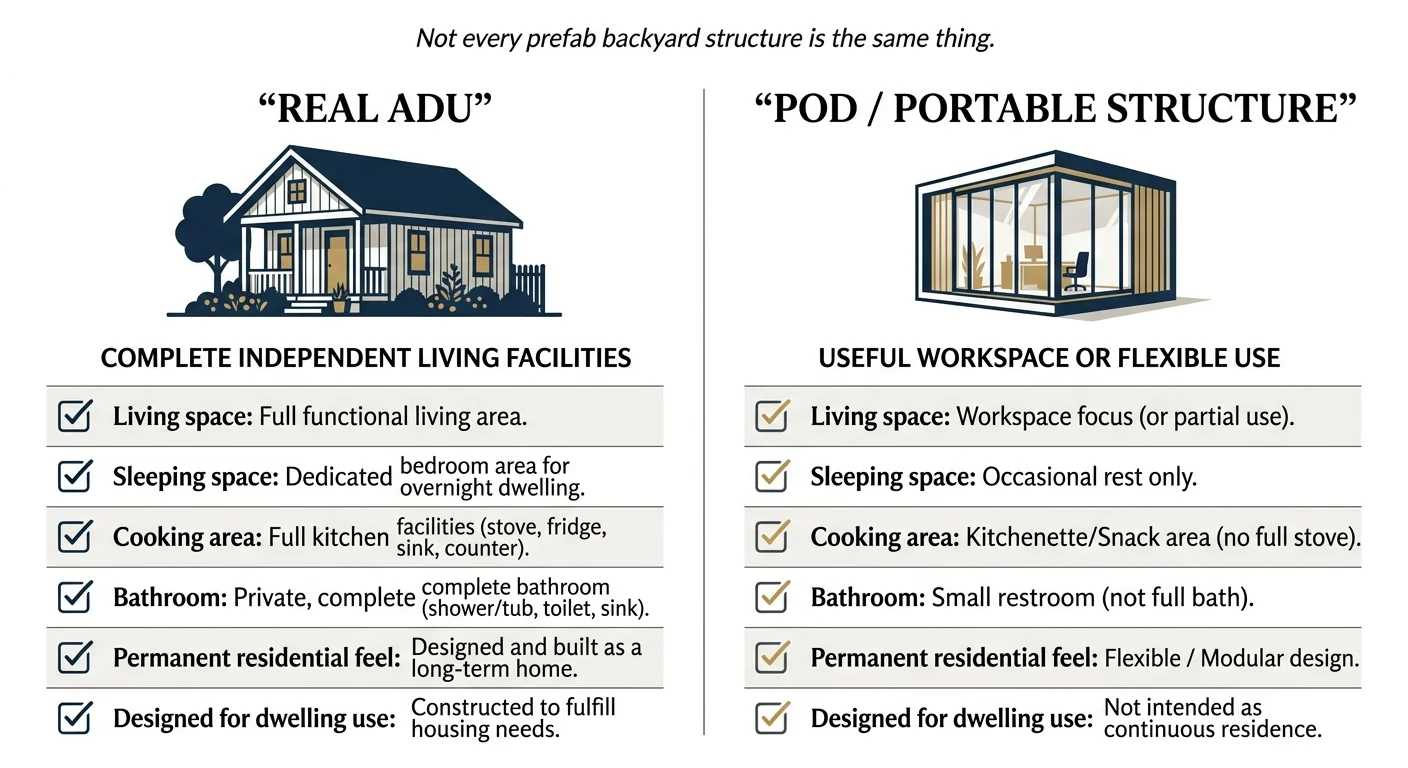
What base price usually includes
What base price almost never includes
Words That Should Make You Ask Questions
The 10-Point Quote Transparency Test
Before comparing models, send every company the same request. Ask them to break their quote into these line items:
Any company that answers all ten clearly is worth your time.
Which Units Are Real ADU Contenders — and Which Aren't?
Most "best prefab ADU" pages lose the reader here. They mix modular homes, office pods, container conversions, tiny homes on wheels, and portable houses into one list as if they're interchangeable. They're not — and the distinction determines whether your city will approve the unit as a legal dwelling you can live in, rent out, and sell your property with.
Real ADU-First Contenders
Craftsman Tiny Homes Summit
Strongest ADU intent under $100KExplicitly marketed as an ADU or primary residence for permanent foundation placement. Full kitchen, full bathroom, mini-split HVAC, washer/dryer hookup, R-38 insulation. HUD-standard eligible and FHA financing eligible. This is the clearest ADU-intent product in the under-$100K space.
craftsmantinyhomes.com (affiliate link) →Modular Home Direct models
Multiple configurationsSteel-frame modular construction designed for permanent installation with factory-direct pricing. Multiple configurations from 284 SF to 432+ SF. Note that base-price listings represent a base package with partial assembly — local completion scope varies.
modularhomedirect.com (affiliate link) →BOXABL Casita
Verify state availabilityFactory-built foldable studio with full kitchen, full bathroom, HVAC, plumbing, and electrical pre-installed. California factory-built housing documentation on file. Pricing and availability currently vary by location and configuration — request a current quote directly.
boxabl.com (affiliate link) →Units That Need Extra Local Verification
Manufactured homes (HUD-code)
Can serve as ADUs in jurisdictions that zone for them, but follow a different regulatory pathway. They require a HUD-approved permanent foundation, and not every city allows manufactured homes as ADUs. Confirm with your local zoning office before purchasing.
Container conversions (e.g. Kountry Containers)
Face mixed regulatory reception. Some cities welcome them; others classify them as non-standard construction requiring extra engineering review.
What Is NOT an ADU (Even If the Marketing Implies It)
Office pods (Autonomous WorkPod and similar)
Excellent backyard workspaces. Not ADUs. Most are 80–110 SF with no plumbing, kitchen, or bathroom. You cannot legally rent one as housing.
Tiny homes on wheels (THOWs)
Classified as recreational vehicles in nearly every jurisdiction. Cannot be permitted as a permanent ADU, placed on a permanent foundation, or rented as housing in most cities.
Portable/expandable houses
When a product's core selling point is portability, local reviewers may not classify it as permanent — and permanent installation is what ADU regulations require.
Best Under-$100K Prefab ADU by Scenario
The right unit depends on what you're actually solving for.
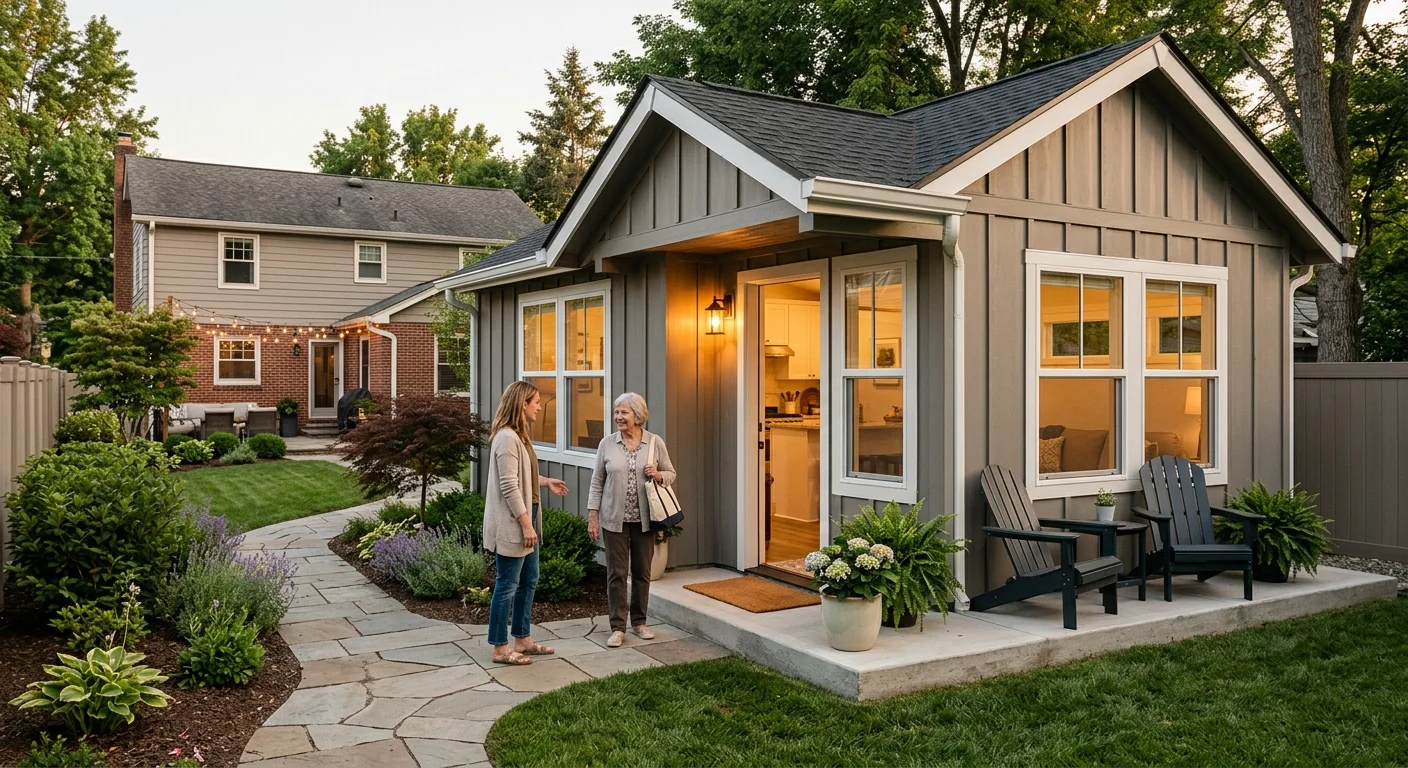
Scenario 1
"My aging parent needs their own space."
This is where livability, quality, and a true full kitchen/bath matter most. The Summit's ~400 SF provides a comfortable studio or small one-bedroom with a full kitchen, full bathroom, and mini-split climate control. Because it's custom-built to order, you can request accessibility features — wider doorways, grab bars, walk-in shower — during the build. At an installed cost of roughly $115K–$150K, it's a fraction of assisted living costs, and your parent keeps their independence steps from your back door.
Affiliate link · craftsmantinyhomes.com
Scenario 2
"I want rental income from my backyard."
Rental math favors livable square footage. The 432 SF steel-frame unit with a 1-bed/1-bath layout is the strongest size-to-price ratio we found under $100K base. In many markets, a 430 SF 1-bedroom ADU can rent for $1,200–$2,200/month. At a ~$130K–$160K installed cost, the income potential is meaningful — confirm your city's rental rules before building.
Rental income figures are illustrative examples, not guarantees. Actual results depend on local market conditions, vacancy rates, construction costs, and regulatory requirements.
Affiliate link · modularhomedirect.com
Scenario 3
"I need the absolute cheapest legal backyard dwelling."
PrefabADU claims six models under $100K, with at least one under $45K for the kit. Kanga's shell kits start around $44,000 and ship nationwide (turnkey installation is Texas-only). Both paths require significant owner involvement or a hired contractor for finishing, utility connections, and permitting. This only works if you're realistic about the labor and coordination involved.
Scenario 4
"I thought prefab was my answer, but my lot is complicated."
If your lot is steeply sloped, has limited access, or requires long utility runs — prefab may not save as much as you expect. On difficult sites, the gap between prefab and site-built narrows, and a skilled local contractor or garage conversion may be the smarter move. See our ADU Cost guide for a broader comparison.
Free ADU Report
Not sure which path fits your lot? See what you can build at your address.
Check your property's zoning, ADU eligibility, and likely next steps in 60 seconds.
When Prefab Is Cheaper — and When It Isn't
Prefab's advantages are real, but they're not universal.
Prefab wins when:
Site-built or garage conversion wins when:
The simple framework: Easy lot + tight budget → prefab. Hard lot + flexible budget → site-built. Existing garage → conversion first.
For the full comparison, see our Prefab ADU Cost and How Much Does an ADU Cost? guides.
Who Should Not Chase a Prefab ADU Under $100K
Some readers should be on a different page — one we've already written.
If you need 2 bedrooms
The sub-$100K zone is almost entirely studios and small 1-bedrooms. Two-bedroom units start around $100K–$150K base.
See our 2 Bedroom Prefab ADU guide →If your lot is difficult
Steep slope, poor soil, limited access, distant utilities. If site prep exceeds $25K, the budget advantage of a cheap unit evaporates.
If you're in a private CC&R community
Some HOAs impose restrictions through private covenants — design review, contractor approval, aesthetic requirements. In California, state law provides that HOAs cannot influence the local agency's approval of an ADU application per HCD guidance, but private CC&R disputes can still create friction and delays. Check your governing documents before investing time.
If you plan to sell within 12–24 months
ADUs add property value, but the payback period on new construction is typically 4–8 years measured against build cost alone. If you're selling soon, the return may not justify the disruption.
How to Pay for a Prefab ADU
Most homeowners don't pay cash. Here are the financing paths that work for this budget range — keeping in mind that the total project is typically $120K–$175K, not just the unit price.
Home Equity Line of Credit (HELOC)
The most common path. Borrow against your home's equity and draw funds as needed at each project milestone. See our detailed HELOC guide for ADU financing.
Cash-out refinance
If you have substantial equity and your current rate makes the math work, refinancing can fund the entire project upfront.
Construction or renovation loan
Purpose-built for building projects, converting to a standard mortgage after construction.
ADU-specific lenders
A growing category. Worth exploring if traditional options don't fit your situation.
For a complete comparison of financing paths, see our ADU Financing guide or our detailed HELOC for ADU guide.
Financing information is educational, not a loan offer. Rates, terms, and qualification vary by lender, location, and individual circumstances. The Dwelling Index is not a lender or broker.
How Long From Order to Move-In?
Most prefab ADU projects take 3–6 months from order to occupancy. The key speed advantage: the factory builds your unit while your site is being prepared. Those phases run in parallel instead of in sequence.
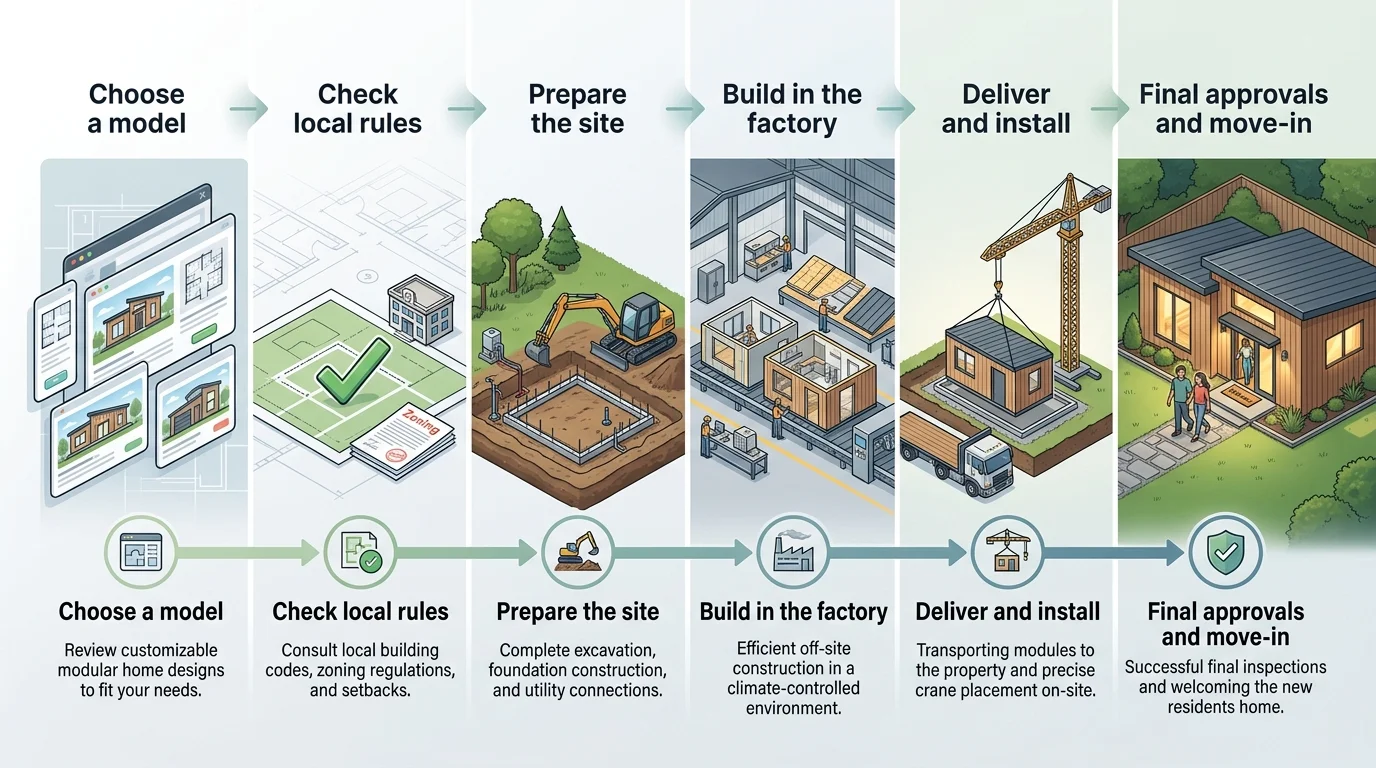
| Phase | Duration | What Happens |
|---|---|---|
| Design & order | 1–4 weeks | Select model, finalize options, sign contract |
| Permitting | 2–8 weeks | Submit plans, city review (pre-approved plans can cut this significantly) |
| Factory buildconcurrent | 4–12 weeks | Unit manufactured — runs concurrently with permitting and site prep |
| Site preparationconcurrent | 2–4 weeks | Foundation, utility trenching, grading — also concurrent |
| Delivery & installation | 1–5 days | Unit delivered, placed on foundation |
| Finishing & inspections | 2–4 weeks | Final connections, finishing (if needed), inspections, certificate of occupancy |
| Typical total | 3–6 months | Parallel phases are why prefab is faster |
A comparable site-built ADU typically takes 9–18 months because every phase happens sequentially on your property.
How We Verified This Shortlist
Pricing
Every base price was checked against the manufacturer's official website or a major marketplace listing (Dwellito, The Prefab List). Where pricing was listed as a range or 'starting at,' we noted it. Where current pricing could not be verified to a public source, we excluded the model or noted the limitation.
Installed cost estimates
Dwelling Index editorial estimates based on published industry data — including Angi's 2026 ADU cost research, BuildingAnADU.com's self-reported cost database, Block Renovation's prefab cost analysis, and manufacturer disclosures. They assume a standard suburban lot. Your actual cost depends on your property.
ADU-fit verdicts
Classified based on whether the manufacturer positions it as a dwelling unit (not workspace), whether it includes or accommodates a kitchen and bathroom, and whether it's designed for permanent installation. Referenced Fannie Mae Selling Guide ADU definition (§B4-1.3-05) and HUD manufactured housing standards (24 CFR 3280) as baselines.
What we excluded
Products primarily marketed as office pods without plumbing. Tiny homes on wheels. Single-metro-area-only products. Models where current pricing could not be verified from a public source. Models where the ADU-ready configuration exceeded $100K.
Update cadence
We re-verify pricing and availability quarterly. Individual listings are updated when we become aware of changes between scheduled reviews.
Frequently Asked Questions
Can you really buy a prefab ADU for under $100,000?
Yes — the base unit price is real. We verified models from established companies priced between $56,500 and just under $100K. But the total project cost after foundation, site prep, utilities, permits, and delivery typically adds $40K–$80K, putting most complete projects at $120K–$175K.
What is the cheapest prefab ADU with a kitchen and bathroom?
The Craftsman Tiny Homes Summit starts at $65,500 for approximately 400 SF with a full kitchen and full bathroom. Kanga Room Systems' Studio Luxe 14×20 with kitchenette and bathroom is available as a turnkey install starting around $65K–$85K (turnkey currently Texas only; kits ship nationwide).
Do prefab ADUs require permits?
Yes, in virtually every U.S. jurisdiction. Prefab describes where the unit is built — in a factory — not whether your city requires approval. Building permits, site plan review, and inspections are required regardless of construction method. Pre-approved plans can speed up review but don't eliminate it.
What is the difference between a modular ADU and a manufactured home?
A modular ADU is built in a factory to IRC residential building code and arrives in sections for permanent installation. A manufactured home is built to federal HUD code on a permanent chassis. Both can potentially serve as ADUs, but they follow different regulatory pathways, and some cities only allow one or the other.
Can a manufactured home be a legal ADU?
In some jurisdictions, yes — when placed on a permanent foundation and when local zoning allows it. Fannie Mae requires a permanent foundation for manufactured home financing eligibility. Not every city zones manufactured homes as ADUs, so verify with your local planning department first.
Is a tiny house on wheels the same as an ADU?
No. A tiny home on wheels is classified as a recreational vehicle in most jurisdictions. It cannot be permitted as a permanent ADU, cannot sit on a permanent foundation, and typically cannot be rented as housing.
What is included in a prefab ADU base price?
Typically: the factory-built structure (walls, roof, floor, insulation, windows, doors). Turnkey units also include interior finishes and sometimes appliances. Base price almost never includes foundation, site prep, utility hookups, permits, or delivery.
How long does it take to install a prefab ADU?
Most projects take 3–6 months from order to occupancy. The unit can be placed on a prepared foundation in 1–5 days. The rest of the timeline covers permitting, concurrent factory build, site prep, and finishing/inspections.
Which is cheaper — prefab or site-built?
On easy lots (flat, good access, short utility runs), prefab can be meaningfully less expensive and considerably faster because factory build and site prep happen in parallel. On difficult lots, the cost gap narrows — and sometimes a site-built approach or garage conversion makes better financial sense.
What is the cheapest legal ADU path overall?
A garage conversion — typically $50K–$150K total for a finished unit using your existing structure (Angi 2026 data). If you don't have a garage, the next most affordable path is a small prefab unit on an easy lot, targeting $100K–$140K all-in.
Are there 2-bedroom prefab ADUs under $100K?
Not at turnkey quality. Two-bedroom prefab units typically start at $100K–$150K for the unit, with installed costs of $175K–$250K+. See our 2 Bedroom Prefab ADU guide.
Can I rent out a prefab ADU?
In most ADU-friendly jurisdictions, yes — subject to local rules. Some cities allow both long-term and short-term rentals. In California, current state law prohibits short-term rental of Junior ADUs and requires JADU rentals to be for terms longer than 30 days (per HCD 2026 handbook). Standard ADU rental rules vary by local jurisdiction.
Ready to Find Out What You Can Build?
The right prefab ADU depends on your lot, your city, and your budget. Start with what's actually possible at your address.
Free ADU Report
See what you can build at your address — get your free ADU report in 60 seconds
Check your property's zoning, ADU eligibility, and likely next steps in 60 seconds.
Best ADU-First Option Under $100K
See pricing & floor plans from Craftsman Tiny Homes
Summit model from $65,500 — full kitchen, full bath, custom-built quality.
Affiliate link — we earn a commission at no cost to you.
Free Download
2026 ADU Starter Kit
Costs, permits, timelines, financing, and your first steps — everything you need before talking to any builder.
Download the Free 2026 ADU Starter KitRelated Guides
Best Prefab ADU Under $150K
More options open up — the sweet spot for most buyers
Best Prefab ADU Companies
Broader view of the full prefab ADU market
Prefab ADU Cost Guide
Real all-in installed cost breakdown by size and type
2 Bedroom Prefab ADUs
Options when you need more than a studio or 1-bedroom
How Much Does an ADU Cost?
All ADU types — site-built, prefab, garage conversion
HELOC for ADU Financing
How to fund your ADU project with home equity
Boxabl Reviews (2026)
SEC-verified data on the Casita Studio — real costs and complaints
Disclaimer: Prices last verified April 2026. The Dwelling Index editorial team re-verifies pricing, availability, and regulatory citations quarterly. Installed cost estimates are editorial estimates based on published industry data, not quotes or guarantees. The Dwelling Index is reader-supported — this page contains affiliate links. We may earn a commission when you use these links at no extra cost to you. Our editorial recommendations are based on independent research and are never influenced by compensation. Full disclosure →