Prefab Barndominium: Real Costs, Best Fits & What to Buy in 2026
Prices and service areas verified April 2026 · Methodology · Editorial standards · Affiliate disclosure
The Dwelling Index is an independent educational resource — we are not a builder, lender, or broker. Some links on this page are affiliate links, but affiliate relationships never influence our coverage or rankings. Full disclosure & editorial methodology.
A prefab barndominium can meaningfully cut shell cost and on-site build time compared to conventional construction — but the savings are often overstated in search results. The “$20–$35 per square foot” numbers you keep seeing refer to shell-kit materials only. Published 2026 cost data puts finished barndominiums at roughly $65–$160 per square foot on average, with the national average total around $230,000 — though site work, utilities, custom finishes, and permits can push luxury builds well above $400,000.
That's still competitive with conventional new construction in many markets — but only if you go in with accurate numbers and the right type of prefab for your situation. And “type” matters more than most people realize, because “prefab barndominium” actually covers three very different products: shell kits, modular homes, and manufactured barn-look homes. Pick the wrong lane and every decision after that — cost, permits, financing, delivery, resale — gets harder.
Prices and service areas verified April 2026. See our methodology and editorial standards.
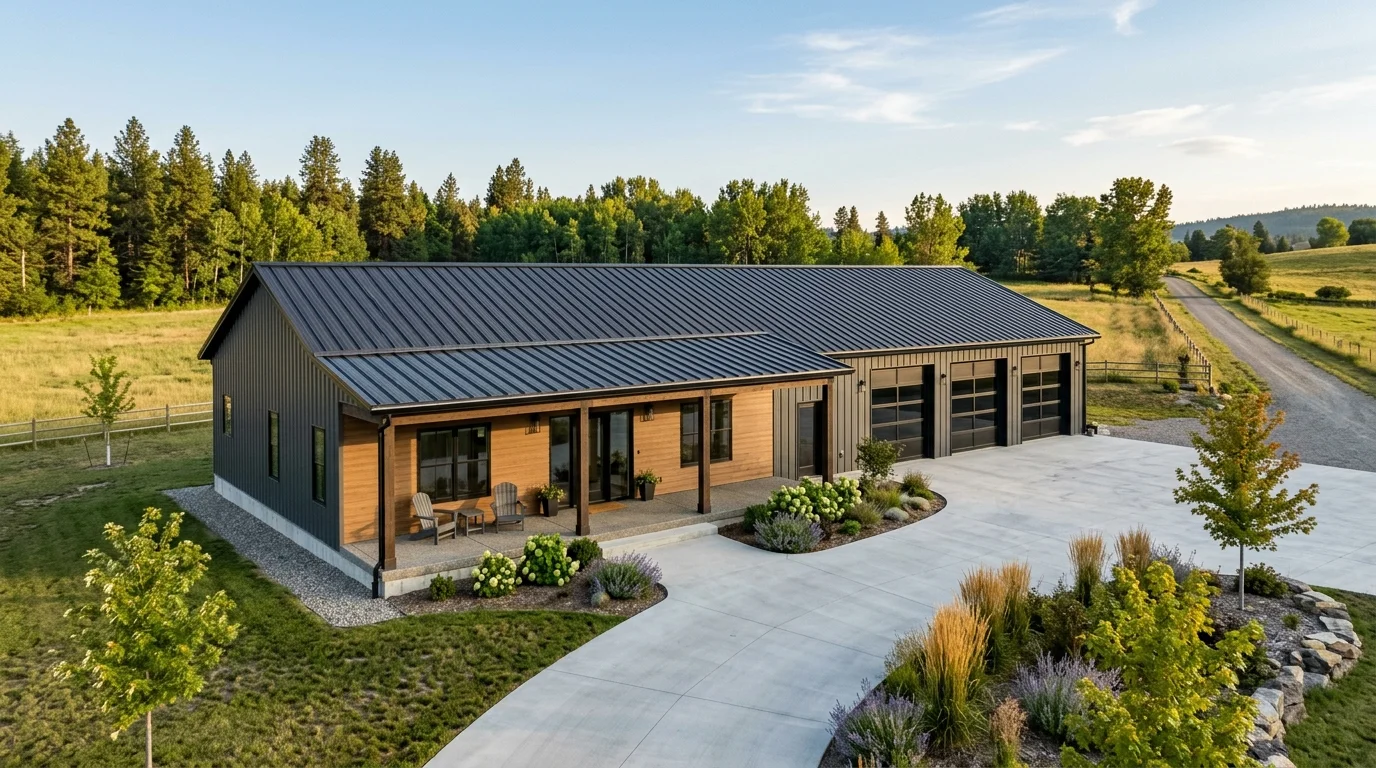
A 40×60 steel-frame barndominium with integrated garage — one of the most popular configurations for rural homeowners
Quick Decision: Which Prefab Barndominium Path Fits You?
Before you dig into the details, find your lane. Most of the confusion in this space comes from comparing products that serve completely different needs.
| Your Goal | Best Prefab Path | Est. All-In Cost | Best Starting Point |
|---|---|---|---|
| Small finished guest house, rental unit, or aging-parent home | Small finished prefab unit | $65,000–$180,000 | Craftsman Tiny Homes (Summit: 410–800 sqft) |
| Larger primary home with barn aesthetic | Modular or steel-frame prefab + build-out | $200,000–$500,000+ | Modular Home Direct (1–4 bed, steel-frame) |
| Shop or garage with attached living space | Steel shell kit + custom interior | $150,000–$400,000+ | Worldwide Steel, My Barndo Plans, BuildingsGuide |
| Premium timber barn-home design | Wood-frame post-and-beam kit | $250,000–$750,000+ | DC Structures |
All-in cost estimates are editorial ranges based on published 2026 data. Your actual cost depends on location, finish level, and site conditions.
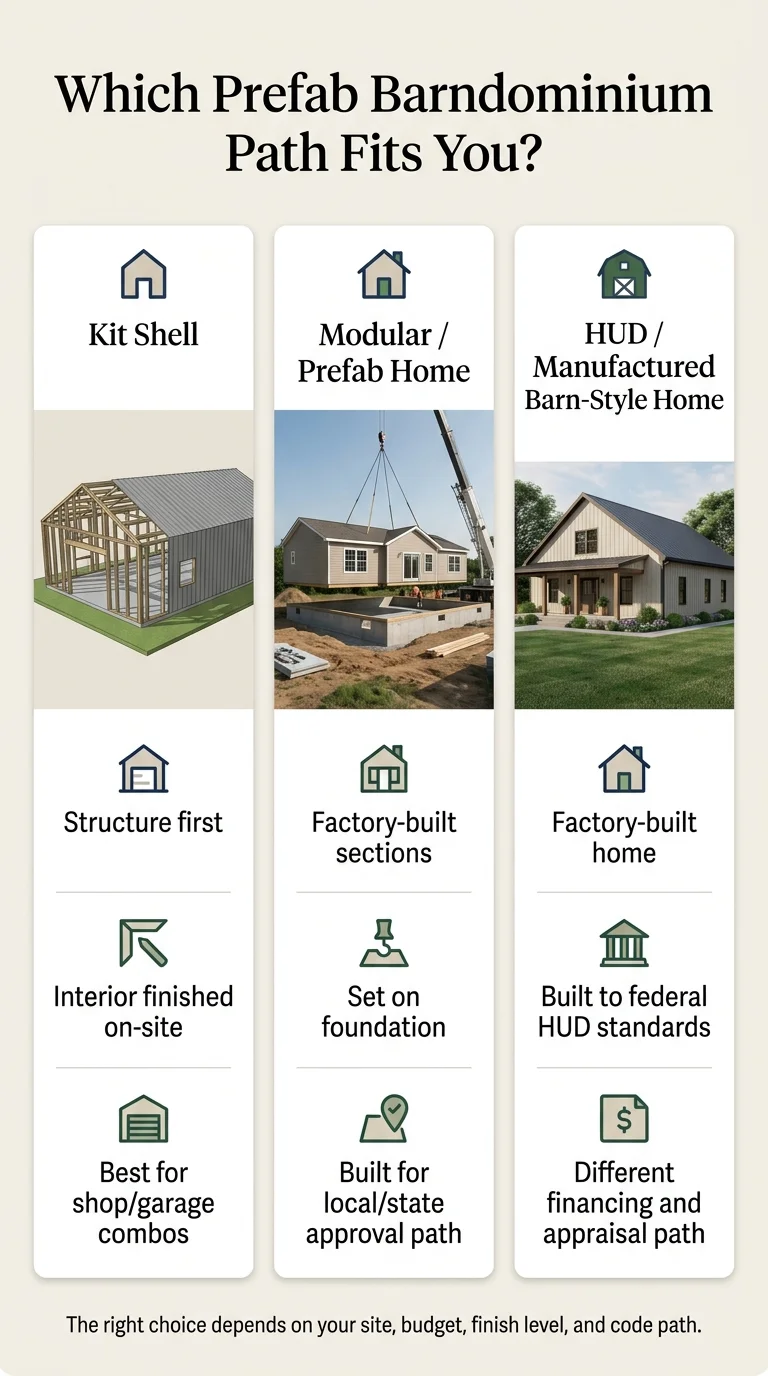
The right choice depends on your site, budget, finish level, and code path
What Is a Prefab Barndominium, Exactly?
“Prefab barndominium” isn't one product. It's a search term that covers at least three different things — and mixing them up is the single fastest way to blow your budget or end up with a product that can't be financed, permitted, or resold the way you expected.
Kit Shell
A pre-engineered steel (or sometimes wood) structural package that arrives as components: steel I-beams or columns, roof trusses, metal siding, roofing panels, trim, and fasteners. You or your contractor assemble it on a prepared foundation. The interior is completely empty — no insulation, no drywall, no plumbing, no electrical, no HVAC. Think of it as buying the bones and skin of a building.
Modular Home
A factory-built home delivered in finished sections or modules, set on your foundation by crane, and connected on-site. Modular homes are built to the IRC (International Residential Code) under administration by the responsible state agency — the same code standard that applies to conventional site-built homes. Interiors are largely finished at the factory: cabinets, flooring, fixtures, sometimes appliances.
HUD / Manufactured Barn-Look Home
A factory-built home constructed to the federal HUD code (24 CFR Part 3280) rather than local building codes. Some manufacturers now offer barn-style or farmhouse-style exterior designs. These follow a completely different code path, which affects financing options, foundation requirements, and how lenders and appraisers classify the property.
Why This Distinction Matters More Than Exterior Style
The table below is the single most important comparison on this page.
| Factor | Kit Shell | Modular Home | HUD Manufactured |
|---|---|---|---|
| How it arrives | Bundled components, assembled on-site | Finished sections, crane-set | Finished unit(s), transported on own chassis |
| Code path | Must meet local IRC/IBC when finished | Built to IRC under state agency administration | Built to federal HUD code (24 CFR 3280) |
| Foundation | Slab or pier, engineered for site | Permanent foundation required | Permanent foundation generally required for real-property treatment and conventional financing |
| Financing | Construction loan → conventional mortgage (harder) | Treated like site-built by Fannie Mae if eligibility requirements met | Manufactured-home loan programs; conventional possible with permanent foundation and real-property classification |
| Appraisal | Fewer comps, more appraisal risk | Comparable to site-built homes | Appraised as manufactured housing — different comp pool |
| What's in price | Shell only (exterior structure) | Near-complete home | Near-complete home |
| Biggest risk | Interior build-out budget blowout | Crane access and site prep cost | Resale classification and financing constraints |
| Best for | Shop/garage combos, DIY-capable buyers | Primary residences, predictable budgets | Budget-conscious buyers in rural areas |
Sources: Fannie Mae Selling Guide B4-1.4-02, B5-2-01, and B2-3-02, verified April 2026. HUD manufactured housing standards: 24 CFR Part 3280.
How Much Does a Prefab Barndominium Really Cost?
This is where most buyers get burned — not because the prices are fake, but because the prices are incomplete. When a kit company says “$20 per square foot,” they mean the steel package. When a cost guide says “$230,000 average,” they're blending shell-only builds with luxury turnkeys. Neither number tells you what your project will actually cost.
The 7 Cost Buckets Almost Every Buyer Misses
The shell kit — the part everyone obsesses over — is typically only 20–40% of your total project cost. The rest is foundation, site work, interior build-out, systems, and finishing. Here's what a 2,400 sqft (40×60) prefab barndominium looks like when you add it all up:
| Cost Category | Est. Cost/Sqft | 2,400 Sqft Example | Notes |
|---|---|---|---|
| Shell kit (materials) | $20–$35 | $48,000–$84,000 | Steel frame, trusses, siding, roofing, trim (vendor-reported, April 2026) |
| Kit assembly labor | $10–$15 | $24,000–$36,000 | Professional crew (HomeGuide, January 2026) |
| Foundation (concrete slab) | $6–$14 | $14,400–$33,600 | Includes footings, anchor bolts per engineer spec (HomeGuide) |
| Site prep & grading | Flat: $1,200–$8,000 | $1,200–$8,000 | Clearing, grading, access road if needed (HomeGuide) |
| Utility hookups | Flat: $9,000–$35,000 | $9,000–$35,000 | Water, sewer/septic, electric, gas — rural sites cost more (HomeGuide) |
| Interior build-out | $40–$80+ | $96,000–$192,000+ | Insulation, framing, drywall, plumbing, electrical, HVAC, flooring, cabinets, fixtures (mid-range est.) |
| Permits & engineering | Flat: $3,000–$10,000 | $3,000–$10,000 | Stamped structural plans, building permit, inspections |
| Estimated Total (2,400 sqft, before land) | $195,600–$398,600+ | Regional labor rates cause significant variation | |
Editorial estimates combining vendor-reported kit pricing (April 2026) and published cost data from HomeGuide (January 2026) and Angi (March 2026). Actual costs vary significantly by location, finish level, site conditions, and local labor rates.
What Those Numbers Look Like by Finish Level
| Finish Level | Interior Cost/Sqft | 2,400 Sqft All-In | What You Get |
|---|---|---|---|
| Basic | $40–$60 | $180,000–$280,000 | Concrete or vinyl floors, standard cabinets, builder-grade fixtures, basic HVAC |
| Mid-range | $60–$100 | $280,000–$400,000 | Engineered wood or tile floors, upgraded cabinets, solid-surface counters, efficient HVAC |
| High-end | $100–$150+ | $400,000–$550,000+ | Custom cabinetry, stone countertops, hardwood floors, smart home systems, premium appliances |
Can You Actually Get a Prefab Barndominium Under $100K?
This is one of the most searched questions in the barndominium space, and the honest answer is: it depends on what you mean by “get.”
| Claim | What It Typically Includes | What It Excludes | Reality Check |
|---|---|---|---|
| "Shell kit from $23,000" | Steel frame, roof, siding, trim | Foundation, assembly, all interior work, utilities, permits | Move-in cost: well above $100K |
| "Kit + assembly from $48,000" | Shell plus professional erection | Foundation, all interior, utilities, permits | Move-in cost: well above $100K |
| "Barndominium from $65,500" | Small finished unit (e.g., 410 sqft) | Delivery, foundation, site prep, utility connections | Move-in cost: potentially near $100K for very small models on cooperative sites |
| "Under $100K packages" | Basic shell kit for smaller sizes (30×40 or smaller) | Everything except the metal structure | Move-in cost: almost always exceeds $100K |
Starting prices from vendor websites, verified April 2026. All-in estimates are editorial.
When Under $100K Is Actually Plausible
It's genuinely possible to be living in a barndo-style home for under $100K in a narrow set of scenarios: a very small footprint (under 600 sqft), a simple site with existing utilities, basic finishes, and a buyer willing to do significant work themselves. Some small finished prefab units — like the Craftsman Tiny Homes Summit at 410 sqft starting at $65,500 — can potentially land near that range after delivery, foundation, and hookups if the site is cooperative.
But for anything over 1,000 sqft with a permanent foundation, utility hookups, and a finished interior? Most under-$100K barndominium prices are not move-in numbers. Once you separate shell, setup, utility, and finish costs into their actual buckets, the real value of prefab construction shows up clearly in the mid-range tier: a $200K–$350K prefab barndominium with mid-range finishes gives you more square footage, better durability, and a faster build than conventional construction at the same price point.
How to Reality-Check Any Price You See
"Does this price include everything I need to move in, or just the structure?"
"What is the realistic total project cost for a finished home using this kit in my state?"
"Can you connect me with a past customer who built a similar project, and what was their final all-in cost?"
If they dodge question three, that tells you something.
Prefab Barndominium Cost by Size: Popular Floor Plans
The most common prefab barndominium kits are sold by footprint. Here's what each popular size looks like across the full cost spectrum:
| Size | Sqft | Shell Kit | Assembly + Foundation | Interior (Mid-Range) | Est. All-In Total |
|---|---|---|---|---|---|
| 30×40 | 1,200 | $24,000–$42,000 | $22,000–$45,000 | $72,000–$120,000 | $130,000–$220,000 |
| 30×50 | 1,500 | $30,000–$52,000 | $27,000–$55,000 | $90,000–$150,000 | $160,000–$270,000 |
| 40×60 | 2,400 | $48,000–$84,000 | $38,000–$70,000 | $144,000–$240,000 | $240,000–$400,000 |
| 50×60 | 3,000 | $60,000–$105,000 | $45,000–$80,000 | $180,000–$300,000 | $300,000–$500,000 |
| 60×80 | 4,800 | $96,000–$168,000 | $65,000–$110,000 | $288,000–$480,000 | $460,000–$770,000 |
Shell kit costs: vendor-reported pricing, verified April 2026. Assembly, foundation, and interior estimates: editorial ranges based on HomeGuide and Angi 2026 data. Mid-range interior assumes $60–$100/sqft. Does not include land.
Small Finished Units · Affiliate Partner
Craftsman Tiny Homes
Family-owned builder in Archer, FL. Summit model from $65,500 (410 sqft) to $129,900 (800 sqft). Custom-built, near-finished units on permanent foundations. Skips the “shell trap” entirely.
Affiliate link. Full disclosure.
See Pricing & Floor PlansLarger Steel-Frame Homes · Affiliate Partner
Modular Home Direct
Based in Salt Lake City with a nationwide general contractor search. Factory-direct pricing on steel-frame prefab home systems in 1–4 bedroom configurations.
Affiliate link. Full disclosure.
See Models & PricingThe 4 Main Kit Types: Red Iron vs SIPs vs Cold-Formed Steel vs Wood-Frame
If you're going the shell-kit route, the structural system you choose determines cost, insulation performance, span capability, and how the build goes together. Here's the framework:
| Feature | Red Iron (I-Beam) | SIPs (Structural Insulated Panels) | Cold-Formed Steel (CFS) | Wood-Frame / Post-and-Beam |
|---|---|---|---|---|
| Best for | Large open spans, shop/garage combos | Energy efficiency, tight envelope | Smaller builds, budget-conscious | Traditional aesthetics, premium builds |
| Kit cost/sqft | $25–$45 | $30–$50 | $20–$35 | $35–$55+ |
| Insulation | Added separately (spray foam or batts) | Built into panels (R-24 to R-40+) | Added separately | Added separately |
| Span capability | Wide clear spans — verify engineering for your design | Moderate spans, residential-scale | Moderate spans, residential-scale | Moderate spans without engineered trusses |
| Assembly | Varies by vendor: some field welding, others bolt-together | Panel system, moderate DIY potential | Screw-together, DIY-friendly | Standard framing, DIY-friendly |
| Pest resistance | Excellent | Excellent | Excellent | Lower (wood-boring insects) |
| Typical companies | Worldwide Steel, BuildingsGuide, Sunward, Titan Steel | My Barndo Plans (SIPs option) | My Barndo Plans (CFS option) | DC Structures |
Kit cost ranges: vendor-reported and editorial estimates, April 2026. Technical specifications vary by manufacturer — verify all structural claims with your specific vendor's engineering documentation.
Quick decision framework:
Prefab Barndominium Pros and Cons: The Honest Summary
Pros
Can reduce shell cost compared to conventional framing
Can shorten on-site construction time significantly
Steel frame: non-combustible, pest-proof, rot-proof
Open-span flexibility for large interior spaces
Long service life with proper maintenance and coating
Workshop/garage integration under one roof
Energy efficient with proper insulation (spray foam or SIPs)
Lower long-term maintenance than wood framing
Cons
Shell cost is only 20–40% of total — interior finishes narrow the gap
Financing requires more preparation than conventional homes
Metal surfaces need maintenance to prevent corrosion
Fewer appraisal comps in many markets
Some HOAs and municipalities restrict metal-clad exteriors
Mixed-use can complicate zoning, insurance, and classification
Requires specialized insulation strategy — batts alone are risky on steel
Niche buyer pool at resale in some areas
Which Prefab Barndominium Companies Are Worth Shortlisting?
We evaluated nationally available options across price, product type, code path, delivery scope, and what's actually included. The table below is sorted by best-fit use case — not by who pays us the most.
| Company | Best For | Product Type | Starting Price | Size Range | What to Watch |
|---|---|---|---|---|---|
| Craftsman Tiny Homes ★ | Small finished unit, guest house, aging-parent cottage | Custom-built small homes & ADUs | $65,500 (410 sqft Summit) | 410–800+ sqft | Verify code classification for your jurisdiction |
| Modular Home Direct ★ | Larger steel-frame custom homes | Steel-frame prefab home systems | Published model pricing; delivered scope varies | 1–4 bedrooms | Confirm assembly, permitting, and stamped plans are included or priced separately |
| My Barndo Plans | Kit shoppers wanting multiple frame options | Red Iron, SIPs, and CFS kits + plans | Kit from ~$29,500 (2-bed CFS) | 2–5 bedrooms | Kit price excludes foundation, interior, all finish work |
| BuildingsGuide | Comparing multiple quotes from regional suppliers | Red Iron I-beam shell kits (multi-quote service) | Varies (quote service) | Custom | Lead-gen service, not a direct builder — vet suppliers independently |
| Worldwide Steel Buildings | DIY-capable shop-house builders | Red Iron bolt-together kits | Request quote | 1,200–6,000+ sqft | 50-year structural warranty; interior is 100% on you |
| DC Structures | Premium timber-frame barn-home aesthetics | Wood-frame pre-engineered kits | $90,000–$150,000+ (base Meridian kit) | 6 standard + custom | Turnkey typically 3–5× base kit price |
| Deer Valley Homebuilders | Factory-finished modular barndominium | Modular (factory-built to IRC) | Request quote through retailers | Custom floor plans | Pricing only through local retailers |
| Buffalo Modular | Modular barndominium in Northeast US | Modular (factory-built to IRC) | Request quote | 1,500+ sqft | Regional only — not a national option |
★ = affiliate partner. All pricing verified against company websites, April 2026.
Our Picks by Buyer Type
Best for: small finished unit
Craftsman Tiny Homes
Summit model from $65,500 (410 sqft) to $129,900 (800 sqft). A custom-built structure from a family-owned builder in Archer, Florida. For smaller projects, this path avoids the “shell trap” entirely — you're buying a near-finished home, not a box of steel parts.
See Craftsman Pricing & Floor PlansBest for: larger home with steel-frame durability
Modular Home Direct
Based in Salt Lake City with a nationwide general contractor search. Factory-direct pricing on steel-frame prefab home systems in 1–4 bedroom configurations. Confirm package scope, delivery logistics, and local code path before ordering.
See Modular Home Direct ModelsBest for: kit shell shop-house builds
Worldwide Steel · My Barndo Plans · BuildingsGuide
Worldwide Steel offers bolt-together systems with a 50-year structural warranty. My Barndo Plans lets you compare Red Iron vs SIPs vs CFS with published starting prices. BuildingsGuide is a multi-quote service to get competing bids from regional suppliers.
Best for: premium timber-frame aesthetics
DC Structures
The clear leader in wood-frame pre-engineered barn homes. Base Meridian kit from $90K–$150K, with turnkey builds typically reaching 3–5× that number. A premium product priced accordingly — unmatched curb appeal for buyers with the budget.
What's Included in the Price — and What Almost Never Is
This is where buyers either save themselves months of confusion or walk straight into it. The word “includes” means something completely different depending on who you're buying from.
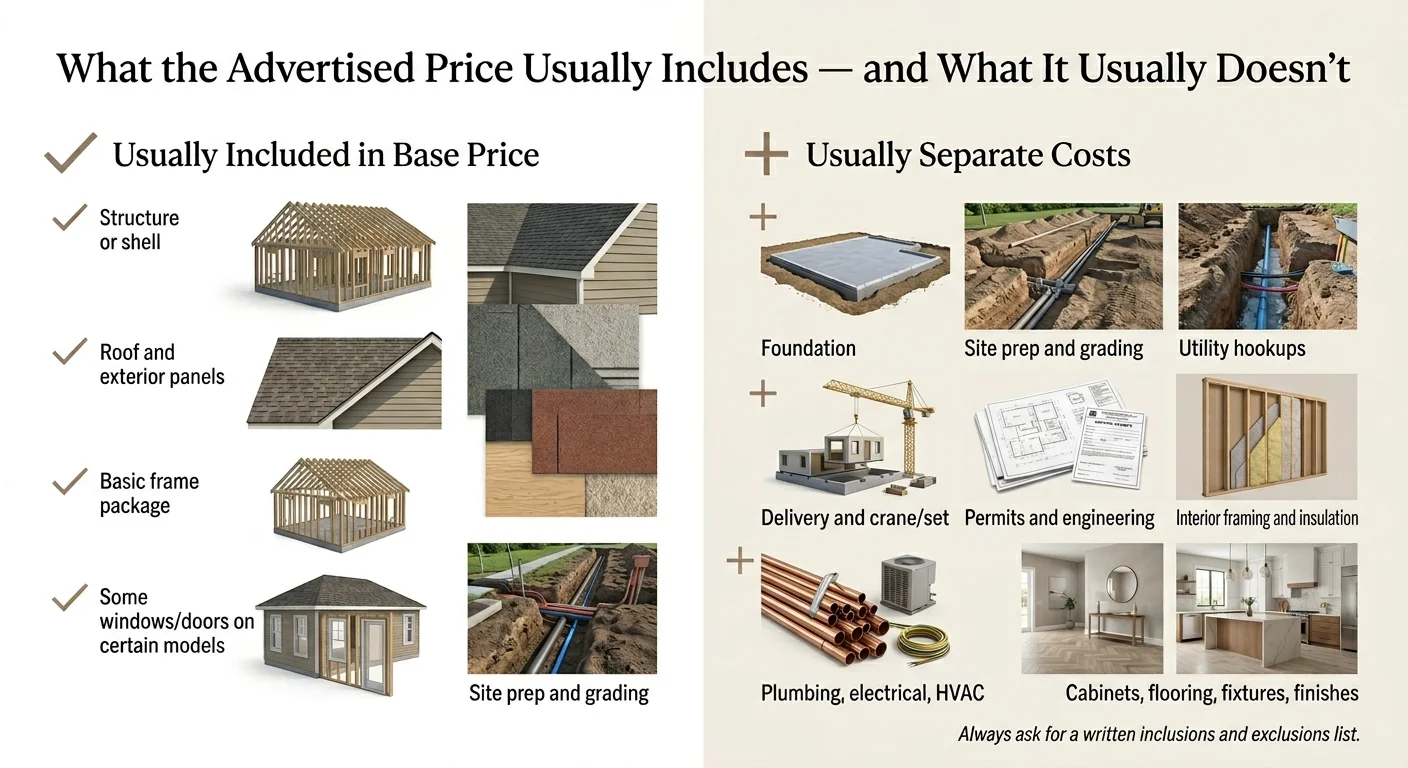
Always ask for a written inclusions and exclusions list before signing anything
| Item | Kit Shell Companies | Modular / Prefab Home Companies | HUD Manufactured Home Dealers |
|---|---|---|---|
| Structural frame | ✅ | ✅ | ✅ |
| Roof & siding panels | ✅ | ✅ | ✅ |
| Windows & doors | ❌ (some include) | ✅ (usually) | ✅ |
| Insulation | ❌ (except SIPs) | ✅ | ✅ |
| Interior walls / drywall | ❌ | ✅ | ✅ |
| Plumbing / electrical / HVAC | ❌ | ✅ (rough-in + fixtures) | ✅ |
| Cabinets & countertops | ❌ | ✅ (standard or upgraded) | ✅ (standard) |
| Flooring | ❌ | ✅ | ✅ |
| Delivery to site | Sometimes (varies) | Usually quoted separately | Usually included within region |
| Crane / set on foundation | ❌ | Quoted separately | Quoted separately |
| Foundation / slab | ❌ | ❌ | ❌ |
| Site prep & grading | ❌ | ❌ | ❌ |
| Utility hookups | ❌ | ❌ | ❌ |
| Permits & engineering | ❌ (stamped plans sometimes) | ❌ (plans usually included) | ❌ |
Where to Find Prefab Barndominium Floor Plans
If you're going the kit-shell route, you'll need a floor plan before anything else — and your plan needs to be engineered for the specific kit type and your local codes.
Kit company plans
Most shell kit companies (Worldwide Steel, My Barndo Plans, BuildingsGuide) offer stock floor plans designed for their specific structural systems. Usually included with the kit or available for a few hundred dollars. The advantage: pre-engineered for their steel package. The limitation: you're choosing from their catalog, and modification costs can add up.
Independent plan marketplaces
For broader design options or a plan you can take to any builder. Architectural Designs has 30,000+ plans including a dedicated barndominium collection with cost-to-build estimates by zip code. Advanced House Plans has a growing barndominium collection with steel kit options. Truoba offers modern designs that work well for barn-inspired builds.
Custom design
For a fully custom floor plan, expect $4,500–$6,000+ for a designer or architect. A stock plan modified to your needs ($1,500–$3,000 in modification fees) is often the best value compromise between custom and off-the-shelf.
Floor Plan Library
30,000+ Barndominium & Barn House Plans
Architectural Designs carries a dedicated barndominium and barn house collection with cost-to-build estimates by zip code. Browse by size, bed count, and style — filter for metal-frame compatible designs.
Affiliate link. Full disclosure.
Browse Barndominium Floor PlansWill a Prefab Barndominium Work on Your Property?
A prefab barndo is only a good deal if your land, access, utilities, and local jurisdiction cooperate. The site can kill the project faster than the house can save it.
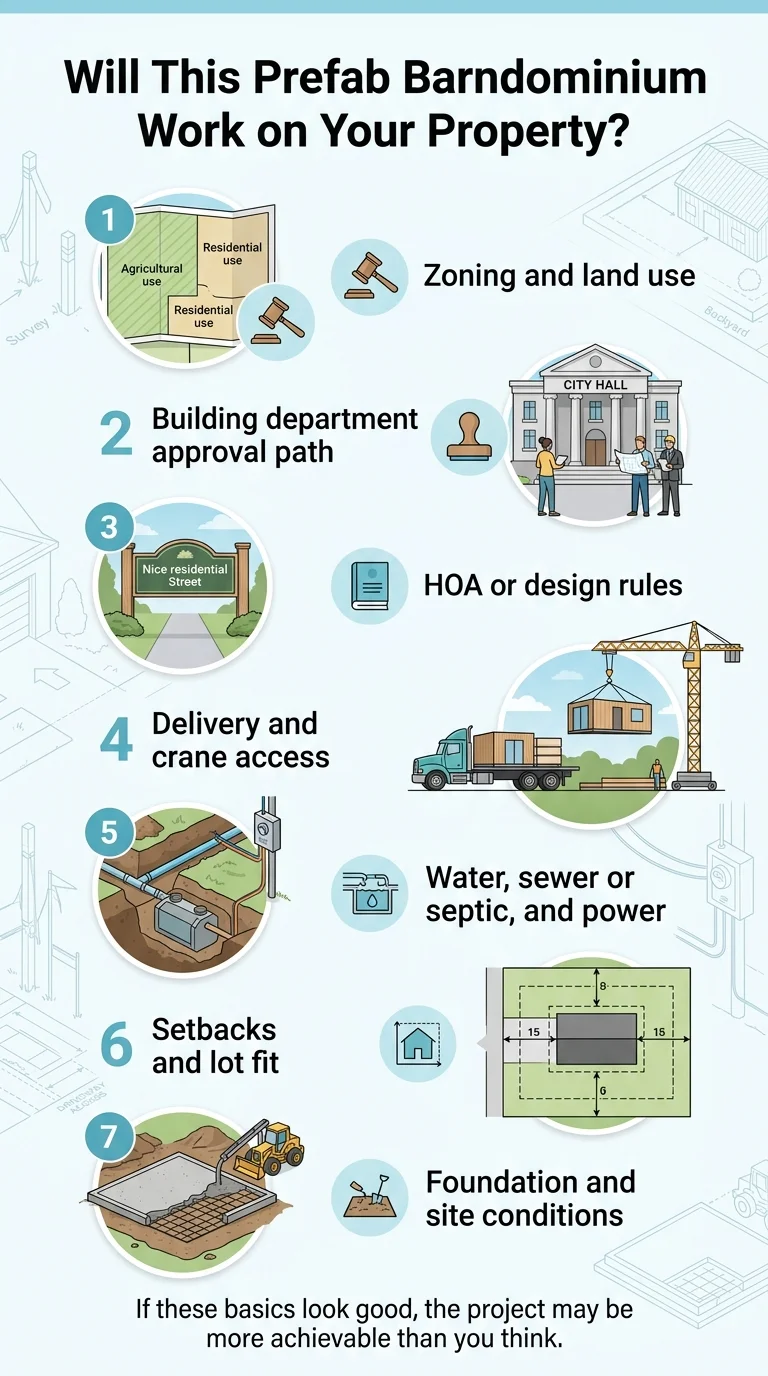
If these basics look good, the project may be more achievable than you think
The 7-Point Site Fit Checklist
Zoning and land use
Is your property zoned residential, agricultural, or mixed-use? Local rules vary widely on whether barndominiums are permitted — some jurisdictions restrict metal-clad exteriors or have minimum square footage requirements. A 10-minute call to your county planning department is the single best investment you can make before spending a dollar on anything else.
Building code acceptance
Will your local building department accept your chosen product type? Kit shells must be finished to local IRC/IBC code. Modular homes need to arrive with the appropriate state or third-party inspection label. Manufactured homes follow HUD code and may face different placement rules. Confirm the specific code path with your building department before ordering.
HOA and design review
Many HOAs prohibit metal siding, barn-style aesthetics, or structures under a certain square footage. Check CC&Rs before you fall in love with a floor plan.
Delivery access
Can a flatbed truck — or multiple trucks — reach your build site? For modular homes, can a crane operate safely? Tight driveways, steep grades, low bridges, and overhead power lines all create delivery complications that add cost or kill the project.
Utility distance
How far are water, sewer (or septic), electric, and gas connections from your build site? In rural areas, bringing in utilities to undeveloped land can add $9,000–$35,000+ to your budget. If you need a well and septic system, plan accordingly.
Environmental and engineering factors
Your jurisdiction likely has specific requirements for wind load, snow load, seismic zone, and sometimes wildfire resistance. Your kit or modular home must be engineered for your specific site conditions — not just stamped generically.
Setbacks and lot coverage
Every jurisdiction has setback requirements (minimum distance from property lines) and maximum lot coverage percentages. Verify your proposed footprint fits within these limits before ordering.
Free Tool · 60 seconds
Not sure about zoning or what your property allows? Get lot-specific basics in 60 seconds.
Lot fit, setbacks, zoning basics, and a rough budget — free, no commitment, no sales pitch.
Can a Prefab Barndominium Work as an ADU?
This is where barndominium intent and ADU intent overlap — and where the answer gets nuanced.
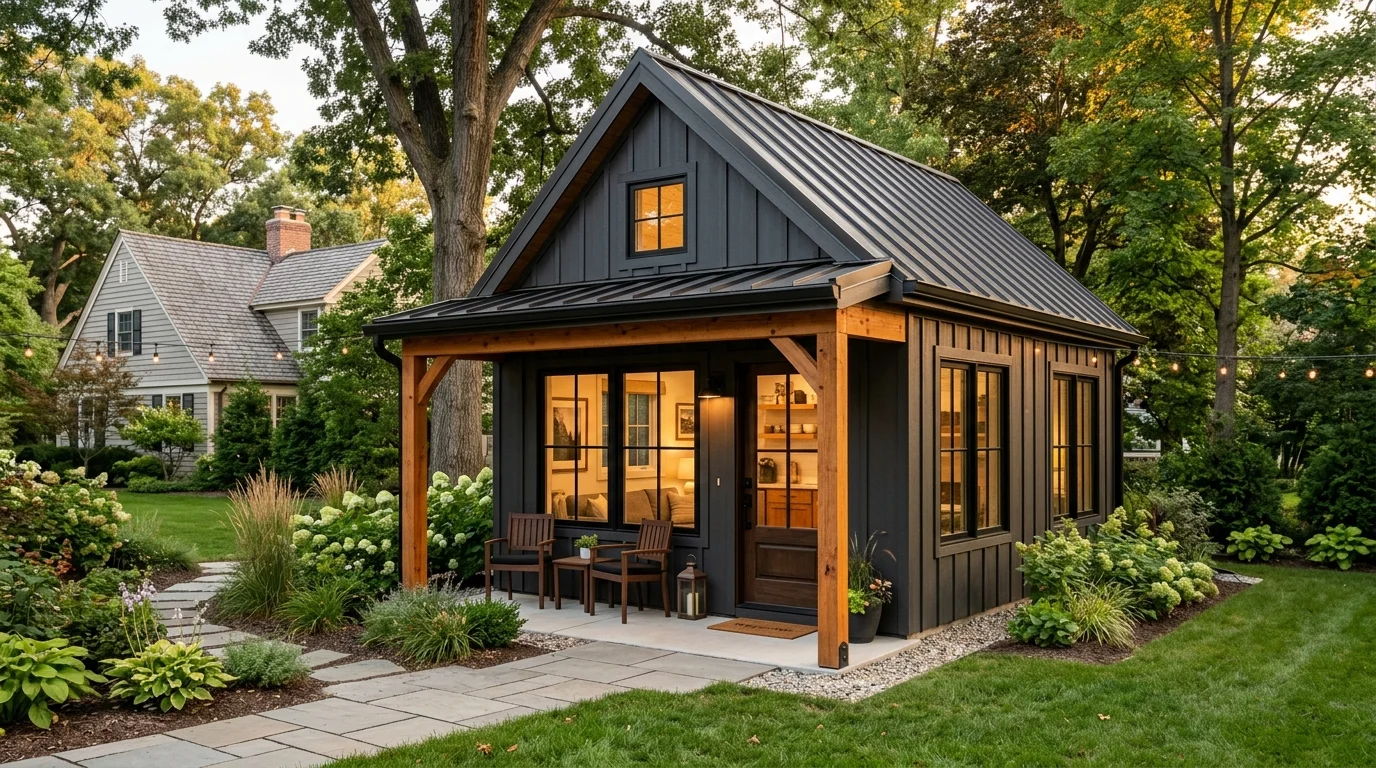
A small barn-style prefab unit on a permanent foundation can qualify as a legal ADU in many jurisdictions
Can work as an ADU
Smaller barn-style prefab units (400–800 sqft) can work as ADUs in jurisdictions that allow accessory dwelling units. A finished unit set on a permanent foundation in a backyard is functionally identical to any other prefab ADU. Many ADU ordinances cap unit size or require the ADU to remain subordinate to the primary home — verify your local rules with your city or county planning department.
Usually doesn't fit ADU rules
Larger shop-house barndominium concepts (a 2,400+ sqft shop-house) are typically primary residences, not ADUs. Most ADU ordinances restrict size, use, or both.
Code path matters here too
For Fannie Mae financing purposes, a manufactured home can serve as an ADU if it's on a permanent foundation and legally classified as real property, provided the primary dwelling is site-built or modular (Fannie Mae Selling Guide B2-3-04, verified April 2026). But your local jurisdiction may have its own restrictions.
If your real goal is a backyard unit — guest house, rental, or aging-parent cottage — also read our Best Prefab ADU Companies guide, which covers the full ADU-specific market.
How Do You Finance a Prefab Barndominium?
The uncomfortable truth first: financing a barndominium takes more preparation than financing a conventional home. It's far from impossible — people do it every day — but you need to know the landscape.
Why It Takes More Work
Fewer appraisal comparables
Lenders need appraisers to find similar recent sales near your property. In many areas, there aren't enough barndominium sales to establish comps easily, which can result in lower-than-expected appraisals.
Classification confusion
Some lenders classify barndominiums as agricultural or commercial structures rather than residential, which changes available loan programs. Mixed-use structures (living space + shop) can complicate this further.
Lender unfamiliarity
Many local banks and credit unions haven't underwritten enough barndominium loans to have standard processes. You may need to talk to more lenders than you would for a conventional home.
The Financing Paths That Work
| Financing Path | How It Works | Best For |
|---|---|---|
| Construction-to-permanent loan | Single- or dual-close loan covering construction, then converting to permanent mortgage | Kit shell builds, custom projects |
| USDA single-close construction loan | Government-backed, for eligible rural properties | Rural builds, income-qualifying buyers |
| FHA one-time close | Construction + permanent in one closing, lower credit requirements | First-time builders |
| VA construction loan | For eligible veterans/active duty service members | Veterans and service members |
| Farm Credit | Specialized rural/agricultural construction lending | Rural properties, experienced barndominium loan officers |
| HELOC on existing property | Use current home equity to fund construction | Buyers who already own property with equity |
| Conventional mortgage (post-construction) | Standard mortgage once barndominium is complete with certificate of occupancy | Completed, permitted, residentially classified barndos |
This is general educational information, not lending advice. We are not a lender or broker. Verify all details, rates, and requirements directly with lenders and financial advisors.
ADU & Prefab Financing
Full range of financing paths — explained
HELOC, construction-to-permanent loans, USDA, FHA one-time close — all compared in plain English.
Prefab Barndominium vs Site-Built vs Modular vs Manufactured: The Real Comparison
Every path has tradeoffs. Here's the honest side-by-side:
| Factor | Kit Shell Barndo | Modular Barndo | HUD Manufactured | Site-Built Custom |
|---|---|---|---|---|
| Speed to move-in | 6–12 months | 4–8 months | 4–8 weeks (after delivery) | 10–18 months |
| Cost predictability | Low (interior is a variable) | High (factory pricing) | High (factory pricing) | Medium (weather, labor, change orders) |
| Design freedom | High (wide open interior) | Moderate (factory constraints) | Low–Moderate (standard models) | Unlimited |
| Shop/garage integration | Excellent (clear-span steel) | Limited | Very limited | Good but expensive |
| Financing ease | Harder (construction loan needed) | Moderate–Good (modular code path) | Manufactured loan programs | Easiest (standard construction loan) |
| Appraisal / resale | Harder (fewer comps) | Good (comparable to site-built) | Varies (manufactured classification) | Best (most comps available) |
| Best for | Shop-house, DIY builder | Primary residence, predictable budget | Budget-conscious, rural, quick occupancy | Unique lots, maximum customization |
Timeline estimates based on HomeGuide and builder-reported ranges, 2026.
What Mistakes Make Prefab Barndominiums Cost More Than Expected?
Here are the six that come up over and over:
Confusing shell price with project price
We've covered this extensively, but it's worth repeating because it's the #1 mistake in the entire barndominium space. A $48,000 kit becomes a $280,000 home. That's not a scam — it's the reality of construction. The kit is the structure. The rest is the house.
Skipping the permit and code check
Ordering a $60,000 steel kit and then discovering your county requires specific exterior cladding, or doesn't allow metal-clad residential structures, is an expensive lesson. Always verify zoning, building codes, and HOA rules before ordering anything.
Ignoring crane access and delivery logistics
Modular sections need a crane. Steel kits arrive on flatbed trucks. If your driveway is too narrow, your lot is too steep, or power lines are in the way, delivery logistics can add thousands — or make the project impossible without regrading.
Over-customizing before locking the basics
Custom floor plans, non-standard window sizes, upgraded exterior treatments, and design changes mid-build are the fastest way to blow a budget. Lock your structural design, floor plan, and basic specifications before you start upgrading finishes.
Underestimating interior build-out on a shell kit
The interior of a shell barndominium is essentially a custom home build inside a metal box. You need framing, insulation, drywall, plumbing, electrical, HVAC, flooring, cabinets, fixtures, and finishes. If you've never managed a construction project, budget extra for a general contractor.
Assuming 'cheaper than a house' without comparing equal specs
A barndominium with mid-range finishes can be cheaper than an equivalent conventional home. But if you compare a barn shell with concrete floors to a finished conventional home with hardwood and granite, you're comparing different products at different finish levels. Compare like-for-like.
Who Should Buy a Prefab Barndominium — and Who Shouldn't
Great Fit
You want open-span living + attached shop or garage — this is where barndominiums genuinely shine
You own rural or semi-rural land with good access and utilities nearby
You're building a smaller guest house, rental unit, or aging-parent cottage
You're an experienced DIYer or owner-builder who can manage subs
You value durability and low maintenance — steel resists fire, pests, rot, and mold
Not the Best Fit
Your lot has serious access, slope, or utility problems — site-built may actually be cheaper
Your HOA or municipality restricts metal cladding or barn-style exteriors
You need the simplest possible resale story — barndominiums still face appraisal challenges in some markets
You're chasing the under-$100K myth without construction experience — a shell kit is the start of a construction project
Free Tool · 60 seconds
See what you can build at your address — free property report in 60 seconds
Lot fit, setbacks, zoning basics, and a rough budget — free, no commitment, no sales pitch.
How to Choose the Right Prefab Barndominium Company
The prettiest model photos matter less than whether the company can deliver — literally and figuratively — for your specific project.
12 Questions to Ask Before You Pay a Deposit
What exactly is included in this price, and what is NOT? Get it in writing.
Is this kit/unit engineered and stamped for my specific build site and local codes?
What is the realistic total project cost to be move-in ready — not just the shell or unit price?
What type of foundation does this require, and do you provide the anchor bolt plan and foundation layout?
What equipment and crew are needed to assemble or set this? Can you recommend local contractors?
What is the current lead time from deposit to delivery?
What warranty covers the structure, and what does it exclude?
Will this product pass residential building code inspection in my county? Have you built in my state before?
Can you connect me with 2–3 past customers who completed similar projects?
What happens if materials arrive damaged or incorrect?
What is your deposit and payment schedule? (Red flag: more than 30–50% upfront before materials ship.)
If I need to change my order after signing, what are the costs and timeline impacts?
Free Download
Free 2026 ADU & Prefab Starter Kit
Full vendor comparison checklist, budget worksheet template, permit preparation guide, and prefab vs. site-built decision framework. Yours to keep — no strings attached.
How Long Does a Prefab Barndominium Take to Build?
| Build Phase | Typical Timeline |
|---|---|
| Design, engineering, and permitting | 4–12 weeks |
| Kit fabrication and delivery (or modular factory build) | 4–16 weeks depending on backlog |
| Foundation pour and cure | 3–4 weeks |
| Shell/module assembly or set | 4–10 days (kit) / 1–3 days (modular set) |
| Interior rough-in (framing, plumbing, electrical, HVAC) | 4–8 weeks |
| Interior finish (drywall, flooring, cabinets, fixtures, paint) | 6–12 weeks |
| Final inspections and punch list | 1–3 weeks |
| Total: Kit shell path | 6–12 months |
| Total: Modular path | 4–8 months |
Timeline ranges based on HomeGuide and builder-reported data, 2026. Conventional stick-built homes typically take 10–18 months.
Frequently Asked Questions About Prefab Barndominiums
Are prefab barndominiums cheaper than regular houses?
Generally yes, at equivalent finish levels. The shell and structural framing cost less per square foot than conventional stick-built framing. But interior finishes — which make up 50–70% of total project cost — cost the same regardless of your shell type. The savings depend on your finish level, location, and how much of the work you manage yourself.
Can you finance a prefab barndominium?
Yes, through construction-to-permanent loans, USDA single-close construction loans, FHA one-time close loans, VA construction loans, Farm Credit, or HELOCs on existing property. It requires more preparation than financing a conventional home but is far from impossible with the right lender.
What is included in a prefab barndominium kit?
Typically: structural steel frame, roof trusses, metal siding, roofing panels, trim, and fasteners. Usually NOT included: foundation, insulation (except SIPs), windows/doors (varies), interior framing, drywall, plumbing, electrical, HVAC, flooring, cabinets, fixtures, utilities, and permits. Always get the inclusion/exclusion list in writing before ordering.
Is a modular barndominium the same as a manufactured barndominium?
No. Modular homes are built to the IRC under state agency administration — the same code standard as site-built homes. Manufactured homes are built to federal HUD code (24 CFR Part 3280). The code path, financing options, and resale profile are fundamentally different.
Can you get a prefab barndominium under $100K?
For a shell kit — yes. For a fully finished, move-in-ready home — only in very narrow scenarios involving small footprints under 600 sqft, simple sites with existing utilities, basic finishes, and significant DIY work.
How long does a prefab barndominium take to build?
Kit shell path: typically 6–12 months from design to move-in. Modular path: typically 4–8 months. Conventional stick-built homes typically take 10–18 months.
Can a prefab barndominium be used as an ADU?
Smaller barn-style prefab units (400–800 sqft) can work as ADUs in jurisdictions that allow accessory dwelling units. Larger shop-house concepts usually don't fit ADU size or use restrictions. Verify local ADU rules directly with your city or county.
Do prefab barndominiums hold their value?
Resale and appreciation depend on classification, location, comp availability, finish quality, and local buyer demand. Well-built, residentially classified barndominiums with quality finishes and broad design appeal tend to perform well. Building with standard bedroom counts, modern finishes, and good curb appeal helps protect your investment.
Are prefab barndominiums safe in tornadoes, hurricanes, or heavy snow?
Steel-frame barndominiums can be engineered to handle significant wind and snow loads. The key is ensuring your specific structure is engineered for your site's conditions — not just rated generically. Always verify engineering specs with your manufacturer and local building department.
Do prefab barndominiums need a permanent foundation?
Kit shells are typically erected on a concrete slab-on-grade with engineered footings. Modular homes require a permanent foundation for Fannie Mae conventional financing eligibility. For HUD/manufactured homes, a permanent foundation is generally required for real-property treatment and conventional mortgage programs.
Can you build a prefab barndominium with a garage or shop?
Yes — this is one of the strongest use cases for barndominium construction. Steel kit shells with Red Iron framing support wide clear-span interiors, making them ideal for integrated shop/garage space under the same roof as living quarters.
Can an HOA prevent a prefab barndominium?
Yes. Many HOAs have covenants restricting metal cladding, barn-style exteriors, minimum square footage, or structures that don't match the neighborhood aesthetic. Always review your HOA's CC&Rs and architectural review process before committing to a barndominium design.
Are prefab barndominiums safe in tornadoes, hurricanes, or heavy snow?
Steel-frame barndominiums can be engineered to handle significant wind and snow loads. The key is ensuring your specific structure is engineered for your site's conditions — not just rated generically. Proper anchoring, reinforced footings, and engineered connections are what make a steel building storm-resistant. Always verify engineering specs with your manufacturer and local building department.
How long does a prefab barndominium last?
With proper maintenance — regular cleaning, fastener tightening, and prompt attention to scratches or minor surface damage — a steel-frame barndominium can provide decades of service. Wood-frame barn kits offer comparable longevity with proper treatment and pest prevention. Service life depends on design quality, coating systems, installation quality, and ongoing maintenance.
Can you build a prefab barndominium with a garage or shop?
Yes — this is one of the strongest use cases for barndominium construction. Steel kit shells with Red Iron framing support wide clear-span interiors, making them ideal for integrated shop/garage space under the same roof as living quarters. If you plan to finance with a conventional loan, confirm with your specific lender what percentage of total space must be finished living area.
Can you get a two-story prefab barndominium?
Yes. Engineered steel framing supports multiple stories and vaulted ceilings. Many kit companies and modular builders offer two-story floor plans. Two-story designs give you more living space on a smaller footprint, which can be important on lots with coverage limits.
Are prefab barndominiums good for rental income?
Smaller barn-style ADU/guest units can make strong rental properties depending on local regulations, market demand, and operating expenses. The lower construction cost per square foot can improve yield compared to conventional construction in many markets. Rental performance depends on local regulations, demand, expenses, financing, and management — these are not guarantees of returns.
What insulation is best for a steel barndominium?
Closed-cell spray foam is the most common recommendation for steel-frame barndominiums because it provides thermal insulation, vapor barrier, and air sealing in one application. SIPs (Structural Insulated Panels) are another excellent option — the insulation is built into the structural panels. Standard fiberglass batts can work but require careful vapor barrier management to prevent condensation on steel surfaces.
How We Verified Prices, Companies, and Code-Path Claims
What was verified directly: Company starting prices confirmed from official websites and published pricing pages as of April 2026. Service areas and shipping scope confirmed from company websites. Kit type classifications (Red Iron, SIPs, CFS, wood-frame) confirmed from company product descriptions. Code path descriptions (modular vs. manufactured vs. kit shell) confirmed from company documentation and cross-referenced against Fannie Mae Selling Guide definitions and HUD standards (24 CFR Part 3280).
What was estimated editorially: All-in project cost ranges are editorial estimates based on published cost data from HomeGuide (January 2026) and Angi (March 2026), combined with vendor-reported kit pricing. These are clearly marked as estimated ranges throughout the page. Actual project costs vary significantly by location, finish level, site conditions, and local labor rates.
How we sort the shortlist: The company comparison table is sorted by best-fit use case. Both affiliate and non-affiliate companies are included. Affiliate partnerships do not influence editorial placement, ranking, or recommendations.
How to report a correction: If you represent a company listed in this guide and believe any information is inaccurate, or if you're a reader who has found an error, contact us at corrections@dwellingindex.com.
Important: This guide is educational, not legal, financial, or construction advice. Always confirm zoning rules, building requirements, and financing options directly with your local planning department and qualified professionals.
Your Next Step
If you've read this far, you know more about prefab barndominiums than 95% of the people searching this term. You know the difference between a $48K shell kit and a $280K finished home. You know why code path matters for financing. You know which companies fit which goals. And you know the questions to ask before spending a dime.
Now the question is whether a prefab barndominium — or any prefab structure — fits your specific property.
Free Tool · 60 seconds
See what you can build at your address — lot fit, setbacks, zoning, and budget in 60 seconds
Lot fit, setbacks, zoning basics, and a rough budget — free, no commitment, no sales pitch.
Free Download
Free 2026 ADU & Prefab Starter Kit
Full vendor comparison checklist, budget worksheet template, permit preparation guide, and prefab vs. site-built decision framework. Yours to keep — no strings attached.
Related Guides
Best Prefab ADU Companies
Full ADU-specific market comparison with pricing, code paths, and delivery scope.
ADU & Prefab Financing Options
HELOC vs construction loan vs USDA — full comparison in plain English.
ADU Floor Plans Guide
32 layouts by size, type, and use case — from studio micro-ADUs to 1,200 sq ft two-bedrooms.
Cheapest Prefab ADU Options
Real prices on the most affordable factory-built ADU options in 2026.