
Cheapest Prefab ADU Options in 2026: Real Prices, Not Just Sticker Prices
Prices last verified: April 2026 · Editorial methodology · Affiliate disclosure
The cheapest prefab ADU kits start around $27,000 for the unit alone. But that number will mislead you if you stop there.
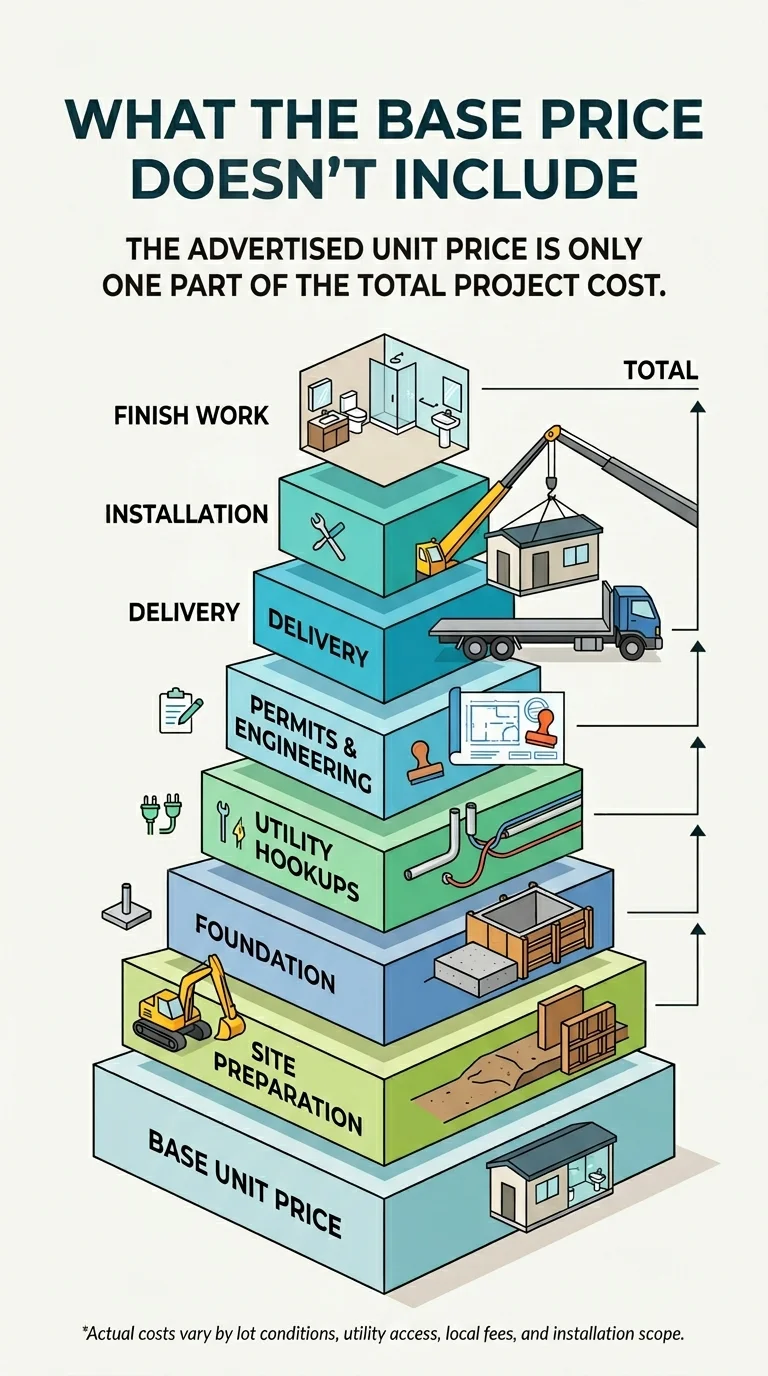
Once you add foundation work, utility hookups, site prep, delivery, and permits, the cheapest livable, permitted prefab ADU realistically costs $80,000–$130,000 all-in for a small studio (200–400 sq ft) — and $150,000–$260,000+ for a full one-bedroom. That is still meaningfully less than most custom site-built ADUs on standard lots, and it is a real, proven path to a backyard unit that generates rental income, houses a family member, or adds lasting property value.
The problem? Most "cheapest prefab ADU" pages show the base unit price and hide everything else. Or worse — they list products from retail marketplaces that will never pass a building inspection.
We pulled public pricing directly from manufacturer websites, estimated realistic installed budgets, and filtered out the fake-cheap options that don't qualify as legal ADUs. Below is the comparison we wish existed when we started: every affordable prefab ADU option worth considering, with the advertised price and what you should actually budget — sorted by total installed cost.
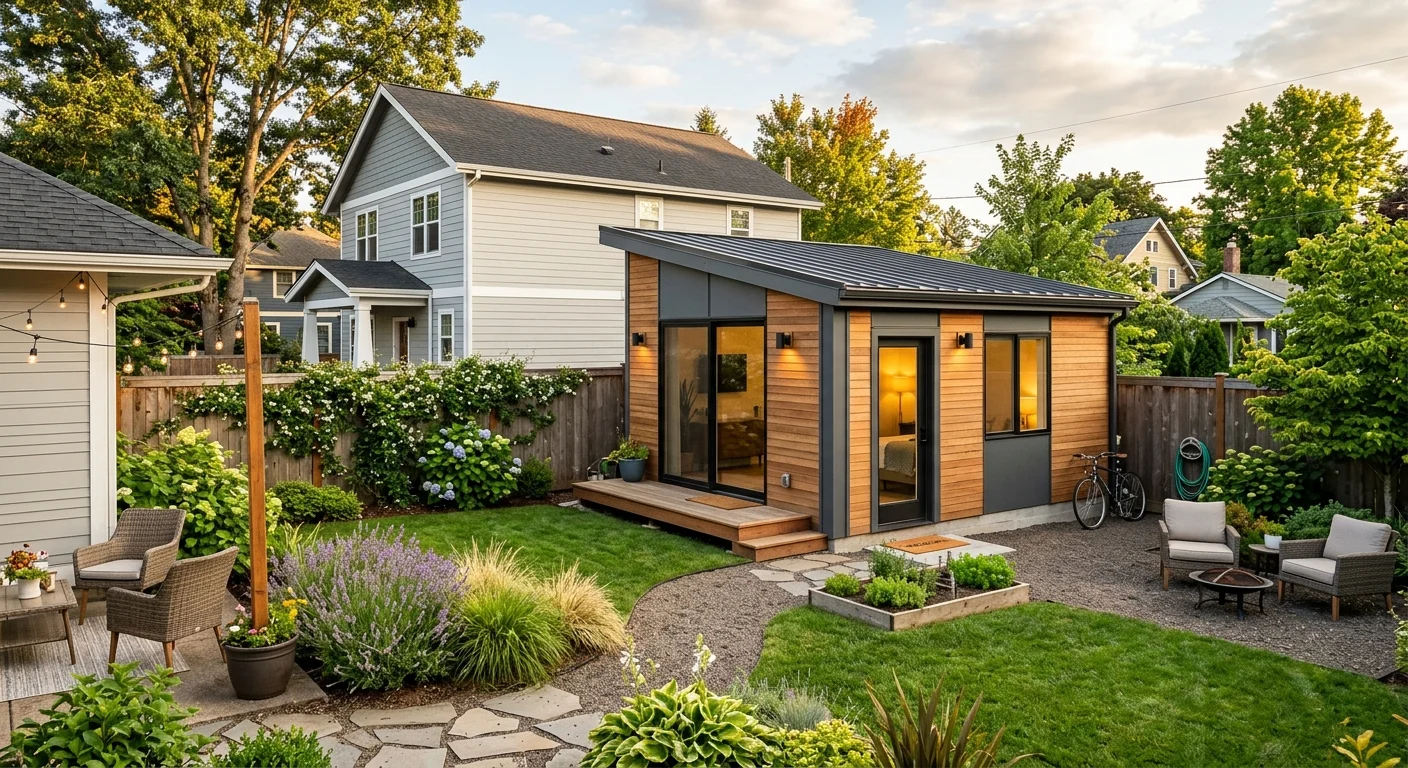
What Are the Cheapest Prefab ADU Options in 2026?
Every company below has public pricing we verified from their official website or published materials. Where we could not verify a current public price, we note "quote required." We estimated the "all-in installed" range using national averages for foundation, site prep, utility hookups, delivery, and permits on a standard flat lot with utilities within 50 feet of the ADU site.
Sorted by estimated all-in installed cost, lowest first:
| Company | Model / Size | Public Base Price | Est. All-In Installed | Type | Kitchen + Bath | Ships Nationwide |
|---|---|---|---|---|---|---|
| Mighty Small Homes | Modern SIP Kit · 256 SF | From $26,885 | $75,000–$130,000 | SIP Kit (owner-assembled) | Configurable | Yes |
| prefabADU | Micro/Mini Kits · 150–399 SF | $30,000–$65,000 | $80,000–$130,000 | DIY Kit | CA focused | |
| Studio Home | Summit Series · 308–1,000 SF | From ~$40,000 (product + plans) | $100,000–$250,000+ | Panelized Kit | Configurable | Yes |
| Modular Home Direct | Steel-Frame · 284 SF | From $56,500 | $110,000–$170,000 | Modular | Yes | |
| Craftsman Tiny Homes | Summit · 410 SF | $65,500 | $115,000–$170,000 | Custom Build | Yes | |
| Modular Home Direct | Steel-Frame · 432+ SF | From $70,000 | $130,000–$220,000 | Modular | Yes | |
| Kountry Containers | Showcase · 1BR/1BA | $80,000 (finished) | $130,000–$185,000 | Container | Yes | |
| Craftsman Tiny Homes | 800 SF · 2BR | $129,900 | $185,000–$265,000 | Custom Build | Yes | |
| BOXABL | Casita · 361 SF | Quote required | Varies by site | Foldable Modular | Yes (from NV) |
"Public base price" is what the manufacturer advertises for the unit (or unit + plans). "Est. all-in installed" adds our estimate for foundation, site prep, utilities, permits, and delivery on a standard flat lot. Your actual costs will vary. Verify all pricing directly with each manufacturer. Prices verified April 2026.
Affiliate note: Some links in this guide lead to affiliate partners. This table is sorted by estimated all-in cost, not by affiliate relationship. Full editorial policy →
Why the Gap Between Base Price and Installed Cost Is the Number That Matters
You will see companies advertise a prefab ADU "starting at $27,000" or "$65,000." Those numbers are real — for the unit. But a livable ADU is not a unit sitting in a crate. It is a unit on a foundation, connected to water, sewer, and electricity, with a building permit and certificate of occupancy. The unit price typically represents only 40–60% of your total project cost.
One well-documented example: a family committed to a modular unit they believed would cost around $165,000 total. After foundation, site prep, utility hookups, crane costs, permits, and finish work, the actual project cost came to roughly $345,000. They walked away from their deposit. That story is not unusual. It is what happens when you plan your budget around the sticker price instead of the installed price.
The Honest Part: Prefab Is Not Always the Cheapest ADU Path
Here is what most prefab comparison pages will not tell you, because they are selling prefab.
| ADU Path | Realistic Budget Range | Privacy | Disruption | Speed | Best For |
|---|---|---|---|---|---|
| Internal conversion / JADU | $20,000–$80,000 | Low | Moderate | Fast | Lowest possible cost |
| Garage conversion | $40,000–$150,000 | Medium | Moderate | Moderate | Existing garage + tight budget |
| Small prefab (under 400 SF) | $75,000–$170,000 | High | Low | Fast | Detached unit, minimal hassle |
| Attached addition | $100,000–$250,000 | Medium | High | Slow | Seamless extension |
| Site-built detached | $150,000–$400,000+ | High | High | Slowest | Full custom, complex lots |
Budget ranges based on ADU builder industry data and construction cost reports, 2025–2026. California ADUs of 750 sq ft or less are generally exempt from impact fees under Gov. Code §66311.5(c), per HCD guidance. Local requirements vary.
If a garage conversion might be your better path, see our full garage conversion cost guide with the same transparency.
Which Cheap Prefab Path Fits Your Budget?
Budget is how you are actually thinking about this. Here is the reality at each level — not what companies advertise, but what is achievable.
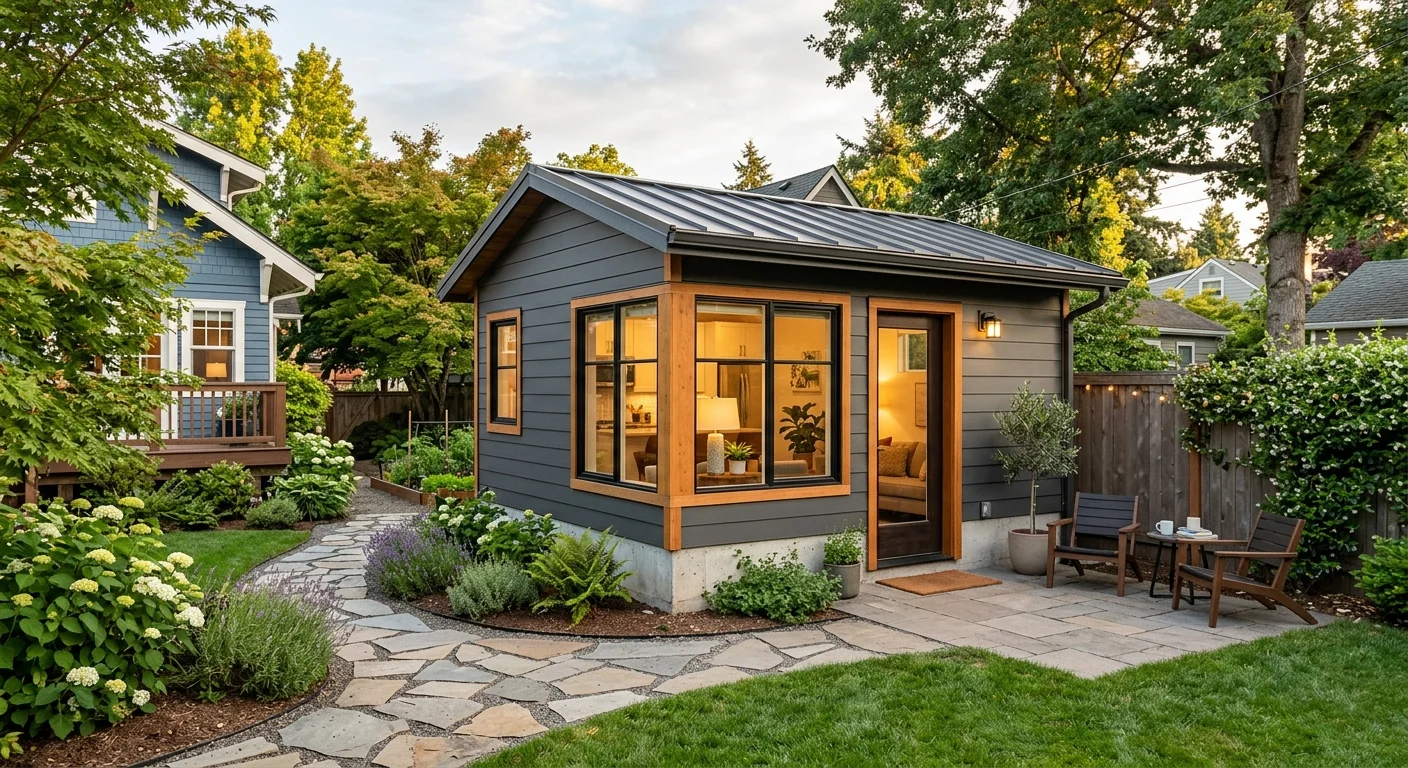
What's realistic
A small shell or SIP kit (150–350 SF) that you assemble yourself or hire a local contractor to build out. Flat, accessible lot with utility access nearby is a must.
Best-fit options
Mighty Small Homes SIP kits (from $26,885 base), prefabADU Micro kits.
Who this works for
Handy homeowners comfortable managing subcontractors or doing real work themselves. Owner-builder path requires more planning and permitting effort, but the savings are substantial on simple lots.
What's realistic
A complete, livable 1BR/1BA prefab ADU (300–500 SF), professionally installed on a standard lot. This is where prefab delivers on its core promise — faster, simpler, and still meaningfully more affordable than going custom.
Best-fit options
Craftsman Tiny Homes Summit at 410 SF ($65,500 base + site work), Modular Home Direct 284–432 SF models, Kountry Containers finished units, Studio Home smaller Summit models.
Who this works for
Homeowners who want a real, permitted, livable unit without managing every subcontractor themselves.
Best value in the $100K–$175K range
Craftsman Tiny Homes — Summit model from $65,500
Custom ADUs with full kitchen, full bath, and transparent pricing. 410 SF, ships nationwide.
Affiliate link — we may earn a commission at no cost to you.
What's realistic
A full 1–2 bedroom unit (500–1,000 SF), turnkey installation with most or all site work handled by the company.
Best-fit options
Modular Home Direct steel-frame modular (factory-direct, nationwide GC network), Craftsman Tiny Homes 800 SF ($129,900 base), BOXABL, Villa Homes, Abodu.
Who this works for
Homeowners who want a second living space that is rental-ready, family-ready, or both. At this level, the unit functions like a small home — not a backyard pod.
Turnkey modular option
Modular Home Direct — steel-frame modular, factory-direct pricing
Models from 284 to 2,000+ SF. Nationwide general contractor network handles site work.
Affiliate link — we may earn a commission at no cost to you.
Is This Actually a Legal ADU? The Filter Most Pages Skip
Not everything marketed as a "prefab ADU" is actually a legal accessory dwelling unit. Retail marketplace listings, expandable container boxes, and prefab sheds may look like small homes — but many cannot get permitted, will not be recognized by lenders or appraisers, and could create legal liability.
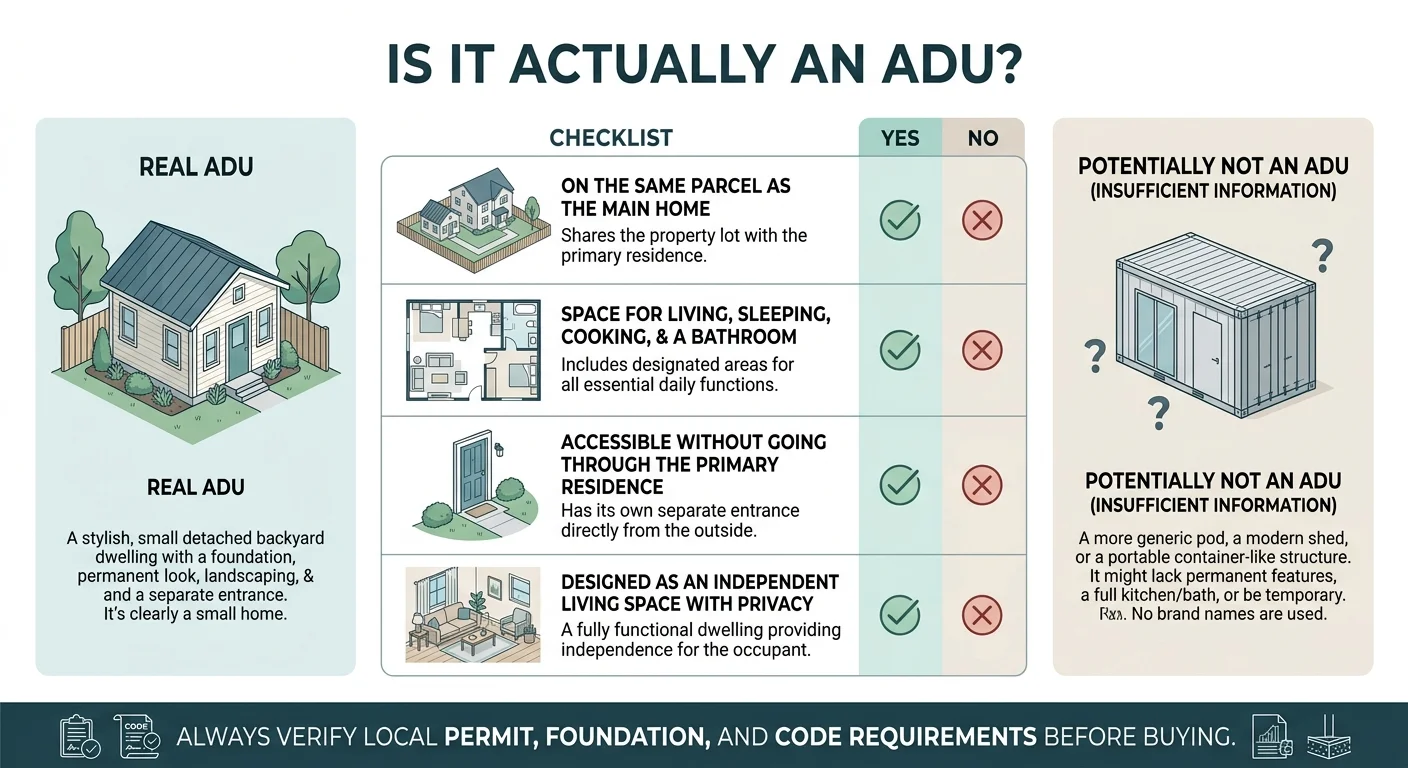
A legal ADU — one that adds appraised property value, qualifies for financing, and can be lawfully rented — generally requires:
| Requirement | Why It Matters |
|---|---|
Separate living space with sleeping area | Must function as an independent dwelling |
Full kitchen (sink, cooking appliance, refrigeration) | Distinguishes ADU from accessory structure |
Full bathroom | Required for habitable dwelling classification |
Separate entrance | Required in most jurisdictions |
Permanent foundation | Required for code compliance, traditional financing, and appraisal |
Built to IRC or applicable local building code | Must pass inspection |
Building permit from local jurisdiction | Cannot be legally occupied without it |
Sources: Fannie Mae ADU eligibility requirements; HUD manufactured-home regulations (24 CFR Part 3280); International Residential Code (IRC). Fannie Mae guidance does allow manufactured-home ADUs under specific conditions including real-property conversion. The code and financing path must be confirmed for your specific situation. Verified April 2026.
Is Prefab Actually Cheaper Than Site-Built?
Usually — but not by as much as marketing suggests, and not always.
On a standard flat lot with good access, prefab typically comes in below a comparable custom site-built ADU. The factory environment cuts labor costs, minimizes weather delays, and compresses the timeline. That efficiency translates to real savings.
But on complex lots — steep slopes, narrow side-yard access, unusual setbacks, or difficult soil — site work costs for prefab can escalate fast. A custom builder who adapts to your lot in place may actually deliver a lower total cost than forcing a pre-sized box onto a site it was not designed for.
When prefab wins:
When site-built wins:
The move: Get quotes for both before committing to either path. Real homeowners have been surprised in both directions.
How to Compare Prefab Companies Without Getting Burned
Twelve questions to ask every prefab company before you put down a deposit:
Red flags
• No clear answer on total installed cost
• No code certification
• "Price varies by site" with no ballpark
• Non-refundable deposit before site assessment
• Pressure to sign before you've done your homework
Green flags
• Published all-in pricing or clear base + site work breakdowns
• Pre-approved plans in your state
• Transparent scope of work
• Customer references provided
• Defined, written timeline
Five Mistakes That Turn a Cheap Prefab ADU Into an Expensive One
Budgeting against the sticker price instead of the installed price
The fix: Always ask for the fully installed number before committing. If the company will not provide it, get a separate site work estimate from a local contractor first.
Skipping the site assessment before choosing a unit
The fix: Soil conditions, slope, access width, and utility distance can double your site costs. A $500 site survey before purchase can prevent a $50,000 surprise after.
Buying a unit that is not code-compliant in your jurisdiction
The fix: Verify the unit meets your local building code and qualifies as a dwelling under your city's zoning. A 'prefab ADU' from a retail listing is not necessarily permittable.
Ignoring delivery logistics for modular units
The fix: Modular units need crane access — an unobstructed path from the street, no low-hanging power lines, and sometimes a street closure permit. Tight backyards may require a kit or panelized approach instead.
Choosing the cheapest unit instead of the cheapest total project
The fix: A $27,000 kit on a difficult lot can cost more installed than a $65,000 unit on a simple lot. Compare total project cost, not unit price. This is the single most important shift in thinking.
Free ADU Report
You've done your homework. Now find out what's actually viable on your property.
Check your property's zoning, ADU eligibility, and likely next steps — in 60 seconds.
How Homeowners Pay for Prefab ADUs
Most homeowners fund their ADU through one of four financing paths. This is education on paths, not a recommendation for any specific product.
Home equity line of credit (HELOC)
Uses the equity in your current home. Works well for homeowners with meaningful equity and a clear project budget. You draw only what you need, as you need it.
Cash-out refinance
Replaces your existing mortgage with a larger one and gives you the difference as cash. Works when refinancing makes sense relative to your current rate.
Renovation or construction loan
Purpose-built for building projects. Converts to a permanent mortgage after the build is complete. Good for larger ADU projects where the full amount is needed upfront.
Personal savings or combination
Some homeowners use savings for the deposit and a HELOC for the balance. Others phase the project across years.
For the full landscape of ADU financing paths — HELOC vs. construction loan vs. cash-out refi — see our ADU Financing Options guide or our HELOC for ADU guide.
Will a Prefab ADU Increase Your Property Value?
In most cases, meaningfully yes — if it is permitted and well-built.
FHFA data from California shows that properties with ADUs experienced stronger median appraised-value growth than properties without ADUs between 2013 and 2023 (source: FHFA.gov, "Trends in Median Appraised Value for Properties With Accessory Dwelling Units in California"). The actual value impact on your property will depend on your local market, design quality, permit status, and how buyers in your area value the additional unit.
Key distinction: Permitted ADUs add appraised value. Unpermitted structures generally do not — and can become a liability during a sale or refinance.
Beyond property value, a well-placed ADU generates ongoing rental income that can offset or exceed the monthly cost of financing the project. The math depends on your local rental market and unit size, but thousands of homeowners across the country are using ADU rental income to build equity faster, support aging family members, or simply create a new income stream from property they already own.
Property value impacts and rental income potential are illustrative and depend on local market conditions, construction quality, and regulatory approvals. These are not guarantees of returns.
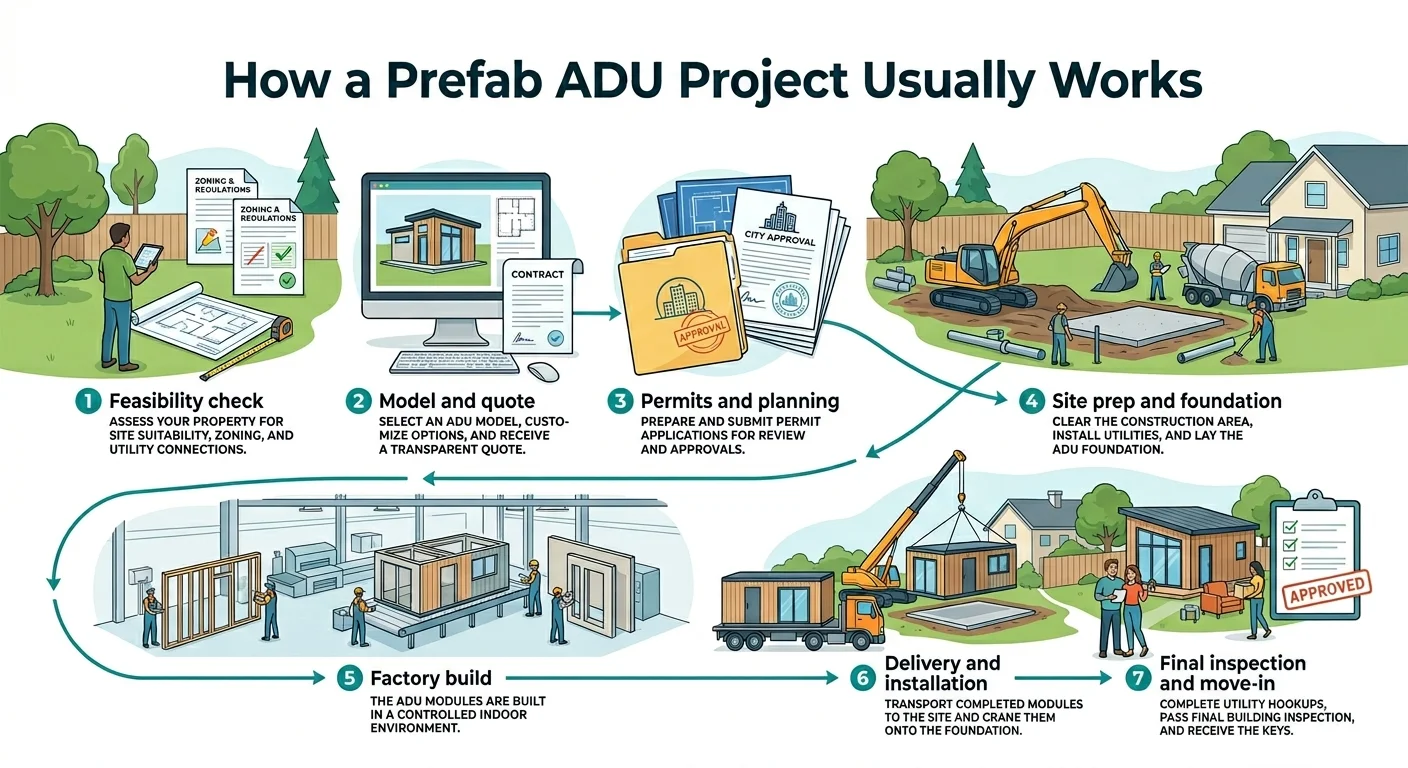
How the Process Works: Quote to Move-In
| Phase | What Happens | Typical Duration | Common Delays |
|---|---|---|---|
| Feasibility & lot check | Zoning, setbacks, utility access, lot fit | 1–2 weeks | Lot doesn't qualify |
| Model selection & quoting | Compare options, get all-in quotes | 2–4 weeks | Waiting for site assessments |
| Permit & plan review | Submit plans, respond to city comments | 4–12 weeks | Revisions, understaffed departments |
| Site prep & foundationconcurrent | Grading, excavation, foundation pour | 2–4 weeks | Weather, soil surprises |
| Factory build (concurrent)concurrent | Unit manufactured in parallel with site prep | 4–12 weeks | Factory backlog, material delays |
| Delivery & installation | Shipped, craned/assembled, connected | 1–3 weeks | Access issues, scheduling |
| Final inspections | Building dept. inspections, C of O | 1–3 weeks | Punch list items |
| Total | Parallel phases compress the timeline | 3–8 months | — |
Editorial planning estimates based on industry-reported timelines. Your project duration will depend on your jurisdiction's permit review speed, manufacturer lead times, and site complexity.
Frequently Asked Questions
What is the cheapest prefab ADU you can buy?
The cheapest prefab ADU units are SIP panel kits from companies like Mighty Small Homes (from $26,885 for 256 SF) and small kits from prefabADU. These are shell/kit prices — the total installed cost including foundation, utilities, and permits will typically be $75,000–$130,000 depending on your lot and how much work you do yourself.
Can I build a prefab ADU for under $100,000 total?
Possible but tight. You would need a very small unit (under 350 SF), a flat lot with easy access and nearby utility connections, and willingness to handle significant portions of the project yourself. Kit approaches are the most realistic path under $100K.
Is it cheaper to build an ADU or buy a prefab?
On standard lots, prefab typically comes in below custom site-built. On complex lots — slopes, tight access, unusual setbacks — site-built can sometimes match or beat prefab on total cost because it adapts to your property instead of working against it. Get quotes for both before committing.
Are prefab ADUs legal in every state?
ADU legality is set at the state and local level. A 2025 Mercatus Center report found 18 states had broadly legalized ADU construction. California, Oregon, Washington, Colorado, Maine, Connecticut, and Vermont are among states with comprehensive reforms, but local zoning still controls specifics like setbacks, size limits, and owner-occupancy. Always verify with your city or county planning department.
Does a prefab ADU need a permanent foundation?
For most permit paths, traditional financing options, and appraisal treatment, a permanent foundation is required or strongly preferred. Fannie Mae allows manufactured-home ADUs under specific conditions including real-property conversion, but the code and financing path must be confirmed for your situation.
What hidden costs do prefab ADUs have?
Foundation ($8K–$25K), utility hookups ($10K–$30K), site prep ($5K–$20K), delivery and crane ($4K–$15K), permits ($2K–$12K), and potential electrical panel upgrades ($2K–$6K). Total add-on costs typically range from $50,000 to $150,000+ on top of the advertised base price.
What size prefab ADU is most affordable?
Studios and micro-units under 400 SF have the lowest total cost. However, cost per square foot is often higher on very small units because kitchens and bathrooms represent a larger share. For rental income, a slightly larger unit (500–800 SF) often delivers better return on investment.
Are tiny homes the same as ADUs?
No. Tiny homes on wheels are typically classified as RVs or personal property. ADUs are permanent structures on foundations, permitted through local building departments. A tiny home may inspire your design, but it is not interchangeable with a legal ADU for zoning, financing, or property-value purposes.
How long does a prefab ADU take from order to move-in?
Typically 3–8 months total, including permitting, site prep, factory build, and installation. The factory build often runs concurrently with site work — that parallel track is prefab's main time advantage.
Can I rent out a prefab ADU?
Yes, in most jurisdictions that permit ADUs. Some cities require owner-occupancy of either the main home or the ADU. Short-term rental rules vary significantly by city. Long-term rental is broadly permitted in ADU-friendly jurisdictions. Verify your local rules.
What happens if you build an ADU without a permit?
An unpermitted structure may need to be demolished, cannot be legally rented, generally will not count toward your home's appraised value, and can derail a sale or refinance. The permit process protects your investment.
Which prefab companies publish real public pricing?
Companies with transparent published pricing include Craftsman Tiny Homes, Mighty Small Homes, Studio Home, Modular Home Direct, Kountry Containers, and prefabADU. Some companies like BOXABL use a feasibility-first quoting process. Others like Abodu and Villa use estimate tools rather than public model-by-model pricing.
Our Methodology and Sources
How we collect pricing
We pull starting prices directly from official manufacturer websites and published pricing pages. Where pricing is not publicly listed, we note 'quote required.' We do not use unverified third-party estimates.
How we estimate installed costs
We add national average ranges for foundation ($8K–$25K), site prep ($5K–$20K), utility hookups ($10K–$30K), permits ($2K–$12K), and delivery/installation ($4K–$15K). Ranges are informed by published data from ADU builders, construction cost databases, and real project reports. We assume a standard flat lot with utility access within 50 feet.
How we screen for ADU eligibility
We verify that each product includes or accommodates a full kitchen, full bathroom, sleeping area, and separate entrance, and is designed for installation on a permanent foundation under IRC or applicable building code. We exclude products not intended as legal ADUs. Permit eligibility still depends on local code and jurisdiction classification.
How often we update
We review pricing quarterly and update when material changes occur. The 'last verified' date at the top reflects our most recent review.
What this page does not guarantee
These are estimated budget ranges based on publicly available data, not project quotes. Your actual costs depend on lot conditions, local fees, utility infrastructure, delivery distance, and contractor rates. Confirm all pricing directly with manufacturers and obtain a site-specific assessment before making financial commitments.
Not Sure Where to Start?
You have done the research. You know the real price ranges. You understand the hidden costs. Now the only question left is: what is actually possible on your specific property? Setbacks, lot coverage, utility access, and local ADU rules all vary — and they determine whether your best path is a small prefab kit, a turnkey modular unit, a garage conversion, or something else entirely.
Free ADU Report
See what's possible at your address — personalized ADU feasibility report in 60 seconds
Check your property's zoning, ADU eligibility, and likely next steps — in 60 seconds.
Best value in the $100K–$175K range
Craftsman Tiny Homes — Summit model from $65,500
Custom ADUs with full kitchen, full bath, and transparent pricing. 410 SF, ships nationwide.
Affiliate link — we may earn a commission at no cost to you.
Affiliate link · modularhomedirect.com
Free Download
2026 ADU Starter Kit
Costs, permits, timelines, financing, and your first steps — everything you need before talking to any builder.
Download the Free 2026 ADU Starter KitRelated Guides
Best Prefab ADU Under $100K
Strict-budget shortlist with real installed costs
Best Prefab ADU Companies
Full market overview across all budget levels
Prefab ADU Cost Guide
Complete installed cost breakdown by size and type
Garage Conversion ADU Cost
Often the cheapest path — if you have a garage
HELOC for ADU Financing
Fund your ADU project with home equity
Boxabl Reviews (2026)
Is the Casita worth it? Verified facts and real costs
Last updated: April 2026. Prices and program statuses verified as noted throughout. Maintained by the editorial team at The Dwelling Index. For corrections, contact editorial@dwellingindex.com. Editorial methodology → · Full affiliate disclosure →